 Ferndale Siding
 Roof Replacement in Fairhaven: A Neighborhood Shaped by the Bay
Fairhaven sits on the hillside where Bellingham slopes down to Bellingham Bay, and that setting shapes how every roof in the neighborhood ages. It's one of the older, more established parts of the city, with a mix of early-century homes and newer construction built into the same sloped, tree-covered terrain. Whatever the age of the house underneath it, a Fairhaven roof is dealing with a specific combination of stress: salt-tinged marine air drifting up off the water, rain that gets driven sideways by wind more often than it falls straight down, and a moss season that runs long on shaded, north-facing slopes under mature tree canopy.
A roof replacement in Fairhaven isn't the same job as a roof replacement on a dry, open, inland lot. The materials, the flashing details, and the sequencing of the work all need to account for a bay-side climate and a hillside setting. This page walks through what that actually means for a Fairhaven roof specifically — what wears out first, what a correct replacement involves, and how our process works when we take on a job in this neighborhood.
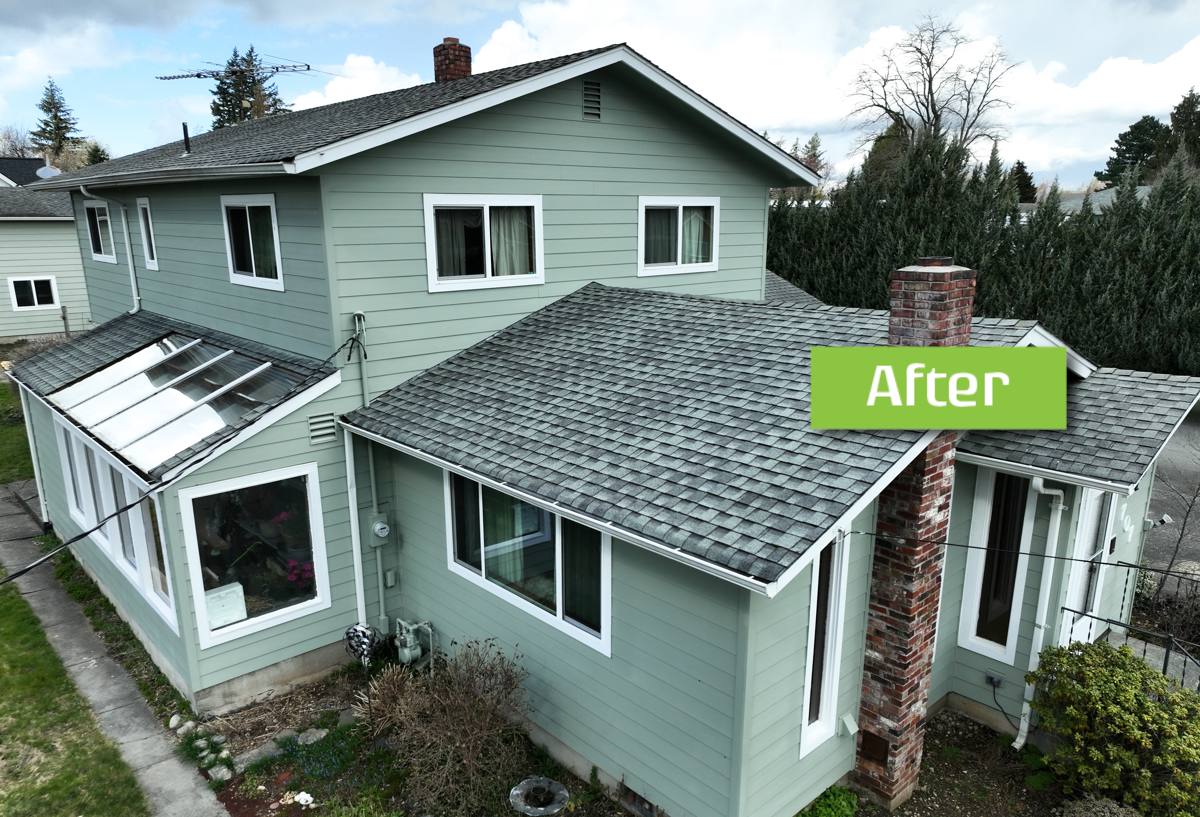
What Bay-Side Exposure Does to a Fairhaven Roof
Salt Air and Metal Corrosion
Homes close to Bellingham Bay pick up a steady drift of salt-laden moisture in the air, not just during storms but as a background condition most of the year. That exposure works slowly on exposed metal — flashing, fasteners, gutter hangers, vent caps — corroding it faster than the same materials would corrode forty miles inland. It's rarely obvious from the ground. It shows up years later as rust bleed at nail heads, lifted or pitted flashing, and hardware that's lost its holding strength well before a roof's expected lifespan is up.
Wind-Driven Rain Off the Water
Fairhaven's position near open water means rain doesn't just fall on a roof, it gets pushed into it. Wind-driven rain finds its way up under shingle tabs, into valleys, and around chimney and skylight flashing from angles a calmer, drier climate never really tests for. A roofing system that would hold up fine on a sheltered inland lot can still take on water here specifically because of how wind interacts with the terrain coming off the bay.
A Moss Season That Barely Lets Up
Mild temperatures, consistent dampness, and Fairhaven's mature tree cover add up to a moss and algae season that runs most of the year, not just through the wettest winter months. Moss doesn't just look bad — its rhizoids work into the granule layer and lift shingle edges as it grows, and sustained growth holds moisture against the roof surface for weeks at a time. North-facing slopes and anywhere shade keeps a roof from drying out between rain events are usually the first places it takes hold.
Hillside Lots and Tree Cover
A fair amount of Fairhaven's housing sits on sloped terrain leading up from the waterfront, often under overhanging branches from mature trees. That combination means more roof debris — needles, leaves, small branches — collecting in valleys and behind chimneys than a roof on an open, flat lot would see, and it means access and staging for a replacement crew often takes more planning than a straightforward driveway setup.
Signs Your Fairhaven Roof Is Telling You It's Time
Most of the warning signs a roof gives before it fails are visible without ever getting on it. A walk around the exterior and a look in the attic on a dry day covers most of what matters.
- Shingles curling at the edges, cupping in the middle, or missing outright
- Bald spots where granules have worn away, or granules collecting in gutters and downspouts
- Heavy moss growth across whole slopes, not just isolated shaded corners
- Flashing around chimneys, skylights, or vents that looks rusted, lifted, or caulked over repeatedly
- Daylight visible through the roof boards, or dark water staining on the underside of the attic decking
- Soft or spongy sheathing when pressed on from inside the attic
- A musty smell in the attic that suggests moisture has been sitting trapped for a while
- Sagging along the roofline or in a valley instead of a straight, even plane
Any single item on that list can sometimes point to a targeted repair. Several of them together, especially on a roof that's already near or past its expected lifespan, usually mean it's time to plan for a full replacement rather than another patch.
Repair or Full Replacement? How We Make That Call
There's no single rule that separates a repair from a replacement. It comes down to a few honest questions about the roof's age, the extent of the damage, and what's happening underneath the surface.
| Factor | Leans Toward Repair | Leans Toward Replacement |
|---|---|---|
| Age of the roof | Well under its expected lifespan | At or past the expected lifespan for the material |
| Extent of damage | Isolated to one valley, boot, or section | Spread across multiple slopes |
| Deck condition | Sheathing is solid, dry, and intact | Sheathing is soft, delaminated, or rotted in spots |
| Moss and staining | Light, limited to shaded corners | Heavy, established across most of the roof |
| Past repair history | First or second repair on this roof | Recurring leaks in the same area |
A ten-year-old roof with one damaged section from a fallen branch is almost always a repair. A roof pushing twenty-five years, with moss embedded across several slopes and a soft spot forming in the attic decking, is a roof that's telling you the next leak is a matter of when, not if. We'll walk the roof and give you a straight answer about which situation you're actually in, rather than defaulting to whichever answer costs more.
What a Correct Roof Replacement Involves in This Climate
A roof replacement is more than stripping off old shingles and nailing down new ones. In a climate that pushes this much wind-driven rain and sustains this long a moss season, the details underneath the shingles matter as much as the shingles themselves.
Tear-Off and Deck Inspection
We remove the old roofing down to the deck rather than layering over it, because that's the only way to actually see what's happened to the sheathing underneath. On a bay-side roof, hidden moisture damage from years of small leaks or condensation is common enough that skipping this step means building a new roof on top of a problem instead of fixing it.
Underlayment
A quality synthetic or self-adhered underlayment gives the roof a second line of defense if wind ever drives rain up under a shingle tab, which happens more often on an exposed hillside lot than on a sheltered, calm one.
Flashing
New flashing at every chimney, skylight, sidewall, and valley — not caulk smeared over old, corroded flashing. This is one of the most common places a cheaper roof job cuts corners, and it's exactly where salt-air corrosion does the most damage over time.
Ventilation
Proper intake and exhaust ventilation keeps the attic deck dry and helps prevent the moisture buildup that leads to premature sheathing rot, particularly relevant on older Fairhaven homes that were often built with less attic ventilation than current standards call for.
Choosing a Roofing Material for a Fairhaven Home
Material choice matters, but so does being realistic about how long any given material actually holds up once it's exposed to sustained bay-side moisture and a long moss season, rather than relying on the national average printed on the package.
| Roofing Material | Typical Lifespan (National) | Realistic Lifespan Near Bellingham Bay |
|---|---|---|
| 3-tab asphalt shingles | 15-20 years | 12-18 years |
| Architectural (laminate) asphalt shingles | 25-30 years | 20-25 years |
| Standing seam metal | 40-60 years | 35-50 years with proper fastener and flashing detail |
| Composite/synthetic shingle | 30-50 years | 25-40 years |
These are general ranges, not guarantees. Actual lifespan depends on ventilation, installation quality, tree cover, and how consistently moss and debris get cleared off. Algae-resistant granule technology, available on many architectural shingle lines, is worth the modest added cost on a shaded, tree-covered Fairhaven lot, since it slows the dark staining and organic growth that standard shingles pick up within just a few years here. We don't push one shingle brand as the only acceptable option the way we do with siding — for roofing, the bigger factor is almost always installation quality and flashing detail rather than which manufacturer's name is on the wrapper.
Our Replacement Process on a Fairhaven Property
- An in-person roof inspection, including the attic where accessible, before we quote anything
- A written estimate that spells out tear-off scope, underlayment, flashing, and ventilation — not just a total price
- Any needed permitting handled before work begins
- Full tear-off and a real look at the deck, with any soft or rotted sheathing replaced before new roofing goes on
- Installation of underlayment, new flashing at every penetration, and the roofing material itself, with attention to fastening patterns suited to a more exposed, wind-affected lot
- A ventilation check and upgrade where the existing attic setup falls short
- Full site cleanup, including a magnetic sweep for stray nails, and a final walkthrough before we consider the job done
Cost Factors Specific to Fairhaven Roofs
| Factor | What It Affects | Why It Matters Here |
|---|---|---|
| Home age and roofline complexity | Total material and labor | Fairhaven's older housing stock often has more valleys, dormers, and roof-wall intersections where wind-driven rain works its way in |
| Tear-off vs. overlay | Labor scope and ability to inspect the deck | Tear-off exposes hidden moisture damage that's common under decades-old roofing this close to the bay |
| Slope and site access | Staging, scaffolding, and setup time | Hillside lots and mature tree cover common in Fairhaven can add real labor time before the roofing work even starts |
| Material and grade selection | Wind rating, algae resistance, expected lifespan | Algae-resistant products matter more here given how long the local moss season runs |
| Ventilation upgrades | Attic moisture control and roof lifespan | Many older Fairhaven homes benefit from added intake or exhaust venting during a replacement |
Real numbers depend on the specific roof, which is why we walk the property in person before quoting instead of pricing off square footage alone.
Why a Crew That Already Works Fairhaven Matters
A crew that replaces roofs in this neighborhood regularly knows which slopes hold moss longest, which hillside lots need extra staging time, and where salt air tends to eat through flashing first. That experience shapes real decisions on install day — where to spend extra time on flashing, which fastening details are worth the added labor on an exposed lot, and how to sequence tear-off and deck repair around a hillside property's access limitations. Fairhaven's older homes, sloped terrain, and closeness to the water aren't the same conditions you'd find on a flat, open lot further inland, and a crew with real experience in the neighborhood plans around that instead of applying a one-size-fits-all approach built for a calmer, drier site.
If your Fairhaven home has a roof that's showing its age, or you just want an honest opinion on whether you're looking at a repair or the start of a full replacement, we're glad to take a look. Reach out using the form below to schedule a free, no-pressure estimate.