 Ferndale Siding
 Why Lummi Island Homes Need Siding Built for the Water
Lummi Island sits out in the marine air of Whatcom County, and that changes what "good siding" means. A product that performs fine twenty miles inland in Ferndale can still struggle here, because island homes deal with a tighter combination of salt-laden air, wind-driven rain coming off the water, and a moss season that runs long into the year. Siding on Lummi Island isn't just a weather barrier — it's fighting a slow, constant chemical and biological assault that never fully lets up, even in the drier summer months.
Salt air is corrosive to metal fasteners and trim, and it accelerates the breakdown of coatings that aren't built to shed it. Driving rain off Hale Passage and the surrounding water doesn't fall straight down — it gets pushed sideways into wall assemblies, which means seams, laps, and flashing details matter more here than on a sheltered inland lot. And the extended damp season that Whatcom County is known for gives moss, algae, and mildew a long runway to take hold on any surface that stays wet and shaded. None of this means siding is a losing battle on Lummi Island — it means the material and the installation both have to be chosen with this specific exposure in mind.
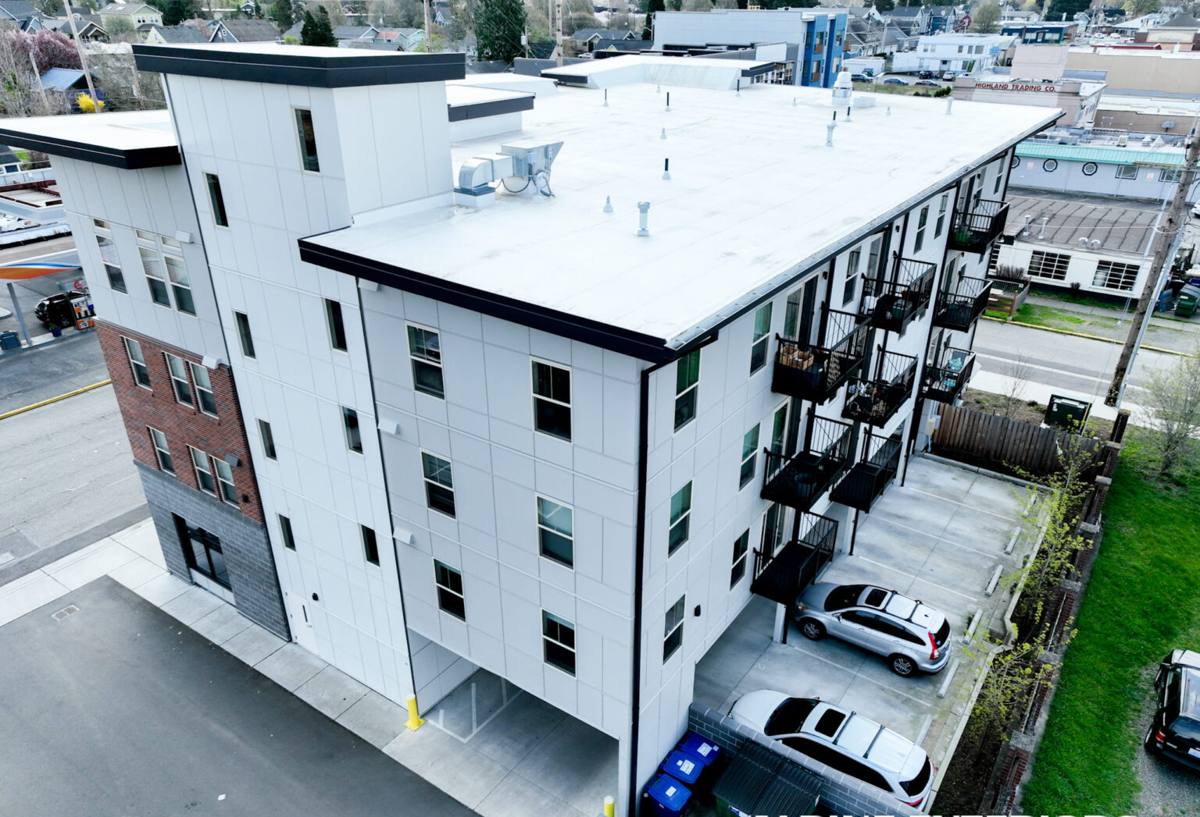
What Correct Fiber Cement Siding Looks Like Here
We install James Hardie fiber cement siding exclusively, and on Lummi Island that choice is about more than looks. Fiber cement is non-combustible, dimensionally stable, and doesn't rot, swell, or delaminate the way wood-based and some engineered wood products can when they take on repeated moisture. Hardie manufactures its siding in regional formulations — its HardieZone system — engineered for the specific humidity and freeze-thaw profile of a given climate zone, rather than a single one-size-fits-all product sold nationwide.
For a marine-influenced, high-moisture area like Lummi Island, that climate-engineering matters. It's paired with Hardie's ColorPlus factory finish, a baked-on coating applied under controlled conditions rather than field-painted on site. That finish resists fading and holds up to UV and salt exposure far better than a standard field-applied paint job, and it comes with its own finish warranty separate from the substrate warranty — so you're not relying on a single coat of site-applied paint to hold the line against salt air for the next decade.
Panel, Lap, or Shingle — Choosing a Profile for Island Exposure
Hardie offers several siding profiles — traditional lap siding, shingle-style panels, and vertical board-and-batten — and the right one depends on the home's design and how exposed it is to prevailing wind and rain. On more exposed, water-facing walls, we pay close attention to lap exposure and fastening pattern, since those details control how much wind-driven rain gets forced up under a course. This is a design conversation we have on-site, not something we standardize blindly across every job.
The Ferry Factor: Why Island Logistics Change a Siding Job
Lummi Island is reached only by a county ferry, and that single fact changes how a siding project has to be planned. Material deliveries, dumpster drop-offs and pickups, and crew transport all have to work around a ferry schedule instead of just a drive time. A contractor who hasn't worked the island before will often underestimate this — showing up with a delivery truck at the wrong hour, or scheduling a crew day that doesn't account for sailing times, can turn a straightforward job into a stretched-out one.
Staging Materials for a Multi-Day Tear-Off
Because you can't just run back to the yard for a forgotten item, we plan Lummi Island jobs with more material staged on-site up front than we would for a mainland Ferndale job — extra fasteners, trim stock, flashing tape, and touch-up kit all accounted for before the ferry leaves the dock. Getting this wrong doesn't just cost us time; it leaves your home with exposed sheathing sitting open to the weather for longer than it should be.
Crew Scheduling Around Sailings
We build the ferry into the crew's day rather than treating it as a surprise. That means fewer half-finished days, fewer "we'll be back next week" gaps in a tear-off, and less time your walls spend open to driving rain between old siding coming off and new siding, house wrap, and flashing going on.
Our Installation Process
Tear-Off and Wall Inspection
We remove the existing siding down to the sheathing and inspect for hidden rot, soft spots, or prior water intrusion — common on older island homes where moisture has been working behind the cladding for years without being visible from outside. Any damaged sheathing or framing gets addressed before a single piece of new siding goes up; covering a wet or compromised wall with new material just hides the problem.
Weather-Resistive Barrier and Flashing
A correctly lapped weather-resistive barrier, properly integrated window and door flashing, and correctly detailed penetrations (vents, hose bibs, electrical) are what actually keep wind-driven rain out — the siding itself is the second line of defense, not the first. On a site that takes rain sideways off the water, we're especially deliberate about how flashing laps into the barrier at every horizontal transition.
Fastening, Clearances, and Caulking
Hardie siding has documented fastening patterns, minimum clearances from grade, roof lines, and decks, and specific gapping requirements at butt joints and trim. These aren't cosmetic guidelines — they're what keeps water from wicking into cut edges and what keeps the ColorPlus finish and substrate performing to their rated life. We follow Hardie's installation specifications as written, because deviating from them is one of the most common ways a warranty claim gets denied later.
Trim, Corners, and Finish Detailing
Corner boards, trim, and any factory-cut edges get sealed and finished per manufacturer spec before the job is called done. On a salt-air site, an unsealed cut edge is exactly the kind of small detail that turns into a moisture problem two or three winters down the road.
Installation Mistakes That Show Up Faster on the Island
Fiber cement siding has a strong track record, but it's an installation-sensitive product — the material can be excellent and a project can still fail early if it's put up wrong. On a marine-exposed site like Lummi Island, installation mistakes tend to surface faster and worse than they would on a sheltered inland lot, because there's less margin for error against salt air and driving rain.
- Face-nailing or over-driving fasteners, which can crack the board or break the factory seal at the fastener head
- Tight or missing gaps at butt joints and trim, which traps moisture instead of letting it drain and dry
- Siding installed too close to grade, decks, or roof lines, well under Hardie's minimum clearances
- Skipped or poorly lapped weather-resistive barrier behind the siding
- Unsealed factory cut edges left exposed to weather
- Caulking used to bridge gaps that should have been sized correctly in the first place
Every one of these is avoidable with correct training and a crew that follows Hardie's published installation requirements — which is also, practically speaking, what keeps the manufacturer's warranty intact if something ever does go wrong.
Cost Factors for a Lummi Island Siding Project
Every home is different, and we won't quote a number without walking the property, but these are the factors that most often move a Lummi Island siding estimate up or down compared to a similar mainland job.
| Factor | Why It Matters on Lummi Island |
|---|---|
| Ferry-based delivery and disposal | Material staging and dumpster logistics take extra planning and time compared to a mainland job with unrestricted access |
| Exposure to wind and water | Water-facing walls often need more careful flashing and trim detailing than sheltered elevations |
| Condition of existing sheathing | Older homes with years of moisture exposure sometimes need sheathing repair discovered only after tear-off |
| Siding profile and trim complexity | Shingle-style or board-and-batten profiles, and homes with heavy trim detail, take more labor than a simple lap job |
| Access and staging space | Tighter lots or limited driveway access can slow material handling and add labor time |
Living With Fiber Cement in a Moss-Prone, Salt-Air Climate
One of the real advantages of correctly installed Hardie siding is how little upkeep it asks for compared to wood or engineered wood alternatives — but "low maintenance" isn't "no maintenance," especially in a Whatcom County marine climate where moss and algae have a long growing season.
- Rinse salt spray and general grime off exterior walls a couple of times a year, especially on water-facing sides
- Keep gutters clear so overflow isn't running down and staining or wetting siding continuously
- Trim back vegetation and tree cover that keeps a wall shaded and damp — the same conditions moss needs to establish
- Check caulking at trim, corners, and penetrations periodically, and re-caulk if it's cracked or pulling away
- Watch for moss or algae starting in shaded, low-airflow corners and address it early with a gentle cleaning rather than pressure-washing directly into seams
- Inspect after major storms for any loose trim, fasteners, or flashing that wind may have disturbed
Why a Crew That Already Works Lummi Island Matters
A siding contractor who's never scheduled a job around a ferry, never staged materials for a multi-day island tear-off, and never seen how a specific stretch of shoreline handles wind-driven rain is learning those lessons on your house. That's expensive for you in ways that don't show up on the estimate — extra trips, delayed schedules, or details that get missed because the crew is unfamiliar with what island exposure actually demands.
Working Ferndale and the surrounding Whatcom County communities, including Lummi Island, means we plan for the ferry before we plan the crew day, we know what exposure level a given elevation is likely to see, and we install to James Hardie's specification every time — not as an upsell, but because it's the only way the product performs and the warranty holds the way it's supposed to.
Get a Straight Answer for Your Home
If your Lummi Island home's siding is showing its age — cracking, staining, soft spots, or paint that keeps failing faster than it should — we're glad to take a look and give you a straightforward assessment of what's going on and what it would take to fix it right. Reach out for a free, no-pressure estimate using the form below.