 Ferndale Siding
 Why Siding Takes a Beating in Sudden Valley
Sudden Valley sits in a part of Whatcom County where mature tree cover, damp air, and a long, low-angle rainy season all work against exterior siding at the same time. Homes here don't just get wet — they stay wet. Shade from surrounding trees slows drying after every storm, driving rain finds its way into laps and joints that would shed water fine in a more exposed spot, and the moist, marine-influenced air common to this part of Ferndale and the wider Whatcom County coastline keeps humidity high for most of the year. That combination is exactly what moss, algae, and mildew need to take hold.
None of this is unique to any one house. It's a neighborhood-wide condition, and it means siding decisions in Sudden Valley have to account for shade and moisture retention as a baseline, not an afterthought. A product or installation detail that holds up fine on an open, sun-exposed lot a few miles away can fail years earlier here simply because it never gets the chance to dry out between rains.
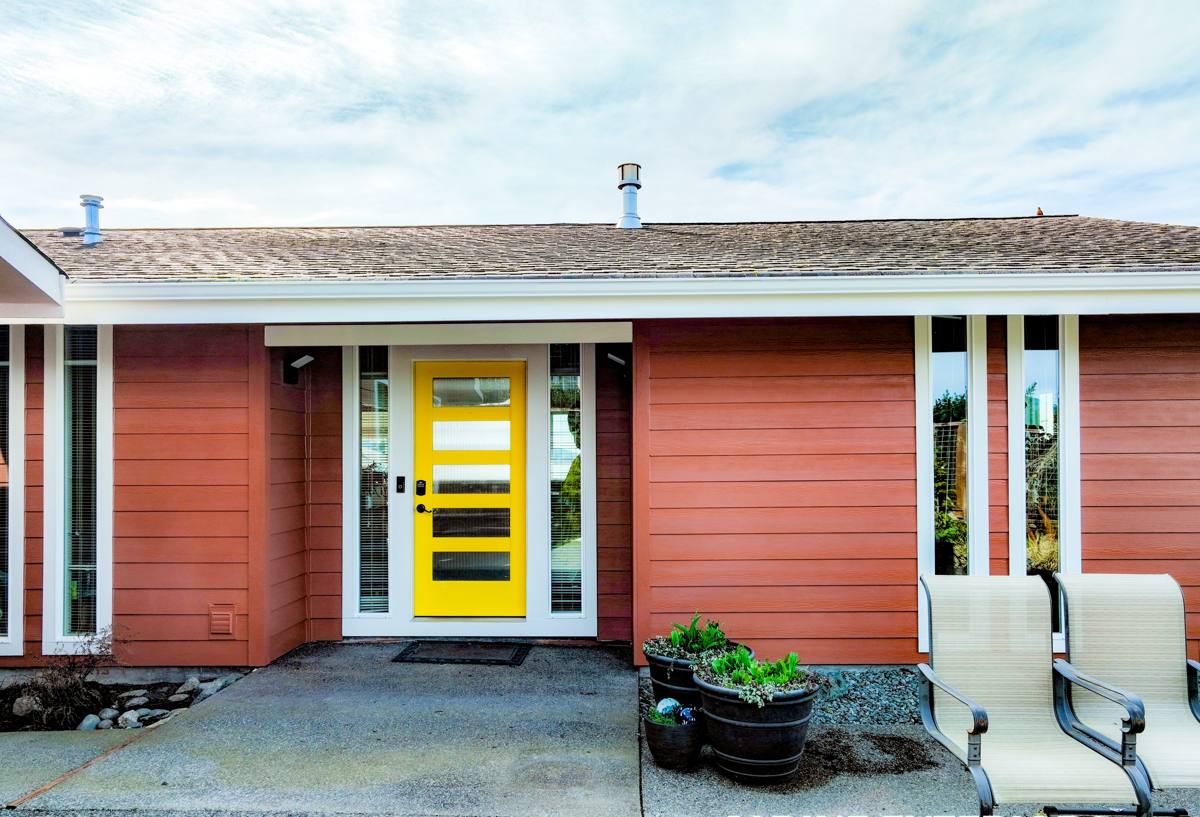
What Fiber Cement Siding Needs to Do Here
Manage moisture without trapping it
Good siding in a shaded, damp setting isn't about being "waterproof" — nothing on the exterior of a house truly is. It's about managing where water goes when it inevitably gets behind the surface layer, and giving the wall assembly a way to dry out. That means a proper drainage plane, correctly lapped water-resistive barrier, and siding that doesn't wick or swell when it stays damp for days at a stretch.
Hold a factory finish through repeated wet-dry cycles
Paint failure is one of the most common siding complaints in shaded, moss-prone areas. Field-applied paint on any substrate tends to lose adhesion faster when it's cycling between saturated and dry, which is the norm under tree cover for much of the year. A factory-applied finish that's baked on and warranted separately from the substrate holds color and adhesion far longer under these conditions than a job-site paint job.
Resist the biological load, not just the water
Moss and algae aren't just cosmetic. Left long enough, they hold moisture directly against the siding surface and, in fastener locations or damaged caulk joints, can contribute to slow water intrusion. Siding material, surface texture, and how tight the joints are all affect how much organic growth accumulates and how easy it is to clean off without damaging the finish.
Why We Install Only James Hardie Fiber Cement
We install James Hardie fiber cement siding exclusively — not vinyl, not engineered wood products like LP SmartSide, not primed spruce or cedar, and not other fiber cement brands. That's a deliberate standard, not a sales pitch. Fiber cement itself is non-combustible and dimensionally stable in a way that matters in a climate that swings between saturated winters and dry summers. Within fiber cement, Hardie's ColorPlus factory finish and its HardieZone engineering for Pacific Northwest conditions are the specific reasons we've standardized on this manufacturer rather than treating fiber cement as a commodity product.
We've made the call, after years of installs and callbacks across Whatcom County, that the long-term performance and warranty backing of Hardie's system is worth the fact that it costs more up front than some alternatives. On a shaded, moisture-heavy lot in Sudden Valley, that difference tends to show up sooner rather than later.
What a Correct Installation Involves
Prep and the drainage plane
Before any siding goes up, the sheathing gets inspected for existing rot or moisture damage — common on older homes in shaded lots where the old siding has been holding water against the wall for years. A weather-resistive barrier goes on correctly lapped (working top-down, shingle-style) and a drainage gap is built in behind the siding so incidental moisture has somewhere to go besides straight into the wall assembly.
Flashing and fasteners
Every window, door, and penetration needs flashing that directs water out and down, not into the wall. Fasteners get placed and spaced to Hardie's specification — over-driven or misplaced nails are one of the most common causes of premature siding failure, and it's a detail that's easy to rush and hard to see once the job is "done."
Joints, caulking, and the finish
Butt joints and trim transitions are where most siding leaks start. Correct installation minimizes caulk-dependent joints where possible and uses the right sealant where they're unavoidable, keeping the factory finish intact rather than covering cut edges with field-applied paint that will weather at a different rate than the rest of the panel.
How Our Process Works in Sudden Valley
We start with a walk-around assessment that looks specifically at sun exposure, tree proximity, existing moss or algae buildup, and any soft spots or staining that point to moisture already working its way in. Because so much of Sudden Valley sits under partial or heavy tree canopy, we pay particular attention to areas that get the least direct sun — north-facing walls, sections tucked behind landscaping, and spots where roof runoff drains close to the siding.
From there we scope removal of the existing siding, sheathing repair if needed, and the drainage and flashing details described above, before installing the Hardie product line and profile that fits the home. If your property is part of a homeowners' association with exterior color or material guidelines, we factor that into product and color selection up front so there are no surprises during approval. We also try to schedule around the wettest stretch of the year where the calendar allows, since giving a new installation a chance to season in drier conditions is better for the long-term result.
Cost Factors for a Fiber Cement Siding Project
Every home is different, but the same handful of factors drive most of the cost variation we see on projects in and around Sudden Valley:
| Factor | Why It Matters Here |
|---|---|
| Existing moisture damage | Shaded, damp lots more often need sheathing or framing repair discovered once old siding comes off |
| Home size and wall complexity | More corners, dormers, and trim details mean more flashing and cutting labor |
| Siding profile and texture | Lap width and texture (smooth vs. cedar-textured) affect material cost and installation time |
| Color and HZ product line | ColorPlus finish options and Hardie's climate-specific HZ5 formulation vary in price |
| Access and site conditions | Mature trees, slopes, and tight lots common in this neighborhood can add setup and material handling time |
We provide a written, itemized estimate before any work starts so you can see exactly where the cost is coming from rather than a single lump number.
Living With Fiber Cement in a Shaded, Moss-Prone Setting
Even correctly installed siding benefits from a little homeowner attention in an environment like this. A short seasonal check goes a long way toward catching small issues before they become expensive ones:
- Look for moss or algae buildup concentrating in one area — it often points to a spot that stays wetter than the rest of the wall
- Check caulking at trim joints and around windows for cracking or gaps once a year, typically before the rainy season sets in
- Keep gutters clear so roof runoff isn't sheeting directly down the siding face
- Trim back branches and landscaping that keep a section of wall in constant shade and slow drying
- Rinse (don't pressure-wash aggressively) areas with heavy moss buildup to avoid driving water behind the panels
- Watch for soft spots, staining, or bubbling near the bottom courses, a common early sign of moisture intrusion
None of this is unusual maintenance — it's the same short list we'd give any homeowner in a shaded, high-humidity setting, and it's far less involved than what wood or engineered-wood siding typically demands in these conditions.
Why Hiring a Crew That Already Works This Neighborhood Matters
Siding contractors who haven't worked in Sudden Valley before are working from general assumptions about Whatcom County weather. Crews who've actually installed and serviced siding on shaded, tree-covered lots here know which orientations tend to hold moisture longest, what the local moss and algae pattern usually looks like a few years in, and how HOA approval processes typically run in this kind of community. That familiarity shows up in fewer surprises during the job and a better match between the product and the specific lot.
It also matters after the install. A crew that's local and still working this area is the one that shows up if a warranty question comes up down the line, rather than a name that only appears for the sale.
If you're thinking about new siding for a home in Sudden Valley, we're glad to walk the property, look at how sun, shade, and moisture are actually behaving on your specific lot, and put together a straightforward estimate. There's no pressure and no obligation — just a clear look at what your home needs and what it would take to do the job right.