 Ferndale Siding
 Siding Replacement Built for Kendall's Climate
Kendall homes take a specific kind of weather beating year after year, and it's a different combination than what a house fifty miles inland has to deal with. Salt-tinged marine air works on fasteners, trim, and anything with exposed metal. Rain rarely falls straight down here — it gets pushed sideways and driven up under laps and edges that a lazier installation never planned for water to reach. And a long, damp moss season settles into shaded and north-facing walls and stays there for months at a stretch, holding moisture directly against the wall assembly behind it. Siding that's chosen and installed without that combination in mind tends to look fine for a few years and then fail all at once — usually right around the time a homeowner assumed they had another decade left.
This page covers siding replacement specifically for Kendall homes: what the local climate actually does to a wall assembly, what a correct replacement job involves from tear-off to final trim, why we install James Hardie fiber cement exclusively, and how our process works from a first walkthrough to a finished house.
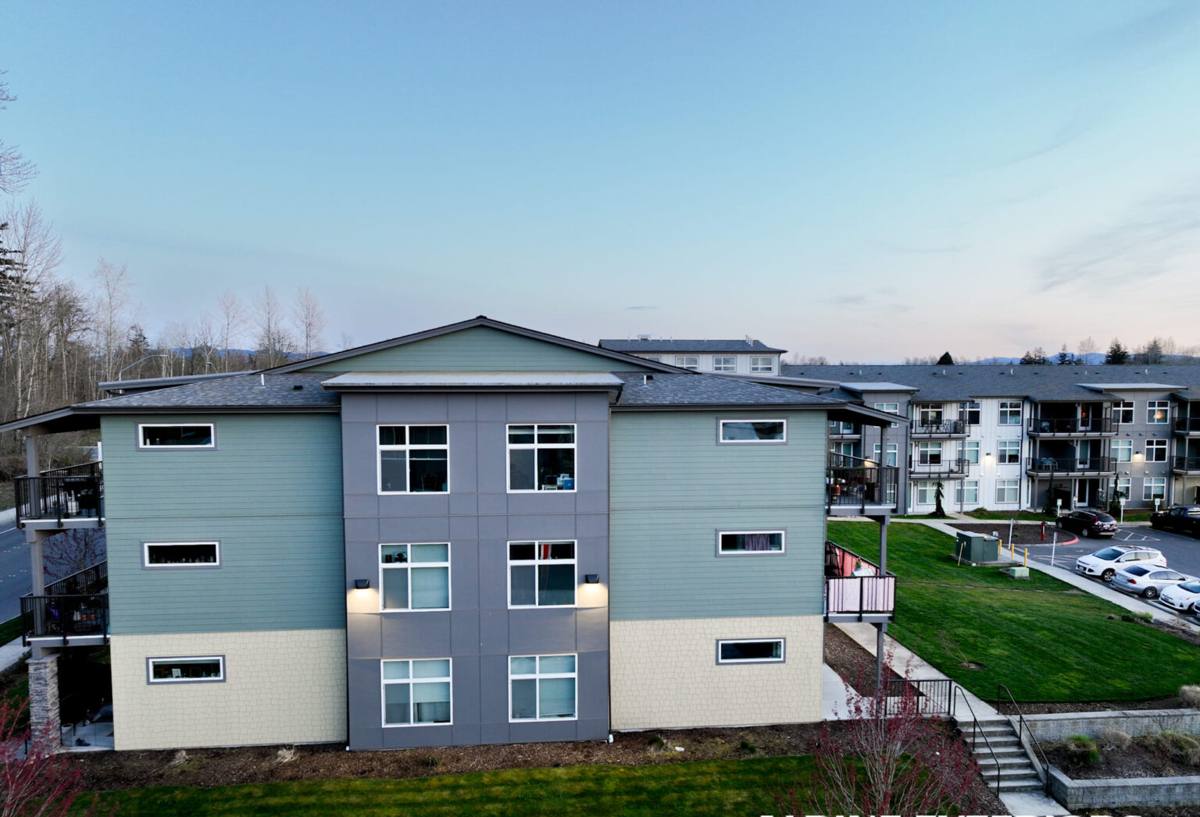
What Kendall's Climate Does to Old Siding
Salt Air and Fastener Corrosion
Marine air moving through this part of Whatcom County accelerates corrosion on cheap or undersized fasteners, trim nails, and lower-grade flashing metal. It's a slow process, which is exactly why it's dangerous — corrosion works quietly behind the siding for years before a homeowner ever sees a stain or a loose board, and by the time it's visible from the outside, the damage underneath is usually further along than it looks.
Wind-Driven Rain
Storms off the water push rain sideways into walls rather than letting it run cleanly down and off. Siding and trim that are detailed only for rain falling straight down — square-butted joints, minimal overlap, caulk standing in for real flashing — start showing water intrusion first at seams, corners, and anywhere the original installer took a shortcut. Once water gets behind the siding, gravity does the rest, and it tends to travel further than homeowners expect before it shows up as a visible problem.
A Long Moss and Mildew Season
Persistent dampness, mild temperatures, and shaded wall area on most Kendall lots add up to a moss and mildew season that runs much of the year. It starts as dark staining or green growth on north-facing walls and isn't just cosmetic — sustained organic growth holds moisture against the wall surface continuously, which is precisely the condition that leads to hidden rot in the sheathing behind it if it's never cleaned or addressed.
What This Looks Like on an Older Home
Put those three factors together over ten or fifteen years and a common pattern emerges on Kendall homes: corroded fasteners that no longer hold siding tight to the wall, soft or swollen sections near grade and around window sills where wind-driven rain has been getting in, and moss-blackened north walls that have been quietly staying wet since fall. None of that shows up overnight, and none of it gets better on its own.
What a Correct Siding Replacement Actually Involves
Replacing siding isn't just pulling off old boards and nailing up new ones. A correct job treats the wall as a system, and skipping any one layer of that system is exactly how a new-looking house ends up with the same hidden problems five years later.
Full Tear-Off and Substrate Inspection
Removing the old siding down to the sheathing is the only way to actually find what's been happening behind it — soft spots, rot, corroded fasteners, or a weather-resistive barrier that's failed and let water track along the framing. Installers who skip this step and side over existing material are also siding over whatever damage is already there.
Weather-Resistive Barrier and Flashing
A correctly lapped house wrap, integrated with flashing at every window, door, and penetration, is what actually keeps wind-driven rain out of the wall assembly — the siding itself is really just the outer layer. Flashing needs to be lapped in the right order, sealed where it should be sealed, and never simply covered with a bead of caulk as a substitute for doing the layering correctly.
Fastening and Clearance
Fastener type, placement, and count all need to follow manufacturer specification rather than whatever's fastest for the crew, especially in an area where salt air accelerates corrosion on undersized hardware. Clearance from grade, roof lines, and decks also matters more here than in a drier climate — siding installed too close to the ground or to a roof surface wicks up moisture that never fully dries between rain events.
Joint and Seam Detail
Every seam, corner, and butt joint is a potential entry point for wind-driven rain. Joints should be lapped, backed, and sealed according to spec rather than simply butted together and caulked, since caulk alone is a maintenance item, not a permanent seal.
Why James Hardie Is What We Install
We install James Hardie fiber cement siding exclusively. We don't install LP SmartSide, vinyl siding, Cemplank, Allura, primed spruce, or cedar. Each of those products has a place in the broader market, and plenty of homeowners elsewhere get reasonable results from them. But after years of exterior work across Whatcom County, watching which materials actually held up to sustained marine moisture, wind-driven rain, and a long moss season and which ones quietly turned into maintenance problems, we made a professional decision to stand behind one system rather than offer a cheaper option that shifts risk back onto the homeowner a few years down the road.
| What Matters | Why It's Worth Considering | Why It Fits Kendall Specifically |
|---|---|---|
| Non-combustible core | Fiber cement doesn't feed a fire the way wood-based or wood-derived products can | Matters for household safety and insurance underwriting regardless of coastal exposure |
| Factory-applied ColorPlus finish | Color is baked on under controlled conditions instead of field-applied paint | Resists fading and moisture intrusion far longer than site-finished siding exposed to salt air and sustained damp |
| Climate-engineered HZ product lines | Hardie builds different formulations for different regional climate demands | A real match for sustained marine moisture and a long wet season rather than a generic dry-climate spec |
| Dimensional stability | Doesn't swell, cup, or warp the way engineered wood siding can after repeated wet cycles | Matters more here given how long the moss and wet season actually runs |
| Strong transferable warranty | Real manufacturer backing when installation follows spec | Protects the homeowner rather than just the point-of-sale price |
Choosing the Right Hardie Product for a Kendall Home
- HardiePlank lap siding: The most common choice for standard single-family homes; its lapped profile sheds wind-driven rain effectively when installed with correct overlap and flashing.
- HardiePanel vertical siding: Works well on gables, accent walls, and modern or farmhouse-style designs common in this area.
- HardieShingle siding: Gives a textured, craftsman look without the moisture absorption and repainting cycle that real wood shingle demands in a damp climate.
- HardieTrim boards: Factory-finished trim for corners, window and door casing, and fascia that resists the same salt air and moisture exposure as the field siding.
Color and profile come down to the homeowner's preference, but the underlying product family and installation approach should be driven by the home's actual exposure — a shaded, north-facing wall and a sun-exposed south wall on the same Kendall house can reasonably call for different detailing even when the visible product looks the same from the street.
Our Process, Start to Finish
- In-person walkthrough: We look at the home's actual siding, trim, and any visible moisture or moss issues in person, not from photos.
- Honest assessment: We'll tell you plainly whether you're looking at spot repair, partial replacement, or a full re-side, and why.
- Written estimate: A clear, itemized bid covering tear-off, substrate repair allowance, house wrap and flashing, material, and fastening spec — not a vague single-line number.
- Scheduling around weather: We build reasonable flexibility into the timeline, since wet-season delays are a normal part of exterior work in this region.
- Tear-off and substrate repair: Old siding comes off completely, and any rot or sheathing damage found underneath gets addressed before anything new goes up.
- House wrap, flashing, and siding installation: Each layer goes on to manufacturer spec, with extra attention at seams, corners, and window and door openings.
- Final walkthrough: We review the finished job with you and do a full site cleanup before calling it done.
Siding Readiness Checklist
- Walls checked for soft spots, staining, or gaps at seams and corners
- Trim and flashing around windows and doors inspected for cracking or separation
- North-facing and shaded walls checked for moss, mildew, or dark staining that's held on for more than a season
- Fasteners and visible metal checked for corrosion or pitting
- Grade clearance confirmed so siding isn't sitting too close to wet ground
- Deck ledger and roof-to-wall connections inspected for trapped moisture
Repair vs. Full Replacement
Not every siding problem on a Kendall home calls for a full tear-off. An isolated section of storm damage, a failed piece of trim around one window, or a spot that's taken impact can often be repaired and matched into existing Hardie siding without touching the rest of the house. But if water has been tracking behind the wall for a while, or the home is still wearing an older, non-Hardie product nearing the end of its service life, patching it usually just delays a larger job while hidden rot keeps spreading underneath. We'll walk the home with you and tell you honestly which situation you're actually looking at rather than upselling a full re-side you don't need — or underselling a repair that won't hold.
Cost Factors for a Kendall Siding Replacement
| Factor | What It Affects | Why It Matters Here |
|---|---|---|
| Tear-off vs. overlay | Labor scope and substrate access | Tear-off is the only way to find hidden moisture and corrosion damage common under older siding in this climate |
| Substrate condition | Repair costs before new siding goes on | Long-term trapped moisture can rot sheathing and framing that isn't visible until the old siding comes off |
| Wall orientation and exposure | Fastening spec and flashing detail | Wind- and salt-exposed elevations often call for more attention than sheltered walls on the same house |
| Grade and drainage | Siding clearance and moisture management | Poor drainage near the foundation keeps ground moisture in contact with siding longer |
| Site access | Labor time and equipment needs | Lot size, driveway access, and staging space vary more here than on a tight in-town lot |
Exact costs depend on the specific property and its exposure, which is why we walk the home in person before giving a real number rather than quoting off a generic price sheet.
Why Hiring a Crew That Already Works in Kendall Matters
A crew that regularly works siding jobs in and around Kendall has already seen how salt air corrodes underspecified fasteners, how wind-driven rain finds its way past improperly lapped flashing, and which wall orientations hold moss longest through the wet season. That's practical knowledge that shows up in the small decisions made throughout a job — decisions a crew unfamiliar with this specific combination of coastal exposure and long wet seasons might not think to make at all.
It also matters after the job is finished. A workmanship warranty is only as good as the company standing behind it, and a contractor with an ongoing, established presence in the area is the one you can actually reach a few years later if a question comes up.
If your Kendall home needs new siding, a section repaired, or just an honest second opinion on what's happening behind an aging wall, we're glad to take a look. Use the form below to request a free, no-pressure estimate.