 Ferndale Siding
 Window Installation Built for Kendall's Conditions
Kendall sits in the wooded, rural stretch of Whatcom County east of Ferndale, where homes deal with a different mix of weather stress than houses closer to the water. There's less direct salt air out this way, but the tree cover, shade, and higher humidity that come with a forested, river-valley setting create their own problems: siding and window trim that stay damp longer after a storm, moss and algae that get a head start in shaded corners, and wood components that hold moisture instead of drying out between rains. Add in the driving rain that rolls through this part of Washington for months at a stretch, and it's easy to see why window installation quality matters more here than in a drier climate.
A window is only as good as the opening it's installed into. Even a well-built window will fail early if the flashing, sealants, and fit aren't handled correctly — and in a climate where wood framing rarely gets a long dry stretch to recover from a bad seal, small installation mistakes turn into rot, mold, and drafts faster than homeowners expect.
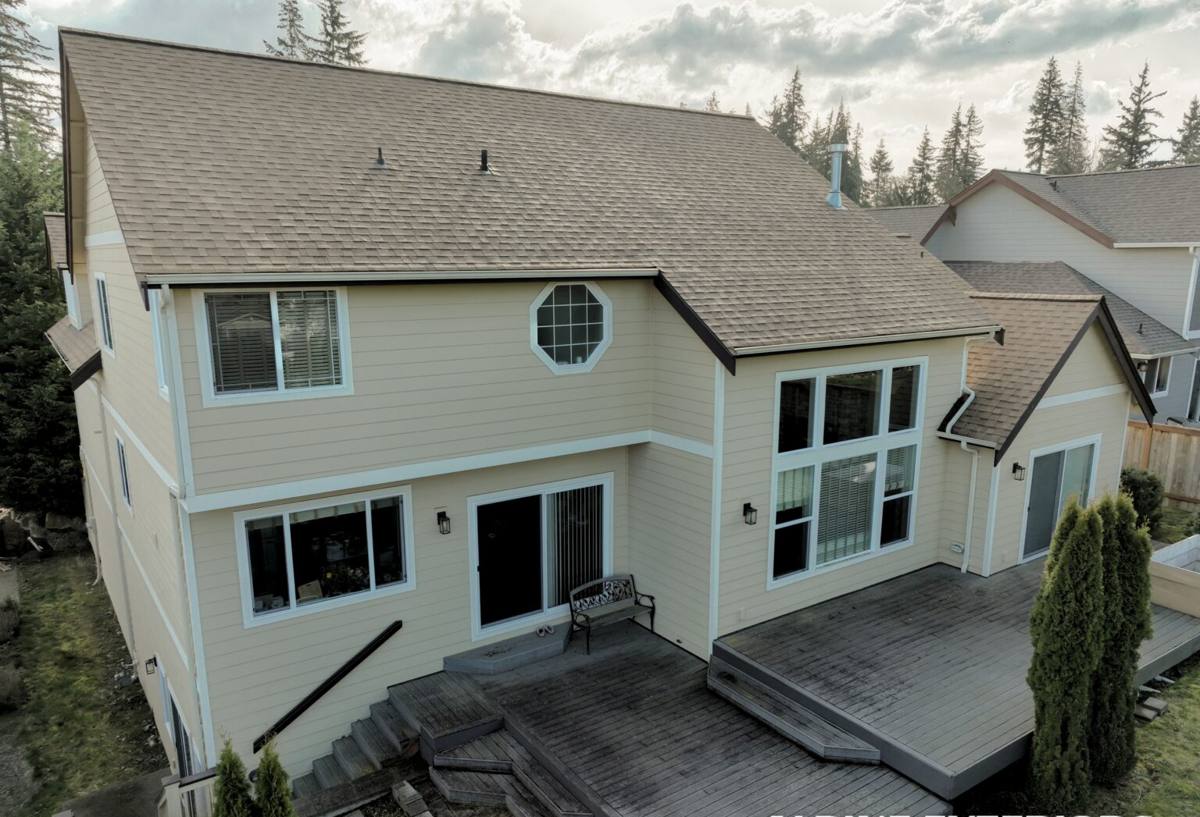
Signs a Kendall Home Needs New Windows or a Reinstall
Because Kendall properties tend to be older farmhouses, cabins, and a mix of newer infill homes, the warning signs vary by age and construction. Look for these before deciding whether you need full replacement or just better sealing and flashing work:
- Soft or discolored wood trim around the window frame, especially on the north or shaded sides of the house
- Moss or dark green streaking building up on the sill or frame faster than on the rest of the exterior
- Visible daylight or a noticeable draft along the window edge when it's windy
- Fogging or moisture trapped between double-pane glass — a sign the seal has already failed
- Windows that are hard to open, close, or lock, which often points to a frame that's shifted or swollen
- Peeling paint or bubbling on interior sills, which usually means moisture is getting past the exterior seal
- Noticeably higher heating bills in a home that hasn't had its windows touched in 20+ years
Older Kendall Homes vs. Newer Builds
Older homes in this area often still have original single-pane or early double-pane windows with wood frames that have taken decades of freeze-thaw cycles and damp winters. These are usually candidates for full replacement. Newer homes more often have a good window unit that was simply installed with shortcuts — missing flashing tape, gaps in the weather-resistive barrier, or caulk used in place of proper flashing. In those cases, the fix isn't always a new window; sometimes it's tearing out the trim, correcting the water management, and reinstalling the same unit properly.
What a Correct Window Installation Actually Involves
Window installation looks simple from the outside — pull the old unit, set the new one, trim it out. Done wrong, that same sequence traps water inside the wall for years before anyone notices. Here's what has to happen for it to hold up through a Whatcom County winter.
Flashing and Water Management
The single most important part of any window install is the flashing sequence: a sill pan to catch and direct any water that gets past the window back outside, flashing tape integrated with the house wrap in the correct shingle-lap order (bottom, sides, then top), and a drainage path so water is never trapped behind the window frame. This is the step that gets skipped most often on rushed jobs, and it's the one that causes hidden rot inside the wall cavity — damage you often can't see until it's extensive.
Air Sealing and Insulation
The gap between the window frame and the rough opening needs to be sealed with a proper low-expansion foam or backer rod and sealant — not stuffed with fiberglass insulation alone, which does nothing to stop air movement. Poor air sealing here is a common source of drafts and condensation that homeowners often blame on the window itself.
Level, Plumb, and Square Fit
A window that isn't set level and square will bind, won't lock properly, and will put uneven stress on the frame that accelerates wear on rollers, hinges, and weatherstripping. This takes shimming and checking at every step, not just eyeballing it.
Choosing the Right Window Material for Kendall
There's no single "best" window for every home — the right choice depends on your home's exposure, your maintenance tolerance, and your budget. Here's how the common options compare for a shaded, damp, rural setting like Kendall:
| Material | Moisture Resistance | Maintenance | Typical Lifespan |
|---|---|---|---|
| Vinyl | Very good — won't rot, doesn't need painting | Low; occasional cleaning | 20–30 years |
| Fiberglass | Excellent — stable in wide temperature swings, low expansion/contraction | Low | 30–40+ years |
| Wood | Requires diligent upkeep to avoid rot in a damp, shaded climate | High; repainting/resealing needed regularly | Varies widely with maintenance |
| Wood-Clad (wood interior, exterior cladding) | Good on the exterior face; interior wood still needs conditioned indoor air | Moderate | 20–30 years |
For a lot of Kendall properties — especially homes with shaded exposures or nearby tree cover — we lean toward vinyl or fiberglass for the exterior-facing performance and lower long-term upkeep. We're honest with clients about solid wood windows too: they can look great, but in a climate that doesn't give wood much of a chance to dry out, they demand a maintenance commitment that not every homeowner wants to take on. That's a trade-off we'll walk through with you, not a sales pitch either direction.
Our Installation Process
- On-site assessment: We look at your existing windows, framing condition, and any signs of past water intrusion before quoting anything.
- Accurate measurement: Every opening gets measured individually — older homes especially rarely have perfectly uniform openings.
- Removal and inspection: Once the old window is out, we check the rough opening and sheathing for hidden rot or moisture damage before installing anything new.
- Repair if needed: Any soft wood or compromised sheathing gets addressed before the new window goes in — installing a new window over a damaged opening just hides the problem.
- Flashing and sill pan installation: Proper shingle-lap flashing sequence, every time.
- Setting and shimming: Level, plumb, square, and fastened per manufacturer specification.
- Air sealing: Low-expansion foam or backer rod and sealant around the full perimeter.
- Interior and exterior trim: Finished to match your home, with attention to caulking lines that will actually shed water instead of trapping it.
- Final walkthrough: We check operation, locks, and seals with you before we consider the job done.
Mistakes We Commonly Find on Prior Installations
When we're called out to a Kendall home for a leak, draft, or fogged window, the underlying cause is almost always the same handful of installation shortcuts — not necessarily a bad window unit. We hold our own crews to a standard specifically to avoid these:
- Caulk used as the primary water barrier instead of proper flashing tape and a sill pan
- Flashing installed in the wrong order, so water gets directed behind the barrier instead of over it
- Windows fastened before checking for square, leading to premature hardware wear
- Insulation gaps around the frame left unsealed, causing drafts that get blamed on the window itself
- Trim reinstalled tight against the siding with no drainage gap, holding moisture against the frame
None of this means a particular product failed — it means the installation didn't give the product a fair chance to perform. That distinction matters when you're deciding whether to replace windows again or just have them reinstalled correctly.
What Affects the Cost of Window Installation in Kendall
Costs vary home to home, but these are the main factors that move the number up or down:
| Factor | Why It Matters |
|---|---|
| Number and size of openings | More or larger windows means more material and labor |
| Condition of existing framing | Rot or moisture damage found during removal adds repair time |
| Window material chosen | Vinyl, fiberglass, and wood carry different material costs |
| Full-frame vs. insert replacement | Full-frame replacement (removing trim and flashing entirely) costs more but is often necessary on older homes |
| Access and site conditions | Second-story windows or tight rural access can add labor time |
We'd rather give you a number after actually seeing the openings than throw out a broad estimate that doesn't hold up once we're on site.
Why Hire a Crew That Already Works in Kendall
Kendall isn't a dense suburban grid — it's a spread-out, semi-rural community, and that changes how a job gets planned and priced. A crew that already knows the area understands the driving distances between properties, the well-and-septic realities of rural Whatcom County homes, and the specific way tree cover and shade affect moisture around a house here versus a home in downtown Ferndale or along the coast. That local familiarity means fewer surprises, faster scheduling, and a more accurate first estimate.
It also means we've seen how the region's driving rain and long moss season affect installations over the years — not in theory, but on real homes across Ferndale and the surrounding Whatcom County communities. That's the experience we bring to every window we install, whether it's one replacement window or a full-home upgrade.
If you're dealing with drafty, foggy, or aging windows on your Kendall property, we're happy to take a look and give you a straight, no-pressure estimate — just fill out the form below to get started.