 Ferndale Siding
 Lummi Island Siding Takes a Different Kind of Beating
Homes on Lummi Island sit in a different exposure category than a house a few miles inland in Ferndale. Being surrounded by Puget Sound water means siding here deals with salt-laden air moving off the water, wind-driven rain that hits walls at an angle instead of falling straight down, and a shaded, damp growing season that keeps moss and algae active for most of the year. None of that is unique to any one home on the island — it's a function of geography, and it shows up in the siding long before most owners expect it to.
We work throughout Whatcom County, and the difference in wear between a waterfront or near-waterfront Lummi Island wall and a similar wall a few miles inland is real. Repairs that would be a ten-year concern elsewhere show up here in half that time if the siding wasn't built or installed for this exposure.
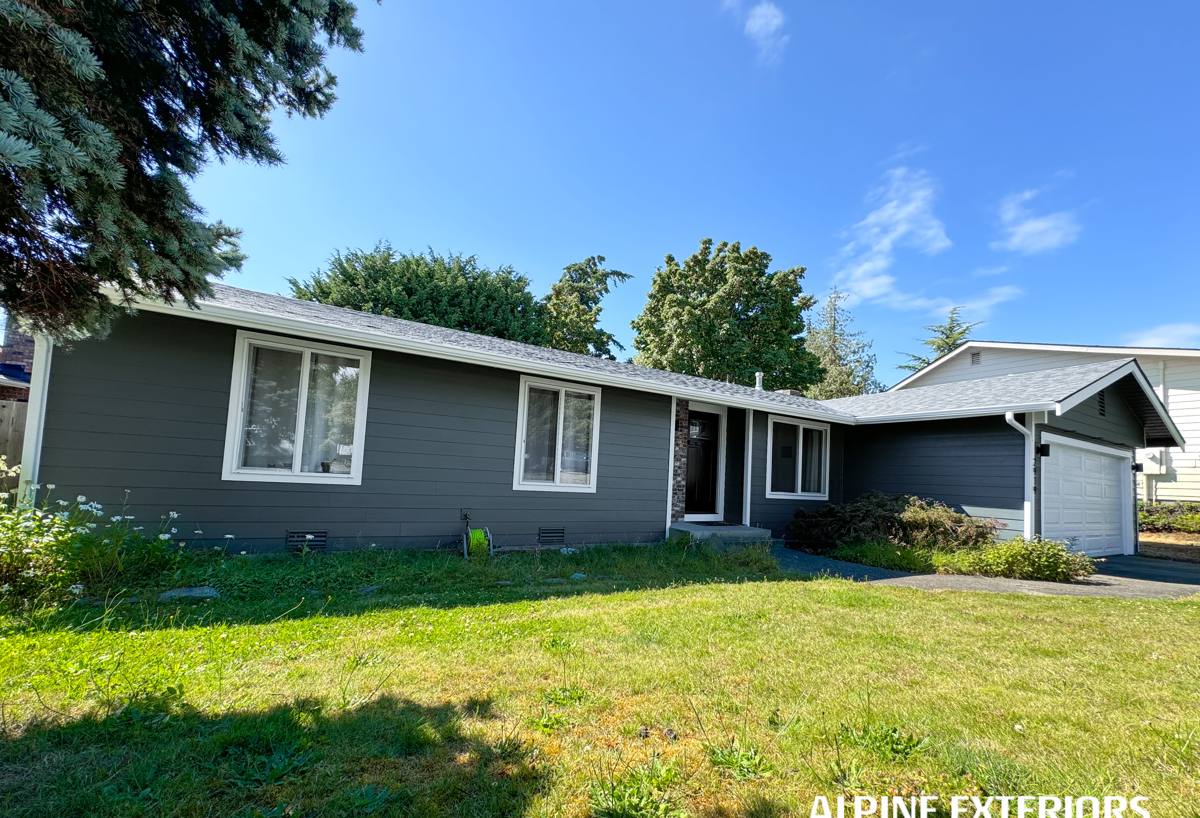
What Salt Air, Driving Rain, and Moss Actually Do to Siding
Salt Air
Airborne salt doesn't just sit on the surface — it's mildly corrosive and hygroscopic, meaning it pulls moisture out of the air and holds it against whatever it lands on. On siding, that means fasteners, trim edges, and any exposed cut ends stay damp longer than they would in a drier inland location. Over years, that accelerates corrosion of lower-quality fasteners and speeds up finish breakdown on anything not engineered for coastal exposure.
Driving Rain
Wind off the water pushes rain sideways into walls instead of letting it run straight down and off. That matters at every horizontal joint, every window and door opening, and every seam where two pieces of siding meet. A house set back from the water with calmer air can tolerate small flashing or caulking shortcuts for years. A house catching wind-driven rain off Lummi Island's shoreline usually can't — water finds the weak point faster and gets behind the cladding instead of running off it.
Moss and Algae
Tree cover, shade, and a long damp season give moss and algae a long runway to establish on north-facing walls, under eaves, and anywhere airflow is restricted. Moss holds moisture directly against the siding surface. On products that absorb water or swell when wet, that constant contact is where rot and finish failure usually start.
Signs a Lummi Island Home Needs Siding Repair
Most siding problems don't announce themselves with a hole in the wall. They show up as small signals that get easy to dismiss until they aren't. Walk the exterior of your home — especially the water-facing and shaded sides — and look for these:
- Soft, spongy, or crumbling spots when you press on the siding, especially near the bottom courses
- Paint that's peeling, bubbling, or failing in patches rather than evenly across the wall
- Visible gaps or separation at butt joints, corners, or around window and door trim
- Dark streaking, persistent moss, or algae that keeps coming back after cleaning
- Rust staining running down from fastener heads or trim fasteners
- Warping, buckling, or a wavy look to individual boards or panels
- A musty smell or visible staining on interior walls that share an exterior wall with a suspect area
Any one of these on its own might be minor. Two or three together, especially clustered on the same wall, usually means moisture has been getting behind the siding for a while.
Repair vs. Replace: How We Decide
Not every problem area needs a full re-side, and we don't push a bigger job than a home needs. The call comes down to how contained the damage is, what's causing it, and what's underneath.
| Factor | Favors Repair | Favors Replacement |
|---|---|---|
| Extent of damage | Isolated to one wall or a few boards | Spread across multiple walls or the whole exterior |
| Underlying material | Sheathing and framing are still sound | Rot has reached sheathing, framing, or insulation |
| Cause | A single flashing or caulking failure | Systemic moisture intrusion across the water barrier |
| Product match | Matching material or paint is available | Original siding is discontinued or a poor performer here |
| Age of siding | Well within expected service life | Nearing or past the end of its realistic lifespan |
We won't recommend tearing off a wall that only needs a targeted fix, and we won't patch a wall where the underlying moisture problem will just resurface in another spot next season.
What a Correct Repair Actually Involves
A siding repair that holds up on Lummi Island has to do more than cover the visible damage. Done right, it includes:
- Removing enough surrounding material to expose the full extent of the problem — not just the visibly damaged board, but the area around it that may already be wet.
- Inspecting the water-resistive barrier and flashing underneath. If the house wrap, flashing, or window/door integration is what let water in, replacing the siding without fixing that just resets the clock on the same failure.
- Letting any wet framing or sheathing dry before closing the wall back up, and replacing anything that's actually rotted rather than covering it.
- Re-flashing and sealing correctly at every joint, using materials and details suited to a wind-driven-rain exposure, not just the minimum code detail.
- Matching or upgrading the finish so the repaired section performs and weathers consistently with the rest of the wall.
Skipping any of these steps is how a "repair" turns into a callback a year or two later — usually with more damage than the first time.
Why We Repair and Replace with James Hardie, Not Vinyl, LP, or Cedar
When a repair area is small and the existing material is sound, we'll patch and match what's there. But when a section needs full replacement — a rotted wall, a discontinued product, or siding that's simply not holding up to this exposure — we install James Hardie fiber cement, and only James Hardie. We don't install vinyl, LP SmartSide, Cemplank, Allura, or unfinished wood siding, and on a site like Lummi Island the reasoning is straightforward:
- Vinyl can look fine for years, but it's a thin material that expands and contracts with temperature swings, and in driving rain it relies heavily on correct overlap and fastening to keep water out from behind — a detail that's easy to get wrong and hard to inspect once it's up.
- LP SmartSide and other wood-strand products perform well when the factory finish and seal stay intact, but they're an engineered wood product at heart, and any breach in that finish in a consistently damp, salt-exposed environment gives moisture a foothold that's harder to arrest than on a non-organic material.
- Untreated or primed cedar is a beautiful material, but it's also the one most directly vulnerable to the moss, mildew, and constant moisture cycling that this climate produces, and it demands a maintenance schedule most owners underestimate going in.
James Hardie fiber cement is non-combustible, doesn't swell or rot the way wood-based products can, and comes with a factory-applied ColorPlus finish engineered to hold color and resist the fading and moisture cycling that coastal exposure causes. Hardie also builds HZ5-rated product for higher-moisture, harsher climates, which is the right specification for an island exposure like this one. It's backed by a strong transferable warranty when installed to Hardie's specifications — which is also why correct installation, not just the material choice, is what actually determines how long a repair or a new wall lasts.
How the Repair Process Works for Lummi Island Jobs
Working on Lummi Island means building ferry timing into the schedule from the start. We plan crew arrival, material delivery, and job length around the ferry rather than treating it as an afterthought, so a repair doesn't stretch out because of avoidable scheduling gaps. In practice that means:
- An on-site assessment to confirm the cause of damage, not just the visible symptom
- A clear scope before work starts — what's being repaired, what's being inspected underneath, and what the finished result will look like
- Material and crew scheduling that accounts for ferry access, so the job runs efficiently once we're on site
- A final walkthrough so you can see and approve the completed repair before we consider the job done
We work throughout Ferndale and Whatcom County, and Lummi Island jobs get the same standard — we just plan the logistics around getting there.
Protecting the Repair After We Leave
A good repair buys you time, but the same conditions that caused the original damage don't go away. A few habits keep a repaired wall performing:
- Keep vegetation and tree limbs trimmed back from siding so walls get airflow and sunlight to discourage moss regrowth
- Rinse moss- and algae-prone walls (typically north-facing or shaded sections) once or twice a year rather than letting growth build up
- Check caulking at trim, windows, and joints annually — it's the first line of defense against driving rain and the cheapest thing to stay ahead of
- Watch for early signs listed above so small issues get caught before they spread
If you're seeing soft spots, persistent moss, failing paint, or gaps in your siding on Lummi Island, it's worth having someone look at it before the next stretch of wind-driven rain finds its way behind the wall. We offer free, no-pressure estimates — use the form below to get a straightforward assessment of what's going on and what it will actually take to fix it right.