 Ferndale Siding
 Building Decks That Hold Up in Marietta
Marietta sits close enough to the water that salt air is part of daily life, and close enough to the Nooksack floodplain and Puget Sound weather patterns that driving rain and long stretches of damp, shaded ground are just as much a factor. A deck built here has to deal with both at once: airborne salt that accelerates corrosion on fasteners and hardware, and near-constant moisture that keeps wood wet longer than it would be almost anywhere else in the state. We've built and repaired decks throughout this part of Whatcom County long enough to know which shortcuts fail here, even if they'd pass unnoticed somewhere drier.
A deck that's built for a subdivision in Spokane or a dry Eastern Washington town won't necessarily hold up in Marietta. The framing, the fasteners, the decking material, and even the way the deck is oriented relative to sun and wind all matter more here than the sales brochure for any given product will tell you.
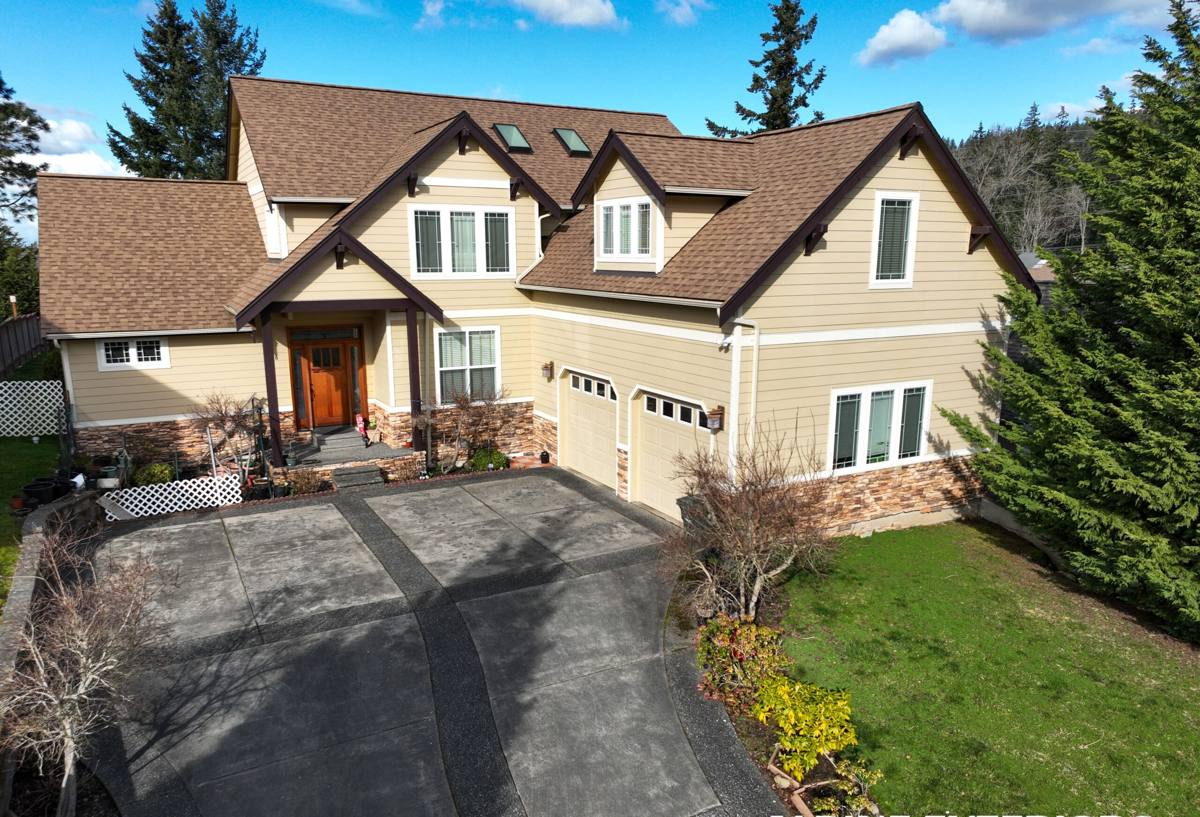
What Marietta's Climate Actually Does to a Deck
Salt Air and Metal Fatigue
Properties near Bellingham Bay and the Nooksack estuary get a steady, low-grade dose of salt-laden air. It's not the same as a deck sitting twenty feet from breaking surf, but it's enough over years to pit standard galvanized fasteners, corrode cheap post bases, and stain or streak certain metal railing systems. The damage is slow and easy to ignore until a ledger bolt or joist hanger has weakened enough to matter.
Driving Rain and Trapped Moisture
Rain here doesn't fall straight down as often as people assume — wind-driven rain gets up under railings, behind ledger boards, and into end-grain cuts that weren't sealed. Combined with our long wet season, that means wood framing and decking spend more days per year at high moisture content than in most of the country. Anywhere water can pool, wick, or sit against wood without draining or drying is where rot starts.
Moss and the Shade Problem
Marietta has plenty of tree cover and low winter sun angles, which means many decks stay shaded and damp for months at a stretch. That's ideal moss and algae territory. Moss holds moisture against the decking surface, and on smooth composite or painted wood it turns walking surfaces slick and dangerously slippery well before it looks like a serious problem.
What a Correctly Built Deck Looks Like Here
The difference between a deck that lasts twenty-plus years in this climate and one that needs major repair in eight usually comes down to details that aren't visible once the project is finished.
- Ledger board flashed and sealed properly where it meets the house — this is the single most common rot point on older Whatcom County decks
- Stainless steel or heavy-duty coated fasteners and structural hardware, not standard galvanized, given the salt exposure
- Post bases set above grade with proper drainage so posts never sit in standing water
- Joist tape or a comparable moisture barrier on top of framing before decking goes down
- Gaps and spacing sized to let the deck surface actually dry out between rain events, not just look tight when new
- Decking material chosen with moss and algae growth in mind, not just appearance on installation day
- Drainage sloped away from the house and clear of low spots where water and debris can collect
Choosing Decking Material for This Climate
There's no single "best" decking material — every option is a trade-off between upfront cost, maintenance, and how it behaves in wet, shaded, salt-air conditions. Here's how the common choices actually compare for a Marietta property, honestly.
| Material | Moisture Behavior | Maintenance | Notes for This Climate |
|---|---|---|---|
| Pressure-treated fir/hem-fir | Absorbs and releases moisture readily; can cup or check if not sealed | Needs re-staining or sealing every 2-3 years | Lowest upfront cost; requires the most diligence in a wet climate |
| Cedar | Naturally rot- and insect-resistant, but still absorbs moisture | Periodic sealing to maintain color and resistance | Good look, moderate cost; still needs a dry, well-ventilated substructure underneath |
| Composite (wood-plastic blend) | Does not rot, but can trap surface moisture and grow moss/mildew if not textured or ventilated well | Occasional washing; no staining or sealing | Strong long-term value here if the brand and board profile are chosen for drainage and grip |
| PVC/cellular decking | Fully moisture-resistant, doesn't absorb water at all | Lowest maintenance of the group | Higher upfront cost; performs very well in shaded, damp, salt-air conditions |
We don't push one brand over another as a blanket rule — the right call depends on your budget, how shaded the site is, and how much upkeep you actually want to do. What we won't do is install a decking product in a low-drainage, heavily shaded Marietta yard without also addressing the framing and airflow underneath it, because no surface material fixes a substructure that stays wet.
Framing and Structure: The Part No One Sees
Most deck problems we get called out to repair aren't decking problems — they're framing problems that were hidden under decking that still looked fine on top. A ledger board that wasn't flashed correctly can rot for years before it shows on the surface. Joist hangers that were installed with standard fasteners can corrode from years of salt air long before the wood around them fails. This is why we treat the substructure — ledger attachment, joist hardware, post bases, and beam sizing — as the part of the job that determines whether the deck lasts, regardless of what decking board sits on top.
For any deck attached to the house, proper ledger flashing and structural connection isn't optional — it's also what current building code requires, and it's the part of the job most likely to be skipped by a crew trying to finish faster.
Railings, Fasteners, and Hardware Choices
Railing systems and the hardware holding a deck together see the same salt-air exposure as everything else, and they're often the first visible sign of trouble — streaking, rust bleed, or a post that's gone soft at the base. For Marietta and the surrounding coastal-influenced parts of Whatcom County, we default to stainless steel or marine-grade coated fasteners and connectors rather than standard galvanized hardware. It costs a bit more upfront and makes a real difference over ten or twenty years of salt exposure and wet winters.
Our Process for a Marietta Deck Project
- On-site assessment: we look at sun exposure, drainage, existing structure (for replacements or additions), and how the site handles wind-driven rain
- Material and design conversation: honest trade-offs on decking material, railing style, and layout based on your budget and how much maintenance you want going forward
- Permitting: we handle the permit process for attached decks and structural work as required locally
- Framing first: ledger flashing, joist hangers, post bases, and beam work done to hold up in wet, salty conditions — not just to pass a quick look
- Decking and railing installation: spacing and fastening done for proper drainage and airflow, not just a tight-looking finish on day one
- Walkthrough: we go over basic maintenance specific to whatever material you chose, including what to watch for with moss in shaded areas
Why Hire a Crew That Already Works in Marietta
A lot of deck problems in this area trace back to a design or material choice that made sense somewhere drier but wasn't suited to Whatcom County's rain and salt exposure. A crew that regularly works Marietta and the surrounding Ferndale area already knows which ledger details fail first in this climate, which fastener grade actually holds up, and where on a given lot moss and drainage issues tend to show up years down the line. That local pattern recognition is hard to replace with a generic install crew working from a national spec sheet.
We also know the practical side of building here — how local permitting works for deck additions and replacements, and what inspectors in this area actually check on ledger attachment and structural hardware.
Maintenance That Actually Matters Here
Whatever material you choose, a few habits go a long way in this climate:
- Sweep debris and organic buildup off the deck surface regularly, especially in shaded corners where moss takes hold first
- Check and clear drainage gaps between boards at least once a season so water isn't pooling
- Inspect ledger flashing and post bases yearly for any sign of water staining or corrosion
- Re-seal wood decking on the schedule appropriate to the product — don't wait until it's visibly gray and dry
- Address moss early with a gentle wash rather than letting it build into a slip hazard
If you're thinking about a new deck, a replacement, or repairs on an existing one in Marietta, we're happy to come take a look and give you a straightforward, no-pressure estimate — just fill out the form below.