 Ferndale Siding
 Siding Repair in Marietta: Why Local Conditions Change the Job
Marietta sits close enough to the water that salt-laden air is a daily fact of life, not an occasional nuisance. Combine that with Whatcom County's long wet season, wind-driven rain off the bay, and shaded, slow-drying wall sections that grow moss for months at a time, and you get a set of stresses on exterior siding that a lot of general "handyman" repair work simply isn't built to handle. A patch that would hold up fine in a drier inland neighborhood can fail within a season or two out here.
We do siding repair work throughout the Ferndale area, and Marietta homes get a specific kind of attention because of where they sit. This page covers what actually causes siding damage in this stretch of Whatcom County, what a correct repair involves versus a cosmetic patch, and how we approach the work so it lasts.
The Marietta Conditions Siding Has to Survive
Three things do most of the damage to siding here, and they often work together rather than separately:
- Salt air. Airborne salt accelerates corrosion on fasteners, flashing, and any exposed metal trim, and it degrades paint and caulk faster than it would inland.
- Driving rain. Storms coming off the water push rain sideways into wall assemblies, not just straight down. That matters because most siding systems are designed to shed water moving downward — sideways-driven rain finds gaps that vertical rain never would.
- A long moss season. Cool, damp, shaded conditions for much of the year let moss and algae establish on north-facing and tree-shaded walls, holding moisture against the siding surface far longer than sun-exposed sections ever experience.
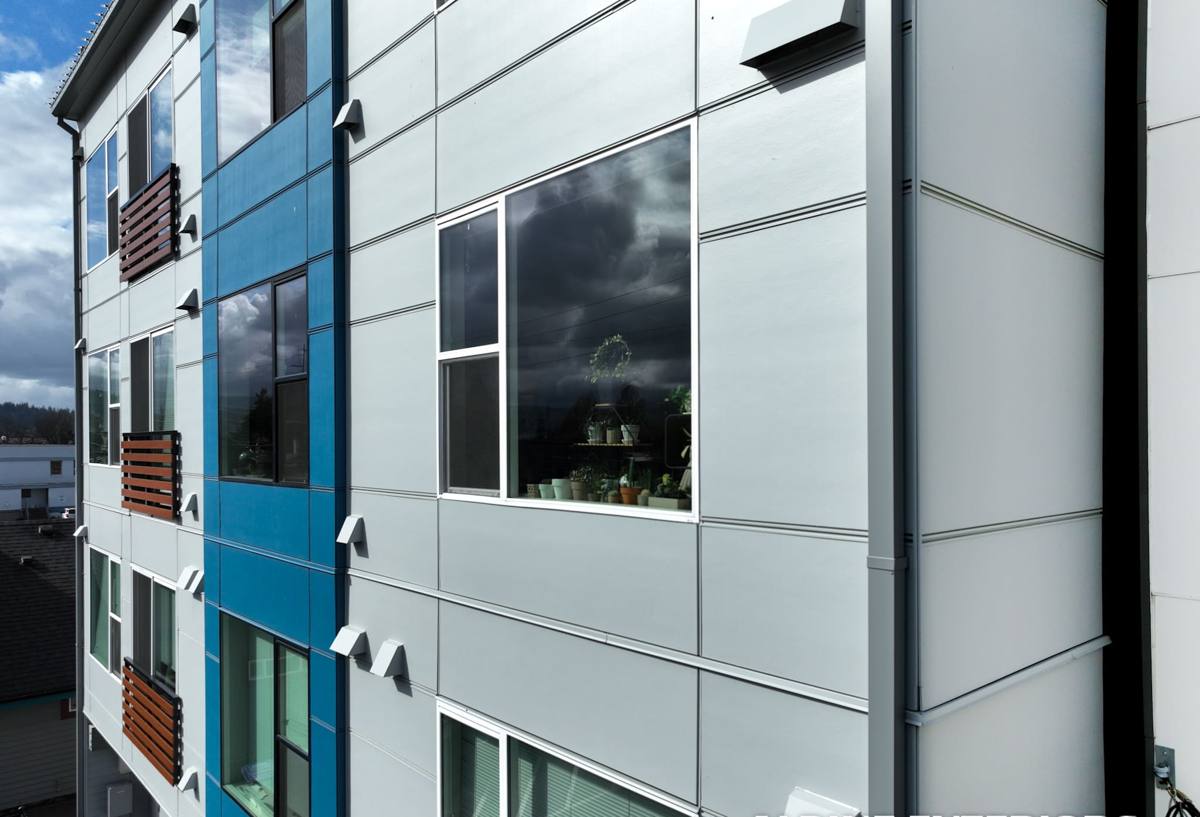
Signs Marietta Homeowners Should Watch For
Some siding damage announces itself. A lot of it doesn't — it shows up as a small cosmetic issue while the real problem is developing underneath. Here's what we look for on inspections, and what you can check yourself before calling anyone:
- Cracked, split, or buckled siding panels or boards
- Soft or spongy spots when you press on the siding near the bottom of walls or below windows
- Paint that's peeling, bubbling, or failing in one section while holding fine elsewhere
- Persistent moss, algae, or dark streaking on shaded or north-facing walls
- Visible gaps or separation at trim boards, corners, or window and door casings
- Warping, cupping, or wavy panel lines, especially on walls that catch the most wind-driven rain
- Rust staining running down from nail heads or metal flashing
Any one of these on its own might be minor. Several appearing in the same area, or damage that keeps coming back after a repaint, usually means water is getting behind the siding — and that's a different job than a cosmetic touch-up.
What's Actually Causing the Damage
Salt Air and Fastener Corrosion
Standard fasteners and flashing that aren't rated for coastal exposure corrode faster near the water. Once a fastener rusts and loses its grip, the board it's holding starts to move, which opens gaps, which lets water in — a slow chain reaction that often starts small and invisible.
Wind-Driven Rain and Water Intrusion
Siding is a rain-screen, not a waterproof membrane on its own — the actual weatherproofing happens at the housewrap and flashing layer behind it. When rain is pushed sideways with force, it stresses seams, laps, and penetrations (like hose bibs, light fixtures, and vents) that were never a problem under calmer conditions. If those details weren't installed correctly the first time, this is where it shows up.
Moss, Shade, and Moisture Retention
Moss itself doesn't eat through most siding materials, but it holds water against the surface for extended periods, which keeps that section of wall damp far longer than it should be. On wood-based or moisture-sensitive siding products, that prolonged dampness is exactly the condition that leads to swelling, delamination, and rot at the edges and butt joints.
What a Correct Siding Repair Actually Involves
A lot of "repairs" amount to caulking a crack and repainting over it. That can hide a problem for a while, but it doesn't fix what's underneath — and on a home exposed to Marietta's rain and salt air, it tends to fail again within a year or two. A repair done right starts with figuring out what's happening behind the siding, not just what's visible on top of it.
Diagnosing Before Repairing
When we open up a damaged section, we're checking the housewrap for tears, the flashing at windows and penetrations for proper lapping, and the sheathing underneath for soft or discolored wood — a sign water has already been getting through. Repairing the visible siding without addressing a torn housewrap or bad flashing detail just resets the clock on the same failure.
Matching Materials and Finish
Replacement boards need to match the existing siding's profile, exposure, and finish as closely as possible. On homes with James Hardie fiber cement, this is straightforward — Hardie's ColorPlus factory finish is manufactured to consistent, documented color standards, so a repaired section blends in rather than standing out as an obvious patch. On other siding types, exact matches can be difficult or impossible once a product has weathered for several years, which is one of several factors we walk homeowners through when deciding between a repair and a fuller replacement.
| Factor | Why It Affects the Repair |
|---|---|
| Extent of hidden water damage | Damage found at the sheathing or framing level requires more than a surface patch and adds to the scope |
| Siding material | Fiber cement holds paint and color match better over time than wood-based or vinyl products, simplifying repairs |
| Wall exposure | Sections facing prevailing wind and rain, or shaded moss-prone walls, often need more thorough repair than protected walls |
| Age and condition of surrounding siding | Older siding nearing the end of its service life may make a full section replacement more practical than patch repairs |
| Fastener and flashing condition | Corroded fasteners or failed flashing found during the work need replacing, not just the siding itself |
Repair vs. Replacement: How We Decide
Not every repair should be a repair. Part of our job is telling you honestly when a patch makes sense and when it's throwing money at a section of wall that's going to keep failing. Generally:
- Isolated damage — a cracked board, a section hit by a falling branch, damage around a single fixture — is a good candidate for a targeted repair.
- Widespread paint failure, repeated moss staining across multiple walls, or soft spots in several unrelated areas usually points to a systemic moisture issue that a spot repair won't solve.
- Siding nearing or past its expected service life, especially non-fiber-cement products showing edge swelling or delamination, is often better addressed with replacement of the affected wall sections rather than ongoing patchwork.
Why We Repair — and Rebuild — With James Hardie
We install James Hardie fiber cement siding exclusively, and that shows up in how we approach repairs too. Hardie's HZ5 product line is engineered specifically for climates with heavy moisture exposure, which fits Whatcom County's rain and Marietta's added salt-air exposure well. It's non-combustible, dimensionally stable, and doesn't swell or delaminate from moisture the way wood-based siding products can. The factory-applied ColorPlus finish is also part of why repairs blend in — the color is baked on under controlled conditions, not job-site painted, so a replacement board matches instead of standing out as a visible patch years later.
When a home currently has a different siding product and the damage is extensive enough that repeated repairs aren't holding up, we'll say so plainly and explain why we'd recommend replacing the affected sections with Hardie rather than continuing to patch a material that's fighting the local climate.
Our Siding Repair Process for Marietta Homes
- Inspection. We look at the damaged area and the surrounding wall assembly, not just the spot you called about.
- Diagnosis. We identify whether this is a surface issue or a sign of water intrusion behind the siding, and check flashing, housewrap, and fasteners in the area.
- Honest scope and quote. You get a clear explanation of what's needed and why — including if we think a repair isn't the right long-term fix.
- Repair. Damaged material is removed, any underlying issues (flashing, housewrap, rot) are corrected, and matching material is installed to spec.
- Cleanup and finish check. We make sure the repaired section is sealed, finished, and blends with the surrounding siding before we call it done.
Why a Crew That Already Works in Marietta Makes a Difference
Siding repair isn't identical everywhere in Whatcom County. A crew that regularly works close to the water already knows which wall orientations take the worst of the wind-driven rain, where moss tends to establish first, and which fastener and flashing details actually hold up under salt-air exposure versus which ones fail early. That local pattern recognition speeds up diagnosis and helps avoid repairs that look fine on day one but fail again by next winter. We also handle Ferndale-area permitting and code requirements as a matter of routine, so there's no learning curve on that end either.
If you're seeing cracking, staining, soft spots, or repeat paint failure on your Marietta home's siding, we're glad to take a look. Reach out for a free, no-pressure estimate — we'll tell you honestly what's going on and what it'll take to fix it right.