 Ferndale Siding
 Metal Roofing for Bellingham Homes
Bellingham sits close enough to the water that salt air is a real factor in how a roof ages, and far enough into the Pacific Northwest weather pattern that driving rain and a long, wet moss season are just part of owning a home here. A roof in this part of Whatcom County works harder than the same roof would in a drier, inland climate. Metal roofing has become a popular answer for homeowners who are tired of replacing composition shingles every fifteen to twenty years and want something that handles the local conditions with less fuss.
This page focuses specifically on metal roofing for homes in and around Bellingham. The climate here isn't generic Pacific Northwest weather — it's coastal-adjacent, moisture-heavy, and moss-prone in a way that changes what "doing the job right" actually means. We'll walk through what local homes need, what a correct installation involves, and how our process works.
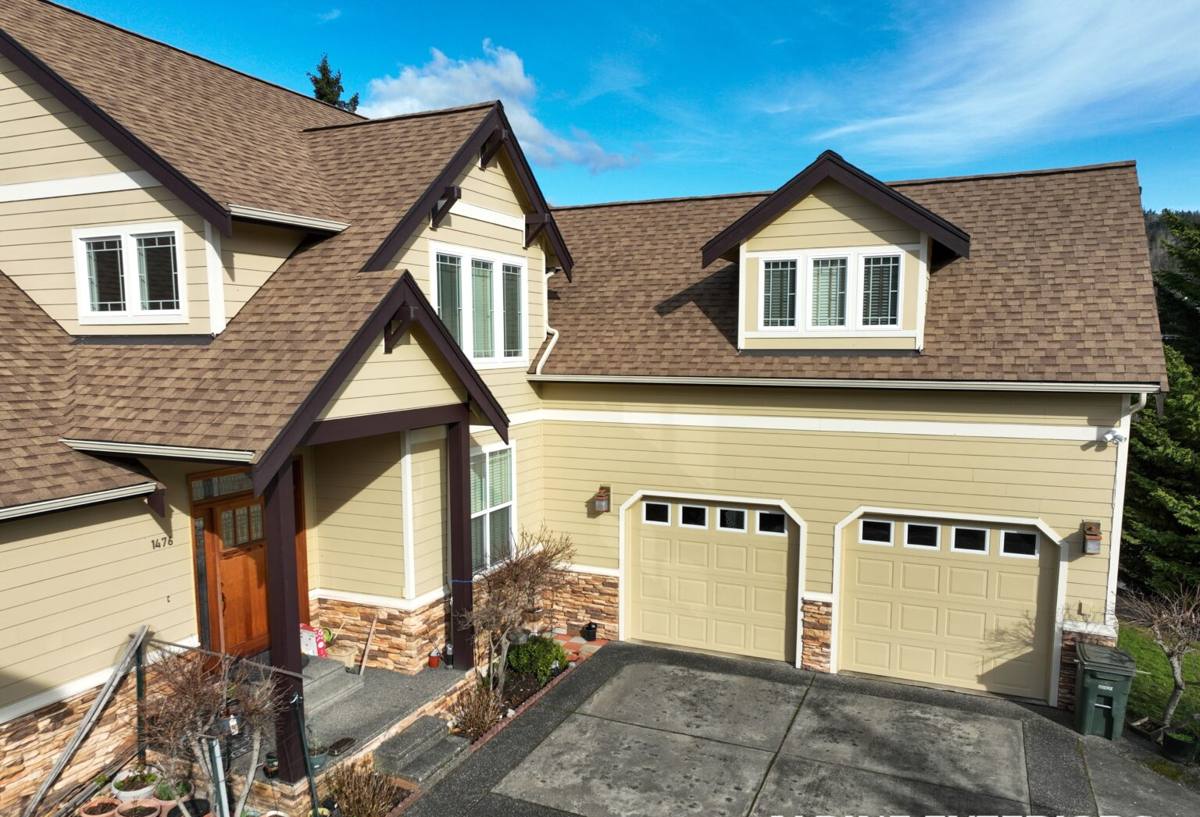
What Bellingham's Climate Does to a Roof
Salt Air and Coastal Exposure
Homes closer to Bellingham Bay and the surrounding shoreline deal with airborne salt that accelerates corrosion on anything metal — fasteners, flashing, and lower-grade panel coatings included. This doesn't mean metal roofing is a bad choice near the water; it means the specific materials and hardware matter more here than they would further inland. A roofing system that's rated and finished for coastal exposure will hold up. One that isn't will show rust streaks, fastener failure, and coating breakdown years before it should.
Driving Rain and Wind-Driven Water
Whatcom County storms don't always come straight down. Wind-driven rain off the Sound can push water sideways and upward under poorly lapped panels, around loose flashing, and into valleys that weren't detailed correctly. Metal roofing sheds water well when it's installed correctly, but the seams, laps, and penetration details are where problems actually happen — the flat panel field is rarely the issue.
The Long Moss Season
Between the shade cover common in Bellingham neighborhoods and the number of wet, mild months each year, moss and algae growth is close to constant. Moss holds moisture against a roofing surface, and on organic materials like composition shingles that moisture retention shortens the roof's life. Metal roofing doesn't give moss the same foothold, but it isn't immune — moss and debris can still build up in valleys, at the base of chimneys, and anywhere water sits or airflow is blocked.
Choosing the Right Metal Roofing System
"Metal roofing" covers a few different systems, and the right one depends on the home, the budget, and how much the roof will be visible from the street. We install standing seam, exposed-fastener panel systems, and stone-coated steel, and we'll talk through the honest trade-offs of each rather than pushing whichever is easiest to install.
Standing Seam
Standing seam panels use raised, interlocking seams with fasteners hidden underneath the panel rather than exposed to the weather. That matters in a climate like ours — every exposed fastener is a potential leak point and a spot where a screw's rubber washer can degrade over time, especially with UV exposure and temperature swings. Standing seam costs more up front but generally needs the least long-term attention.
Exposed-Fastener Panels
Exposed-fastener systems (sometimes called 5V or corrugated panels) are a lower-cost way to get a metal roof, and they perform fine when installed with the right fastener spacing, gasketed screws, and periodic maintenance in mind. The trade-off is that the fasteners themselves are the roof's weak point over a 20-30 year span, particularly with salt air in the mix. We'll be direct with you about that maintenance expectation rather than glossing over it.
Stone-Coated Steel
Stone-coated steel panels are formed to mimic shake or tile profiles while keeping the underlying steel's durability. They're a good fit for homeowners who want a metal roof's performance without the look of flat panels, though they cost more than basic exposed-fastener systems.
| System | Fasteners | Typical Lifespan | Best For |
|---|---|---|---|
| Standing Seam | Concealed | 40-70 years | Long-term, low-maintenance ownership |
| Exposed-Fastener Panel | Exposed, gasketed | 25-40 years | Budget-conscious metal roofing |
| Stone-Coated Steel | Concealed under coating | 40-50 years | Shake or tile appearance with steel durability |
What a Correct Installation Actually Involves
Metal roofing has a reputation as a "forever roof," but that reputation only holds if the installation underneath the panels is done right. The panels themselves are rarely what fails — the details around them are.
- Deck inspection and repair: Any soft, rotted, or water-damaged decking gets identified and replaced before anything else happens. Installing new roofing over a compromised deck just hides the problem.
- Ice and water shield at vulnerable areas: Eaves, valleys, and roof-to-wall transitions get a self-adhering waterproof membrane underneath the metal, since these are the areas most exposed to wind-driven rain and standing water.
- Synthetic underlayment across the field: A quality synthetic underlayment adds a second line of defense and helps manage any condensation that forms on the underside of the metal.
- Proper fastening pattern: Panel spacing and fastener placement follow the manufacturer's specification for our wind and rain exposure — not a generic pattern used everywhere.
- Flashing and trim at every penetration: Chimneys, vents, skylights, and wall transitions get custom-formed flashing rather than caulk-and-hope solutions.
- Ventilation: Metal roofing needs proper attic and ridge ventilation to prevent condensation from forming underneath the panels, which is a common cause of hidden moisture problems in metal roofs installed without enough airflow.
Cost Factors to Understand
Metal roofing costs more per square foot than composition shingles up front, and the honest answer for most homeowners is that it pays that back over time through longevity rather than any single line item. What actually moves the price on a given project comes down to a handful of factors:
| Factor | Why It Matters |
|---|---|
| Panel system chosen | Standing seam costs more than exposed-fastener panel; stone-coated steel falls in between |
| Roof pitch and complexity | Steep roofs, multiple valleys, and dormers add labor and material waste |
| Tear-off vs. overlay | Removing an existing roof adds cost but allows a full deck inspection |
| Panel gauge and finish | Heavier gauge steel and higher-grade coatings cost more but resist coastal corrosion better |
| Roof size and access | Larger roofs and difficult site access affect labor time |
We give straightforward, itemized estimates so you can see where the money is going rather than a single bottom-line number.
Our Process for Bellingham Roofing Projects
The steps below are the same regardless of which metal system you choose — they're what makes the difference between a roof that performs for decades and one that causes problems in five years.
- On-site assessment: We inspect the existing roof, deck condition, ventilation, and any specific exposure concerns (proximity to the water, shade and moss patterns, valley design).
- Written estimate: A clear breakdown of panel system, materials, and labor, with the trade-offs explained so you can make an informed decision.
- Tear-off and deck prep: Old roofing is removed and the deck is inspected and repaired as needed before anything new goes down.
- Dry-in: Ice and water shield and synthetic underlayment go down first, protecting the home the moment the old roof comes off.
- Panel installation: Panels are installed to manufacturer spec for our wind and rain exposure, with attention to fastening pattern and seam alignment.
- Flashing, trim, and ventilation: Every penetration and transition gets properly formed flashing, and ventilation is checked and corrected if needed.
- Final walkthrough: We go over the completed roof with you, including any maintenance expectations specific to the system installed.
Moss, Algae, and Long-Term Maintenance
Metal roofing resists moss far better than composition shingles because there's no organic granule surface for it to root into, but a metal roof still needs occasional attention in a climate as wet and shaded as ours. Debris that collects in valleys or against a chimney can hold moisture against the panel finish over time, and gutters clogged with moss and needles can back water up under the roof edge. A yearly check — clearing debris, confirming gutters drain freely, and looking over flashing and seams — goes a long way toward getting the full lifespan out of the system. We're happy to walk homeowners through what to look for, or to handle that check as part of a maintenance visit.
Why Hire a Crew That Already Works Bellingham
Metal roofing failures we get called to fix almost never come down to bad panels — they come down to installation shortcuts that don't show up until the first real storm season. A crew that already works Bellingham and the surrounding Whatcom County area knows what the wind-driven rain does to a poorly lapped valley, what salt air does to the wrong grade of fastener, and how much moss buildup is normal versus a sign of a drainage problem. That local, hands-on familiarity is worth more than a lower bid from a crew that doesn't usually work this coastline.
As a Ferndale-based contractor, we're not driving in from out of the area for a one-off job — we're working roofs in this region regularly, which means we stand behind what we install and we're around if a question comes up after the fact.
Questions Worth Asking Before You Hire
- Is the panel gauge and coating rated for coastal or salt-air exposure, or a standard inland-grade product?
- Will fasteners be gasketed and spec'd for our wind and rain exposure, or a generic fastening pattern?
- Does the estimate include ice and water shield at eaves and valleys, or just the panels themselves?
- Is deck repair priced separately, or is it a flat "tear-off and install" number that assumes a perfect deck underneath?
- Will ventilation be assessed and corrected if it's inadequate for a metal roofing system?
- Is the crew licensed and insured to work in Washington, and can they speak specifically to Whatcom County conditions?
If you're weighing metal roofing for a home in Bellingham or elsewhere around Ferndale, we're glad to take a look and walk you through what your specific roof needs — no pressure, no upsell. Use the form below to request a free estimate.