 Ferndale Siding
 Birch Bay Roofs Work Harder Than Most
Birch Bay sits right on the water, and that changes what a roof has to deal with compared to a house a few miles inland. Salt-laden air moves off the bay and settles on every exposed surface, including your shingles, flashing, and fasteners. Add Whatcom County's long wet season, driving rain that comes in sideways during winter storms, and a moss season that can stretch from fall through spring under the tree cover common in this area, and you've got a roof that ages faster than the manufacturer's brochure suggests. A roof built for a dry inland climate simply doesn't hold up the same way out here.
This page is specifically about full roof replacement for Birch Bay homes. If you're dealing with an aging roof, storm damage, or a roof that's simply reached the end of its service life, here's what a correct installation looks like in this environment, how we approach it, and what to actually watch for when hiring someone to do the work.
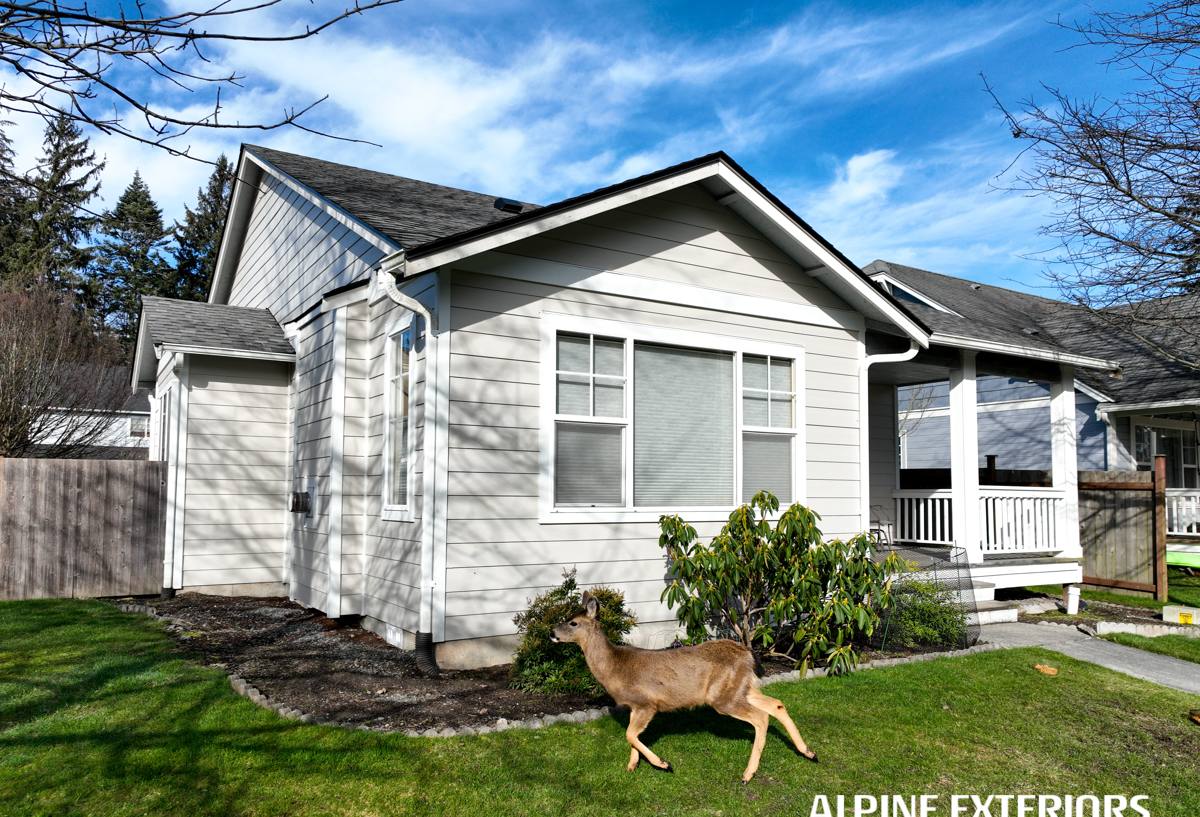
What Salt Air, Rain, and Moss Actually Do to a Roof
Salt Air
Airborne salt accelerates corrosion on any exposed metal — nail heads, flashing, vent stacks, and gutter hardware. Standard fasteners can start showing rust streaks years before they would inland. This is a metallurgy problem, not a workmanship problem, and it means fastener and flashing choice matters more here than in a lot of other parts of the county.
Driving Rain
Wind-driven rain off the bay doesn't fall straight down — it gets pushed sideways and upward under roof edges, around penetrations, and into any gap in the flashing. A roof that would shed water fine in a calm, straight-down rain can still leak in Birch Bay if the underlayment and flashing details aren't built for wind-driven moisture specifically.
Moss and Sustained Moisture
Shade, humidity, and mild temperatures are exactly what moss wants, and a lot of Birch Bay lots have tree cover that keeps roof sections damp for extended stretches. Moss holds moisture against the roofing surface, works its way under shingle edges over time, and can lift material enough to create a path for water. Left unmanaged for years, it shortens the roof's life regardless of how good the original installation was.
What a Correct Roof Replacement Involves
A new roof is more than laying down shingles. In a coastal, high-moisture climate like Birch Bay's, the details underneath and around the shingles are what actually determine whether the roof performs for its full expected life.
- Full tear-off: old material removed down to the deck so we can actually see the condition of the sheathing, not just cover up problems.
- Deck inspection and repair: any soft, rotted, or water-stained sheathing gets replaced before anything new goes down.
- Ice-and-water shield at vulnerable areas: eaves, valleys, and penetrations get a self-adhering waterproof membrane, not just standard felt.
- Synthetic underlayment across the field: a water-resistant layer that gives a real second line of defense if wind-driven rain gets past the shingles.
- Corrosion-resistant fasteners and flashing: matched to the salt-air exposure rather than the cheapest standard option.
- Properly balanced ventilation: intake at the eaves and exhaust at the ridge, sized to the attic, to keep moisture from building up from the inside.
- New flashing at every penetration and transition: chimneys, skylights, sidewalls, and valleys — old flashing gets replaced, not reused.
Skip any one of these and you can still end up with a roof that looks fine from the driveway but fails early where you can't see it — at the valleys, the penetrations, or from the inside out through the attic.
Choosing a Roofing Material for This Climate
There's no single "best" roofing material for every home — it depends on your roof's exposure, your budget, and how much long-term maintenance you're willing to keep up with. Here's an honest comparison of the main options we install, specifically as they perform in a salt-air, high-moisture environment like Birch Bay.
| Material | Salt Air Performance | Moss Resistance | Maintenance |
|---|---|---|---|
| Architectural Asphalt Shingle | Good with corrosion-resistant fasteners | Moderate — benefits from periodic cleaning | Low to moderate |
| Standing Seam Metal | Very good with coastal-rated coatings | Good — sheds moss more easily than textured surfaces | Low |
| Composite/Synthetic Shingle | Good — resistant to moisture absorption | Moderate to good | Low |
| Cedar Shake | Requires diligent maintenance in salt exposure | Poor without regular treatment | High |
We don't install cedar shake on Birch Bay homes as a standard recommendation. It's a beautiful material, but in a shaded, moisture-heavy, salt-air environment it demands a maintenance schedule most homeowners don't want to keep up with — regular treatment, moss removal, and closer monitoring for rot. That's a trade-off worth knowing before you commit to it, not a knock on the material itself.
Ventilation: The Part You Don't See That Matters Most
A lot of premature roof failures near the water trace back to attic moisture, not the shingles themselves. Warm, moist air from inside the house rises into the attic. Without balanced intake and exhaust ventilation, that moisture condenses on the underside of the deck, saturates insulation, and rots sheathing from the inside — all while the roof surface looks perfectly normal from outside. In a climate that already delivers plenty of moisture from the outside, an under-ventilated attic just adds a second source of damage working against the same roof.
When we replace a roof, checking and correcting ventilation is a standard part of the job, not an upsell. We look at existing soffit vents, ridge venting, and attic airflow, and we'll tell you plainly if something needs to change.
Our Installation Process
- On-site inspection and estimate: we look at your current roof, deck condition where accessible, ventilation, and any problem areas before quoting anything.
- Material selection: we walk through the trade-offs for your specific roof — exposure, shade, budget, and how the house is used.
- Scheduling around weather: we watch the forecast closely and plan tear-off days to minimize how long your deck is exposed.
- Tear-off and deck inspection: old roofing comes off, and any deck damage gets identified and priced before we move forward.
- Underlayment, flashing, and ventilation installation: the parts of the job that determine long-term performance.
- Final roofing material installation: installed to manufacturer spec so your warranty is actually valid.
- Site cleanup: nails, debris, and old material hauled off — we don't leave a mess behind.
- Final walkthrough: we go over the finished roof with you before calling the job done.
What Drives Cost on a Birch Bay Roof Replacement
Every roof is different, and we won't quote a number without seeing yours, but these are the factors that consistently move the price up or down.
| Factor | Why It Matters |
|---|---|
| Roof size and pitch | More square footage and steeper pitches mean more material and labor time |
| Number of layers to remove | Tearing off multiple old layers adds labor and disposal cost |
| Deck condition | Rotted or soft sheathing needs replacement before new roofing goes down |
| Material choice | Asphalt, metal, and composite options carry different material and install costs |
| Roof complexity | Valleys, dormers, chimneys, and skylights all add flashing detail work |
| Access | Tree cover, steep lots, or limited driveway access can affect labor time |
As a general guide, expect a straightforward asphalt shingle replacement to run in the range most Whatcom County homeowners are quoted for a mid-size home, with metal roofing and complex rooflines pushing toward the higher end. We'll give you specific numbers after we've actually looked at your roof.
Signs Your Birch Bay Roof May Need Replacing
- Shingles that are curling, cracking, or losing granules in large patches
- Moss buildup that keeps returning within months of cleaning
- Daylight visible through the attic roof deck
- Water stains on interior ceilings, especially after wind-driven storms
- Soft or spongy spots when walking the roof surface
- Flashing that's visibly rusted, lifted, or separated from the surface it meets
- A roof at or past its expected service life with no recent major repairs
One or two of these on their own might mean a repair is enough. Several at once, or a roof that's already 20+ years old, usually means it's time to talk replacement rather than keep patching.
Why It Matters That We Already Work in Birch Bay
A crew that only occasionally works this close to the water tends to default to standard inland practices — standard fasteners, standard flashing, standard ventilation assumptions. None of that is wrong on an inland roof, but out here it's the difference between a roof that lasts its full expected life and one that starts showing corrosion and moisture problems years early. Working regularly in Birch Bay and along the rest of the Whatcom County coastline means we default to salt-air-appropriate materials and moss-conscious detailing as standard practice, not as something we have to be reminded to think about.
We're a Ferndale-based crew, so Birch Bay isn't a special trip for us — it's part of our regular service area, and we know the kind of wear this stretch of coastline puts on a roof because we see it on a routine basis.
Get a Straight Answer on Your Roof
If your roof is showing its age, took storm damage, or you're just trying to plan ahead before it becomes an emergency, we're happy to take a look and give you an honest assessment — no pressure, no upsell script. Fill out the form below for a free estimate on your Birch Bay roof replacement.