 Ferndale Siding
 Siding That Has to Work in Nooksack's Climate, Not Just Look Good on Day One
Homes in and around Nooksack sit in one of the more punishing exterior environments in Whatcom County. You've got marine air drifting in off the Salish Sea, long stretches of driving rain through fall and winter, and a moss season that can run eight months or longer on north-facing walls and anything shaded by trees or a neighboring structure. None of that is unusual for this corner of Washington. What is unusual is how much damage it does to siding that wasn't built, or installed, with those conditions in mind.
Salt-tinged air corrodes fasteners and metal trim faster than inland environments. Constant moisture cycling — wet, dry, wet again — is what breaks down paint film, swells wood fiber, and feeds the moss and algae that root into any surface with texture and shade. A siding installation that's correct on paper but rushed in the field will show cracks in that armor within a few years, usually right where flashing, fastening, or drainage detailing got shortcuts. For Nooksack homeowners, siding installation isn't a cosmetic project. It's a weather envelope decision.
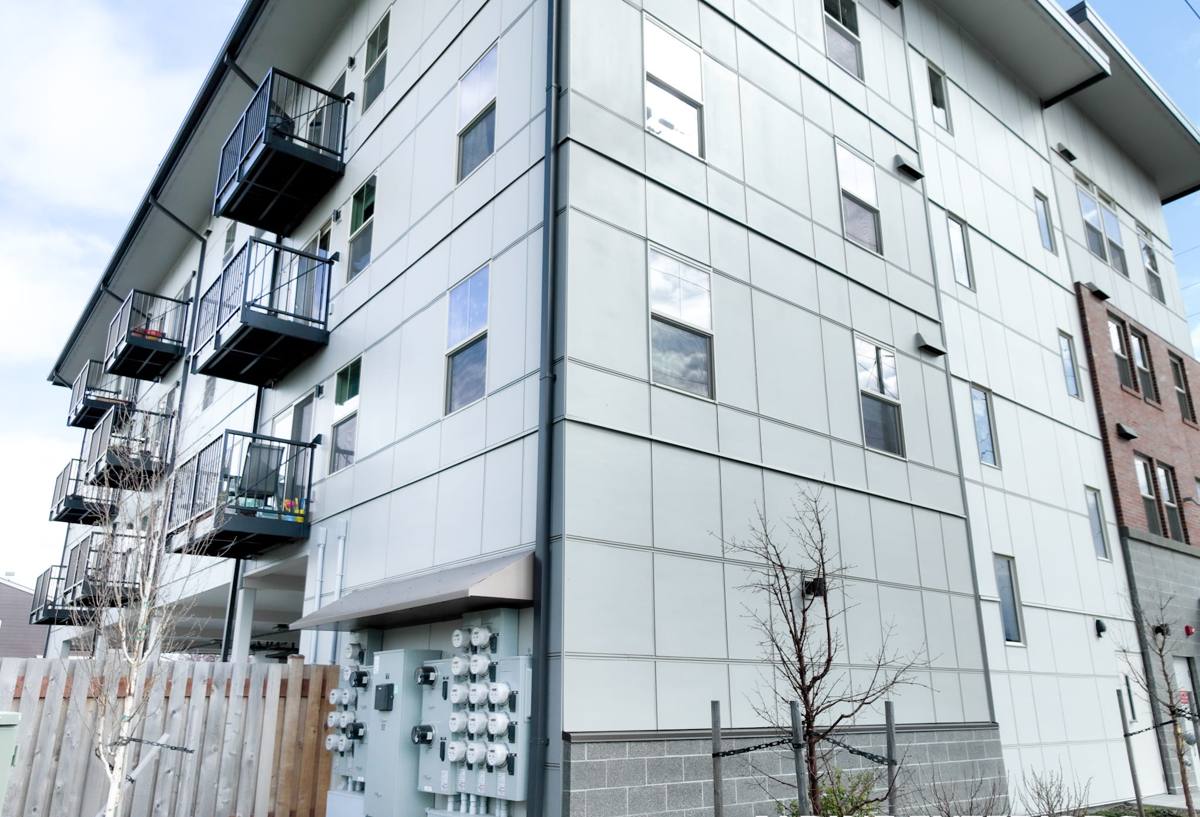
What a Correct Siding Installation Actually Involves
Most siding failures we get called out to inspect aren't material failures — they're installation failures. The material held up fine; the details around it didn't. A correct install has to get right at every layer, not just the visible one.
The Weather-Resistive Barrier and Flashing Come First
Before a single siding board goes up, the wall needs a continuous, properly lapped weather-resistive barrier, with flashing integrated at every window, door, deck ledger, and penetration. In a climate that sees as much driving rain as this one, water is going to reach the barrier eventually — the barrier and flashing system is what keeps it from reaching the framing. Skipping or rushing this step is the single biggest cause of hidden rot behind siding that looks fine from the curb.
Fastening and Clearances Matter More Here Than in Drier Climates
Fastener spacing, type, and depth all affect how well siding sheds water and resists wind-driven rain. Ground clearance and clearance from roof lines, decks, and grade also matter — siding installed too close to soil or hardscape stays damp longer and is one of the first places moss and mildew take hold. These clearances are code minimums, but in a moss-prone area like Nooksack, we treat them as the baseline, not the target.
Trim and Joint Detailing Determine How the Wall Ages
Every horizontal joint, corner, and trim intersection is a place water can get behind the siding if it's not caulked, flashed, or lapped correctly. This is where installation quality shows up first — usually within two or three wet seasons if it was done wrong, and usually not at all for decades if it was done right.
Why We Install Only James Hardie Fiber Cement
We standardized on James Hardie fiber cement siding for every home we side, including in Nooksack, and we don't install vinyl, LP SmartSide, cedar, or other fiber cement brands. That's not a marketing position — it's a decision based on what actually holds up in this climate with the least long-term maintenance burden for the homeowner.
Fiber cement doesn't absorb moisture the way wood-based products do, which matters directly in a region with this much sustained rain and humidity. It's non-combustible, which is an increasingly relevant consideration given wildfire smoke and ember exposure trends across the Pacific Northwest. And Hardie's ColorPlus factory-applied finish is baked on under controlled conditions, which holds color and resists the fading and peeling that field-applied paint struggles with in marine air. Hardie also builds climate-specific HZ product lines engineered for moisture exposure, which is exactly the profile Whatcom County presents.
We're happy to talk through the trade-offs of other materials honestly if you're comparing options — but everything we install ourselves is Hardie, because it's what we're willing to warranty our workmanship against.
Our Siding Installation Process for Nooksack Properties
- On-site assessment. We walk the exterior, check existing siding and sheathing condition, note moss/shade patterns, drainage, and any trouble spots specific to the lot.
- Tear-off and sheathing inspection. Old siding comes off and we inspect the sheathing underneath for rot or moisture damage before anything new goes on — this is the step that catches problems a re-side-over-existing-siding approach would hide.
- Weather-resistive barrier and flashing installation. Continuous barrier, properly lapped, with flashing integrated at every opening and penetration.
- James Hardie siding installation to manufacturer spec. Correct fastening, clearances, and joint treatment throughout — installed by crews trained specifically on Hardie's installation requirements, which is also what keeps the manufacturer warranty intact.
- Trim, caulking, and final detailing. All transitions sealed and finished so water has nowhere to get behind the wall assembly.
- Final walkthrough. We go over the finished work with you directly before calling the job done.
Comparing Siding Materials for a Climate Like This
If you're weighing options before committing, here's how the materials most commonly considered for this region stack up against the conditions Nooksack homes actually face.
| Material | Moisture / Moss Resistance | Salt Air Durability | Maintenance Burden |
|---|---|---|---|
| James Hardie fiber cement | Strong — doesn't swell or rot; factory finish sheds moss buildup more easily | Strong — non-metallic surface, stable in marine air | Low — occasional wash, no repainting cycle with ColorPlus finish |
| Vinyl | Moderate — won't rot but can trap moisture behind panels if installed poorly; moss grows readily on textured surfaces | Moderate — can become brittle over time | Low, but prone to cracking, warping, and fading in sun/temperature swings |
| Wood or primed spruce/LP-style siding | Weaker — wood-based substrate is vulnerable to prolonged moisture exposure and rot if finish fails | Weaker — finish breakdown accelerates in salt-tinged, humid air | High — regular repainting and moisture monitoring required |
| Cedar | Moderate — natural resistance but requires consistent sealing/staining to keep performing | Moderate — finish degrades faster near marine air | High — ongoing sealing, staining, and moss treatment |
This is a general comparison, not a claim about any specific product line failing — every material can perform well or poorly depending on installation quality. But the maintenance and moisture-resistance gap is real, and it's the reason fiber cement is what we put on homes in this area.
Signs Your Current Siding May Already Be Failing
A lot of siding problems in this climate develop slowly and get dismissed as cosmetic until they're not. If you're seeing any of the following, it's worth having someone look at what's happening behind the surface, not just on it.
- Persistent moss or dark streaking that comes back within weeks of cleaning
- Soft, spongy, or bubbling spots when you press on the siding
- Visible gaps or separation at trim, corners, or window/door frames
- Paint that's peeling, cracking, or chalking faster than expected
- Warping, buckling, or panels that no longer sit flat against the wall
- A musty smell near exterior walls or noticeably higher energy bills
Any one of these can be minor. Several together, especially on the shaded or weather-facing sides of the house, usually mean water has been getting past the siding for a while.
What Drives Cost on a Nooksack Siding Project
Every home is different, so we don't post fixed pricing, but the main cost factors for siding installation in this area are consistent enough to plan around.
- Tear-off scope — how much of the existing siding and sheathing needs to come off versus repair
- Sheathing condition — hidden rot found during tear-off adds real but necessary cost
- Home size and complexity — roofline breaks, dormers, and multiple stories add labor
- Trim and detail work — more corners, window returns, and transitions mean more finishing time
- Product line and profile — Hardie offers multiple plank widths, textures, and the HZ5 climate-engineered line, which affects material cost
We walk every project in person before quoting, because the biggest cost swings almost always come from what's underneath the old siding, not the new material itself.
Why It Matters to Hire a Crew That Already Works in Nooksack
Siding installed by someone unfamiliar with this specific microclimate tends to make the same mistakes: underestimating moss exposure on shaded walls, under-flashing against sustained rain, or not accounting for how quickly salt-tinged air ages exposed fasteners and trim. A crew that regularly works Whatcom County homes has already seen how siding performs — or fails — in these exact conditions over multiple wet seasons, and builds that knowledge into how the job gets done, not just what material gets used.
That local track record is also what makes warranty conversations straightforward. We're not guessing at how a product will hold up here — we're installing the same system we've already put on homes facing the same rain, the same moss pressure, and the same air.
Get a Straightforward Estimate for Your Nooksack Home
If your siding is showing wear, or you're planning ahead of a problem rather than reacting to one, we're glad to take a look and give you an honest read on what your home actually needs. There's no pressure and no obligation — just a clear assessment and a straight answer, using the form below to get started.