 Ferndale Siding
 Roofing a Peninsula Cut Off From the Rest of Whatcom County
Point Roberts sits in a spot most roofing crews never have to think about. It's a small peninsula bounded by water on three sides, physically separated from the rest of Whatcom County by the Strait of Georgia and Boundary Bay, and reachable by land only by driving through Canada. That geography doesn't just affect how you get groceries or how a delivery truck finds its way in — it shapes what a roof here has to survive and how a roofing job actually has to be scheduled and run.
Homes on this peninsula take on wind and salt-laden air with almost nothing to break it up first. Rain doesn't just fall here, it gets pushed sideways and driven up under roof edges during the region's wetter stretches. And on shaded or north-facing slopes, especially under tree cover, moss and algae settle in for a long season and don't let go until well into the warmer months. None of that makes asphalt shingles the wrong material for a Point Roberts roof — it's still the most practical, cost-effective option for the large majority of homes here. It just means the install has to account for conditions that are genuinely more aggressive than what a roof faces a few miles inland.
This page covers what a correct asphalt shingle roof looks like specifically for a Point Roberts home, what the job should actually involve from tear-off to final cleanup, and why the logistics of this particular stretch of coastline matter as much as the materials do.
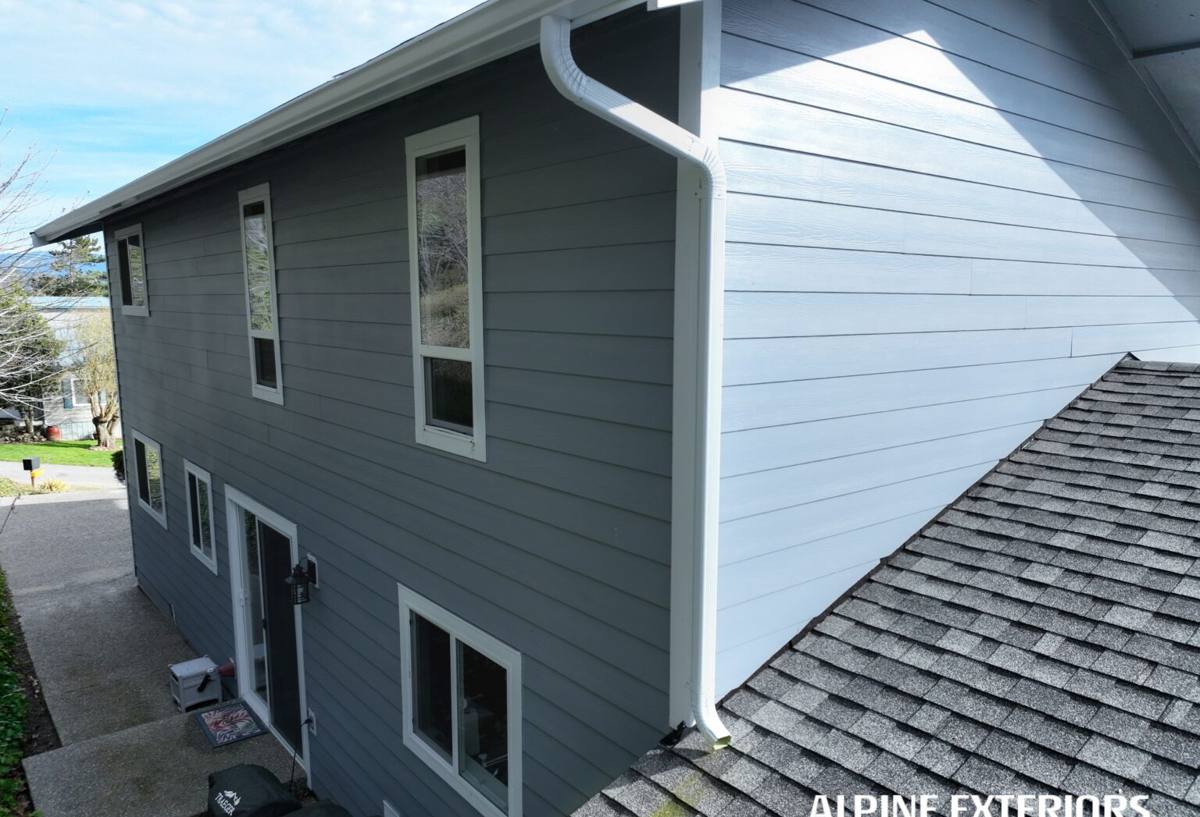
What Point Roberts' Exposure Actually Does to a Roof
A roof a few miles east, sheltered by more tree cover and more distance from open water, faces a noticeably easier set of conditions than a roof sitting exposed on this peninsula. Three things in particular do most of the damage over time.
Salt Air and Corrosion
Constant exposure to salt-laden marine air speeds up corrosion on any exposed metal that isn't properly rated for it — roofing nails, drip edge, step flashing, valley metal. A flashing detail that would hold up fine well inland can start rusting through in a fraction of the time out here, and a rusted flashing joint is one of the most common sources of a leak that doesn't show up inside the house until years after it started.
Wind-Driven Rain
With water on three sides and little to break up the wind before it reaches a roof, rain gets driven sideways and forced upward under shingle tabs rather than simply running off the field of the roof. That's a very different load than a standard underlayment system is built to handle, and it's exactly where a lower-grade install starts to leak first — at valleys, ridges, and shingle edges rather than in the open field.
A Long Moss Season
Shaded and north-facing roof planes hold moisture through much of the year in this climate, and moss takes hold quickly once it gets a foothold. Left untreated, it works its way under shingle edges, holds water against the roof surface, and shortens the life of the shingles underneath it — a slow problem that's easy to ignore until it isn't.
What a Correct Install Looks Like Here
Replacing a roof correctly isn't a matter of stripping the old shingles and laying down new ones. It's a layered system, and on a peninsula like this, every layer has to be built with the local exposure in mind, not installed to a generic minimum standard.
- Corrosion-resistant fasteners and flashing: Roofing nails, drip edge, and step flashing rated to hold up against sustained salt air exposure, not standard-grade metal that starts pitting within a few seasons.
- Underlayment built for wind-driven rain: Synthetic or self-adhered underlayment gives real secondary protection where basic felt falls short against rain that's being pushed sideways and up rather than falling straight down.
- Ice-and-water shield at high-risk transitions: Extra membrane protection at eaves, valleys, and penetrations, exactly where wind-driven rain is most likely to find a way in.
- Algae-resistant shingle granules: Copper or zinc-infused granules that slow moss and algae growth on shaded slopes, which matters more here given how long those slopes stay damp.
- Balanced attic ventilation: Proper intake and exhaust airflow keeps the underside of the deck dry, which protects the roof from the inside at the same time weather is working on it from the outside.
None of these are exotic upgrades. They're the difference between a roof that's built for the location it's actually sitting on and one that was installed to a generic spec and left to find out the hard way.
The Logistics That Shape a Point Roberts Roofing Job
This is the part of the job that has nothing to do with shingles and everything to do with getting the work done well. Point Roberts is a U.S. exclave — the only way in or out by land is through Canada, which means every material delivery, every crew arrival, and every schedule adjustment has to account for a border crossing that a job a few miles east simply doesn't have to think about.
A crew unfamiliar with that reality tends to underestimate it: showing up short a bundle of shingles or a roll of underlayment isn't a quick run to the nearest supply house the way it would be almost anywhere else. It means a delay measured in hours, not minutes, and on a tear-off roof that's exposed to weather in the meantime, that delay matters. Staging materials correctly before the job starts, ordering with enough buffer, and building realistic timelines around crossing logistics isn't an inconvenience — it's part of doing the job right on this peninsula.
It also affects who's actually available to come back for a warranty call or a follow-up inspection. A contractor who treats Point Roberts as a routine stop on a regular route is in a very different position than one who only crosses over occasionally and has to plan a special trip every time something needs attention.
Comparing Shingle Options for a Point Roberts Home
| Shingle Type | Typical Lifespan | Fit for Point Roberts Conditions |
|---|---|---|
| 3-Tab Shingles | 15-20 years | Lowest upfront cost, but a thinner profile and lower wind rating make them a weak fit for a wind-exposed peninsula |
| Architectural (Laminated) Shingles | 25-30 years | Heavier construction and stronger wind resistance; the practical default for most homes here |
| Premium/Designer Shingles | 30+ years | Stronger algae resistance and heavier build, worth the upcharge on shaded or moss-prone slopes |
For the large majority of homes on this peninsula, architectural shingles with algae-resistant granules and a solid wind rating hit the right balance of upfront cost and long-term durability. Whether it's worth stepping up to a premium tier usually comes down to how much of the roof sits in shade and how exposed the lot is to open water and wind.
Cost Factors Worth Understanding
Two bids for the same roof can land thousands of dollars apart, and the gap is almost always real differences in scope rather than one contractor padding the number.
| Factor | What It Affects |
|---|---|
| Tear-off vs. layover | Whether hidden deck damage gets found and repaired before new shingles go down |
| Fastener and flashing grade | How well the roof resists salt-air corrosion over the years, not just at installation |
| Underlayment grade | How well the roof resists wind-driven rain getting under shingle edges |
| Shingle grade and wind rating | Expected lifespan on an exposed, wind-facing lot |
| Ventilation upgrades | Long-term moisture control and how long the shingles actually last |
| Material staging and delivery timing | Whether the crew has what it needs on site without mid-job delays tied to border logistics |
Ask any contractor to walk through what's included line by line rather than comparing two lump-sum numbers side by side. On a job like this, the estimate should also tell you how materials and crew scheduling are being handled, not just what shingle is going on the roof.
How Our Process Works
We keep the process straightforward, with the border logistics planned for up front rather than discovered mid-job.
- In-person inspection: We walk the roof and attic ourselves and document what we actually find, rather than estimating from a photo.
- Written estimate: A clear, itemized bid covering tear-off, underlayment, flashing, ventilation, material selection, and cleanup.
- Material staging: Shingles, underlayment, and flashing ordered and confirmed on hand before the crew crosses over, so a tear-off roof isn't left exposed waiting on a supply run.
- Scheduling around weather and crossing times: Realistic timelines that account for both wet-season delays and the logistics of getting a full crew and materials onto the peninsula.
- Tear-off and deck repair: Old roofing comes off completely, and any deck damage found gets addressed before anything new goes down.
- Underlayment, flashing, and shingle installation: Each layer installed to manufacturer specification, with extra attention at valleys, penetrations, and wall transitions given the wind and rain exposure here.
- Final walkthrough and cleanup: We review the finished roof with you in person and do a full site and magnetic nail sweep before calling the job done.
Moss, Algae, and Ongoing Maintenance in a Marine Climate
Even a correctly installed roof needs some ongoing attention on shaded or north-facing slopes here. Zinc or copper strips installed near the ridge let rainwater carry trace metal down across the shingles below, which slows new moss growth between cleanings. Periodic gentle cleaning — never a high-pressure wash, which strips granules and shortens shingle life — keeps existing moss and algae from building up into a mat that holds moisture against the roof surface.
Gutters matter more here than people expect. Moss and needle debris that collect in gutters hold water against the fascia and lowest course of shingles, which is a slower but just as damaging source of rot as a leak higher up the roof. Because a number of homes on the peninsula are used seasonally rather than lived in year-round, small maintenance issues like a clogged gutter or a lifting shingle edge can go unnoticed for longer stretches than they would in a home checked on daily — which makes catching problems early, and having a crew you can actually reach when something comes up, worth planning for from the start.
Signs Your Point Roberts Roof May Need Attention
Asphalt shingle roofs rarely fail all at once — they give warning signs first, often well before a leak shows up inside the house.
- Granules collecting in the gutters, signaling shingles wearing thinner than they should be at this stage of their life
- Curling, cracking, or lifted shingle edges, especially on wind-exposed slopes facing open water
- Dark streaking or visible moss buildup on shaded or north-facing planes
- Rust staining running down from flashing at valleys, chimneys, or wall transitions
- Water staining on interior ceilings or in the attic, particularly near valleys or penetrations
- Visible sagging along the roofline, which can point to deck-level moisture damage underneath
If any of this sounds familiar, it's worth having the roof looked at before the next stretch of heavy weather rather than waiting for a leak to force the decision — especially given how much longer a small problem can go unnoticed on a property that isn't occupied every day.
Why Hiring a Crew That Already Works in Point Roberts Matters
A crew that regularly works this peninsula has already worked out the parts of the job that have nothing to do with shingles — staging materials so a border crossing doesn't stall a tear-off, building realistic timelines around crossing logistics, and knowing firsthand how salt air and wind-driven rain find the weak points in an underspecified install. That's practical knowledge that shows up in a dozen small decisions over the course of a job, and it's exactly the kind of knowledge a crew that only occasionally makes the trip out here hasn't had the chance to build.
It matters after the job is done, too. A workmanship warranty is only as good as your ability to actually reach the company behind it, and a contractor with an established, ongoing presence serving Point Roberts is one you can call for a follow-up visit without it turning into a special trip.
If you'd like an honest, no-pressure look at your Point Roberts roof and a written estimate you can compare against anything else you've received, we're glad to come take a look. Use the form below to request a free estimate.