 Ferndale Siding
 Metal Roofing Built for Point Roberts' Coastal Exposure
Point Roberts sits on its own peninsula at the southern tip of the Tsawwassen landmass, surrounded by Boundary Bay and the Strait of Georgia on three sides. That geography is part of what makes it a great place to live, and it's also exactly why roofs here take more abuse than roofs a few miles inland in Whatcom County. Salt-laden air moves off the water and settles on every exposed surface, wind-driven rain finds its way under anything that isn't properly flashed, and the shade and moisture that come with the Pacific Northwest's long wet season keep moss and algae growing on north-facing slopes for most of the year. A roof that would hold up fine in a drier, more sheltered part of the county can wear out early here.
Metal roofing, installed correctly with materials rated for this kind of exposure, is one of the strongest answers to that combination of problems. This page covers what that actually means in practice — not the generic case for metal roofing you'd read on any roofing site, but what it takes to get a metal roof right on a Point Roberts home specifically.
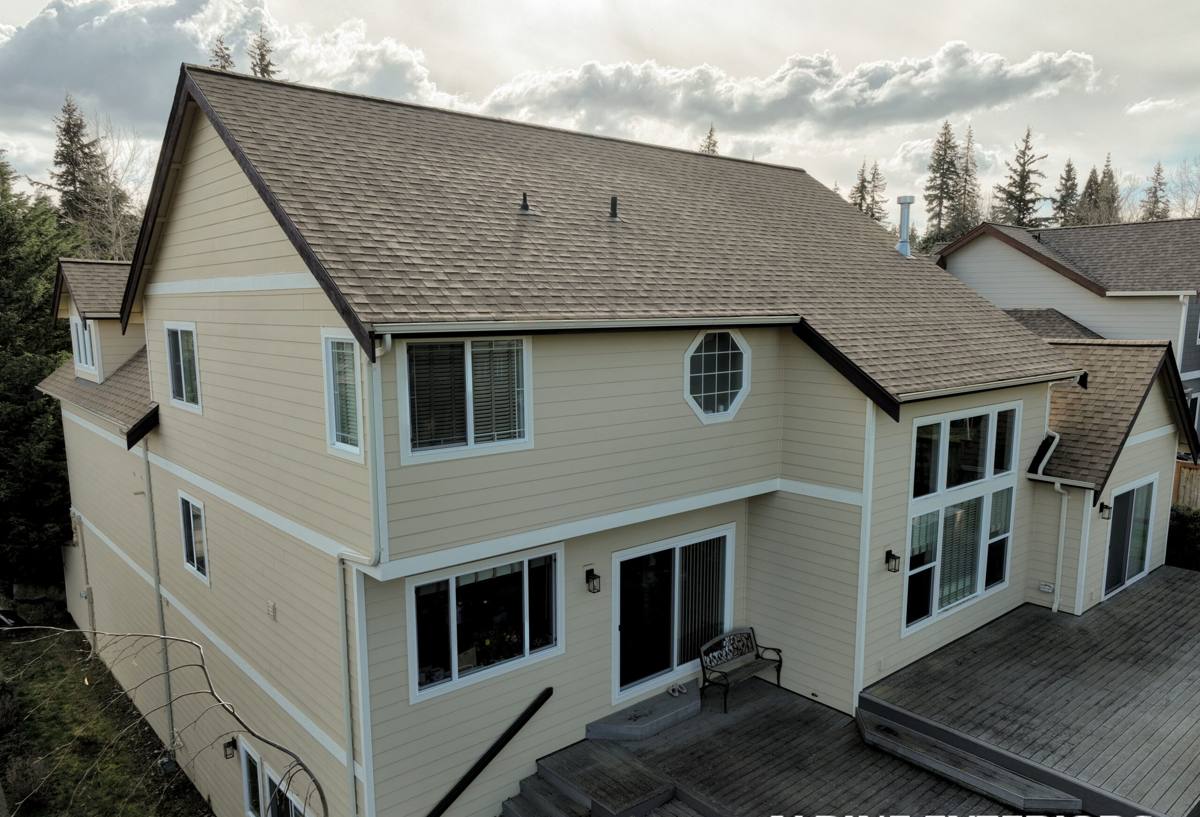
What Point Roberts' Climate Actually Does to a Roof
Salt Air and Corrosion
Airborne salt is corrosive to unprotected metal, and it's persistent — it doesn't take a storm to deposit it, just ordinary wind off the water. On a metal roof, that means the coating on the panels and the metal in the fasteners both matter more here than they would on a home set back from the water. Bare or lightly coated steel, uncoated fastener heads, and mismatched metals in contact with each other are where salt exposure shows up first, usually as surface corrosion or streaking well before the panel itself is at risk.
Driving Rain
Storms coming off the Strait of Georgia don't just drop rain straight down — wind pushes it sideways, up under laps, and into any gap in flashing or trim. A roof detail that would shed water fine in a calm, straight-down rain can leak in a Point Roberts wind event if the laps, underlayment, and flashing weren't built with wind-driven rain in mind from the start.
Moss and Organic Growth
The long wet season and tree cover common on residential lots here keep shaded roof areas damp for extended stretches, which is exactly what moss and algae need to establish. Moss holds moisture against a roof surface, and on the wrong material that trapped moisture is what shortens a roof's life. This is one of the areas where metal roofing has a real structural advantage over other coverings, which we'll get into below.
Why Metal Roofing Fits This Environment
Metal roofing isn't just a durability upgrade in the abstract — its specific properties line up well with what Point Roberts homes are dealing with.
- Steep, hard surface: Metal panels don't give moss spores the rough, organic surface they need to root into, so growth is far less likely to establish compared to a shingle roof, especially on adequately pitched sections.
- Fewer failure points, when done right: A concealed-fastener system has far fewer penetrations through the panel than a shingle roof has nail heads, which matters directly when wind-driven rain is testing every seam.
- Corrosion-resistant coatings: Quality metal roofing systems use coatings engineered specifically for coastal and marine exposure, which is a different spec than what's needed for an inland roof.
- Long service life: When the coating, fasteners, and flashing are matched correctly to a salt-air environment, a metal roof is built to outlast most other roofing materials by a wide margin — but that's conditional on getting the coastal-specific details right, which is where a lot of installs fall short.
None of this is automatic. A metal roof installed with inland-grade materials and standard details will still corrode faster and leak sooner here than the same roof installed with the coastal-appropriate spec. The material choice matters, but the installation choices matter just as much.
Panel Systems: What's Actually Different
Homeowners often come to us already knowing they want "metal roofing" without knowing there are meaningfully different systems under that umbrella. Here's how the common options compare for a coastal Whatcom County property:
| System | How It's Fastened | Coastal Considerations |
|---|---|---|
| Standing seam | Concealed clips; no exposed fastener heads through the panel field | Fewest penetration points for wind-driven rain and salt to work into; generally the strongest choice for direct water exposure |
| Exposed-fastener (screw-down) | Screws driven through the panel face into the deck or purlins | Lower material cost, but every fastener is a potential corrosion and leak point over time; gasketed, coastal-rated screws and periodic re-tightening become part of the maintenance picture |
| Stone-coated steel | Interlocking panels, typically with concealed or minimally exposed fasteners | Profile resembles shingle or tile; coating adds a layer of protection but seam and flashing detailing still has to be done to a coastal standard |
We'll walk through which of these makes sense for a given roof's slope, exposure, and budget as part of the estimate — there isn't one universally "correct" system, but there is a correct way to detail each of them for this climate.
What a Correct Installation Involves Here
The panel itself is only part of the job. On a Point Roberts roof, we pay particular attention to:
- Deck condition: Any rot or soft sheathing gets addressed before anything goes down — a metal roof over a compromised deck just hides the problem.
- Underlayment: A quality synthetic underlayment across the field, with self-adhered ice-and-water protection at eaves, valleys, and other vulnerable spots, gives the roof a real second line of defense against wind-driven rain.
- Fastener and flashing metal compatibility: Mixing incompatible metals in direct contact (for example, the wrong fastener alloy against a panel, or dissimilar metals at a flashing transition) sets up galvanic corrosion — the two metals react with each other and one degrades faster than it should. We match fasteners and flashing to the panel system to avoid this.
- Coastal-rated coatings: We spec coatings suited to salt exposure rather than a standard inland-grade finish, since that coating is the panel's primary defense against the air here.
- Valley and penetration detailing: Valleys, chimneys, vents, and skylights are where most roof leaks originate, coastal or not — these get built up with proper flashing rather than relying on sealant alone.
- Ventilation: Balanced ridge and soffit ventilation keeps moisture from condensing on the underside of the panels, which matters in a consistently humid, maritime climate.
Cost Factors on a Point Roberts Metal Roof
| Factor | Why It Matters Here |
|---|---|
| Panel system and coating grade | Coastal-rated coatings and concealed-fastener systems generally cost more upfront than basic screw-down panels, but they're doing more work against salt exposure |
| Roof complexity (valleys, penetrations, pitch) | More flashing detail means more labor, and it's the flashing — not the flat panel field — that determines whether wind-driven rain stays out |
| Tear-off vs. deck repair needs | Moss and trapped moisture from a prior roof can mean deck repair is needed before the new roof goes on, which isn't always visible until tear-off |
| Material staging and access | Point Roberts' location affects delivery scheduling and how materials get staged on site, which a crew unfamiliar with the area often doesn't plan for |
Our Process
- On-site evaluation: We look at the existing roof, deck condition, slope, exposure to prevailing wind and salt air, and any moss or drainage issues before recommending a system.
- Written scope and estimate: You get a clear breakdown of the panel system, coating grade, and flashing plan — no vague allowances for the details that actually determine how the roof performs.
- Tear-off and deck prep: Old roofing comes off, the deck is inspected, and any rot or soft spots are repaired before underlayment goes down.
- Underlayment and flashing installation: Ice-and-water protection at vulnerable areas, synthetic underlayment across the field, and properly detailed flashing at every valley, penetration, and edge.
- Panel installation: Panels and fasteners matched for coastal use, installed to manufacturer spec and squared to the roof lines.
- Final walk-through: We go over the finished roof with you, cover basic maintenance expectations for this climate, and make sure everything is clean before we leave.
Living With a Metal Roof in a Salt-Air Climate
A correctly installed metal roof in this environment is genuinely low-maintenance, but "low-maintenance" isn't "no-maintenance." We recommend keeping gutters and valleys clear of needles and debris, especially on lots with mature tree cover, since trapped organic debris holds moisture against any roof surface longer than it should sit. An occasional visual check after a major windstorm — looking for lifted trim, shifted flashing, or debris buildup in valleys — catches small issues before they become leaks. Exposed-fastener systems benefit from a periodic check that screws haven't backed out or lost their gaskets, since that's the most common source of a slow leak on that type of system over a long service life.
None of this requires a specialist visit every season. It's the kind of thing most homeowners can glance at themselves, with a call to us if something looks off.
Why It Matters That We Already Work in Point Roberts
Point Roberts is a pene-exclave — the only land route in and out runs through Delta, British Columbia, which means every material delivery, every crew arrival, and every follow-up visit involves a border crossing. That's not a minor logistical footnote; it directly affects how a project gets scheduled and supplied. A crew that hasn't worked here before often underestimates this, which shows up as delayed material deliveries, poorly planned staging, or a reluctance to come back promptly for a small warranty item because the trip is more of a hassle than they anticipated.
We factor that logistics reality into how we plan and schedule Point Roberts projects from the start — staging materials appropriately, planning crew time around the crossing, and treating a callback here the same as we would anywhere else in our Whatcom County service area. Combined with knowing what this specific stretch of coastline does to a roof over time, that's the practical case for hiring a crew that already works this community rather than one that's stopping through for a single job.
Get a Straight Answer About Your Roof
If you're weighing metal roofing for a Point Roberts home, we're glad to take a look and give you an honest read on what your roof actually needs — no pressure, no inflated scope. Use the form below to request a free estimate, and we'll walk you through the options that make sense for your home's exposure and budget.