 Ferndale Siding
 Roof Repair Built for How Custer Actually Weathers
Custer sits in the stretch of Whatcom County between Ferndale and the Canadian border, close enough to saltwater that airborne salt is part of daily exposure, and rural enough that mature trees and open lots create heavy shade and long-standing moisture on a lot of roofs. A repair that would hold up fine in a drier, more sheltered part of the state doesn't always last here. The roofs we get called out to repair in Custer are almost always dealing with some combination of driving wind-driven rain, salt-laden air working on metal fasteners and flashing, and moss that's had months of damp shade to establish itself.
This page focuses on one service, in one area: roof repair for Custer homes. Not a general roofing overview — what actually fails here, what a correct repair looks like, how we approach the job, and why it's worth hiring a crew that already knows this part of the county.
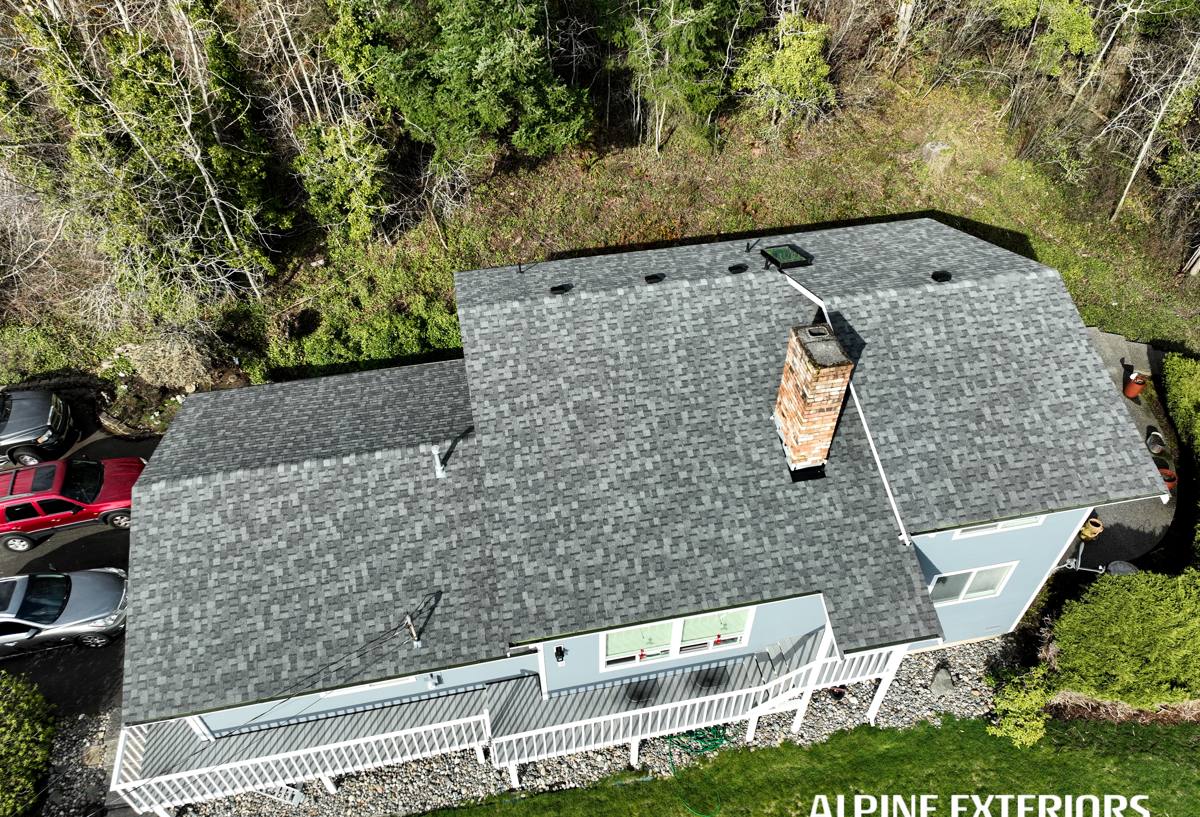
What Salt Air, Driving Rain, and Moss Do to a Roof Here
Salt Air
Homes within a few miles of the water pick up airborne salt that settles on roofing metal — flashing, fasteners, vent caps, gutter hardware — and accelerates corrosion well beyond what you'd see further inland. A fastener that would last decades in a dry inland climate can start rusting and backing out years earlier here. Once a fastener loosens or a metal flashing pits through, water finds a path under the roofing material long before the shingles or panels themselves are worn out.
Driving Rain
Whatcom County storms don't just drop water straight down — wind pushes rain sideways and up under laps, ridge caps, and flashing edges that were only ever meant to shed water moving downhill. Roof details that are technically installed but not installed tight — a slightly short step flashing, an underlayment lap facing the wrong way, a ridge vent without enough baffle — tend to leak specifically in wind-driven storms, which is exactly the weather Custer gets a lot of through the fall and winter.
Moss
Shaded roof sections, especially north-facing slopes and anything under fir or cedar cover, stay damp for days after a storm rather than drying out. That's ideal moss growing conditions. Moss doesn't just look bad — its root structure lifts shingle edges and granules, holds water directly against the roofing surface, and works its way under laps and around penetrations. A moss-heavy roof section is often shedding its protective granule layer years ahead of schedule, even though the shingles look intact from the ground.
Signs Your Custer Roof Needs Repair Now
Most roof problems in this area show themselves gradually. Here's what we tell homeowners to actually watch for:
- Dark streaking or thick moss growth concentrated on shaded or north-facing slopes
- Granules collecting in gutters or at downspout outlets after rain
- Rust staining below metal flashing, vent boots, or exposed fasteners
- Curling, cupping, or lifted shingle edges, especially near ridges and hips
- Soft or discolored ceiling patches after a wind-driven storm, even if it stops after a day
- Daylight visible around chimney flashing, skylight curbs, or pipe boots from the attic
- Sagging or spongy feel in any section of the roof deck when walked
- Gutters or roof edges holding standing water instead of draining freely
Any one of these on its own might not mean a major problem — but ignoring several at once is how a repairable issue turns into a deck replacement.
What a Correct Roof Repair Actually Involves
A roof repair done right isn't just patching the spot that's visibly leaking. Water rarely enters where it shows up on the ceiling — it travels along the deck or underlayment before finding a way through, so an honest repair starts with tracing the problem to its actual source, not just covering the symptom.
For Custer specifically, that means paying close attention to a few things a lot of quick patch jobs skip:
- Fastener and flashing material — using corrosion-resistant fasteners and flashing appropriate for salt exposure, not whatever's cheapest at the yard
- Underlayment condition — checking that underlayment beneath the failed area is still intact before assuming new shingles alone will solve it
- Flashing geometry — rebuilding step flashing, counterflashing, and valley metal to actually shed wind-driven rain, not just cover the joint
- Moss removal without damage — clearing growth and treating the surface without pressure-washing granules off in the process
- Deck integrity — confirming the sheathing under a repaired section is solid, not just replacing the top layer over a soft spot
Skipping any one of these gets you a repair that looks finished but fails again in a season or two — which ends up costing more than doing it right the first time.
Common Repair Types We Handle in Custer
Every roof is different, but these are the repairs that come up most often on homes in this area, and why:
| Repair Type | Common Local Cause | Typical Fix |
|---|---|---|
| Flashing replacement (chimney, valley, wall) | Salt-air corrosion and wind-driven rain forcing water past worn joints | Remove and rebuild flashing with corrosion-resistant metal, correct lap direction |
| Moss remediation and shingle repair | Extended shaded dampness lifting shingle edges and holding moisture | Careful moss removal, damaged shingle replacement, treatment to slow regrowth |
| Vent boot and penetration repair | Rubber boots and fasteners degrading faster in coastal air | Replace boot and fasteners, reseal penetration correctly |
| Wind-lifted or missing shingles | Driving storms catching edges not sealed or nailed to spec | Reset or replace shingles, correct nailing pattern, re-seal exposed edges |
| Localized deck repair | Long-term moss or flashing leak that went unnoticed | Cut back to sound sheathing, replace deck section, rebuild roofing over it |
Our Roof Repair Process, Start to Finish
- Inspection and diagnosis — we walk the roof and check the attic where accessible, tracing any leak to its actual entry point rather than guessing from the ceiling stain
- Honest scope and estimate — you get a clear explanation of what's actually wrong, what it takes to fix it correctly, and what it costs before any work starts
- Moss and debris clearing — growth and buildup removed carefully so we're not stripping granules or damaging sound shingles in the process
- Repair of the affected area — flashing, underlayment, decking, or shingles replaced as needed, using materials suited to salt exposure and wind-driven rain
- Detail work — flashing laps, fastener placement, and sealant applied to actually shed water in a storm, not just pass a visual check
- Cleanup and walk-through — debris hauled off, and we show you what was found and fixed before we call it done
Repair or Replace? What Actually Factors In
Not every problem roof needs a full replacement, but sometimes a repair is just delaying an inevitable bigger job. These are the factors that genuinely decide which makes sense:
| Factor | Leans Toward Repair | Leans Toward Replacement |
|---|---|---|
| Roof age | Under roughly two-thirds of expected material lifespan | Near or past expected lifespan for the material |
| Extent of damage | Isolated to one section, flashing, or penetration | Widespread across multiple slopes |
| Deck condition | Sheathing solid outside the immediate repair area | Soft or damaged decking found in more than one spot |
| Moss history | First significant growth, caught early | Repeated heavy moss cycles over several years |
| Underlayment condition | Still intact and doing its job elsewhere | Failing broadly, not just at the visible leak |
We'll always tell you plainly which side of that line your roof falls on — a repair we don't believe will hold isn't a repair worth selling you.
Why Hiring a Crew That Already Works Custer Matters
A contractor who mostly works dry, sheltered, inland roofs can still do competent general roofing work — but they won't necessarily think to spec corrosion-resistant fasteners for salt exposure, or know that a flashing detail that's fine elsewhere in the county tends to leak on a shaded, wind-exposed slope out this way. Knowing what actually fails on Custer roofs, and why, is the difference between a repair that's still holding in three years and one you're calling someone back out for after the next big storm.
It also means a faster, more accurate diagnosis. When you've seen the same moss patterns, the same corrosion points, and the same wind-driven leak paths on roofs like yours before, you're not starting from scratch every time — you know where to look first.
Keeping a Repaired Roof in Good Shape Between Visits
A correct repair should hold, but Custer's climate means roofs here benefit from a bit more upkeep than roofs in drier parts of the state. A few habits go a long way toward protecting the work and catching the next issue before it becomes a repair:
- Keep gutters and downspouts clear so water isn't backing up against roof edges
- Trim back overhanging branches to cut down on shaded, damp roof sections
- Have moss treated before it establishes heavily, not after it's visibly thick
- Check attic spaces after major windstorms for early signs of moisture
- Have flashing and penetrations inspected every few years, especially near the coast
None of this requires major effort, but skipping it is how small, cheap issues turn into deck repairs and early replacements.
If you're seeing moss buildup, a leak, or storm damage on a Custer roof, we're glad to take a look. Fill out the form below for a free, no-pressure estimate — we'll tell you honestly what's going on and what it actually takes to fix it.