 Ferndale Siding
 Roof Replacement in Everson: Built for the Nooksack Valley Climate
Everson sits inland along the Nooksack River, surrounded by farmland, tree lines, and the kind of shaded, moisture-holding lots that are common throughout Whatcom County. It doesn't get hammered by ocean surf, but the marine air that moves in off the Salish Sea still finds its way up the river valleys, mixing with runoff from tree cover and settling into roofs that don't get much direct sun. The result is a climate that's less about single storms and more about sustained exposure: driving rain that comes sideways as often as straight down, and a moss season that can run from early fall through late spring on shaded slopes.
A roof in this environment isn't just shedding water for a few weeks a year — it's managing near-constant dampness for most of it. That changes what "correct" looks like for a replacement. Underlayment choice, ventilation, flashing detail, and even which shingle line you pick all matter more here than they would in a drier climate. This page walks through what an Everson roof replacement actually needs, what our process looks like, and why local experience on this specific kind of roof makes a real difference.
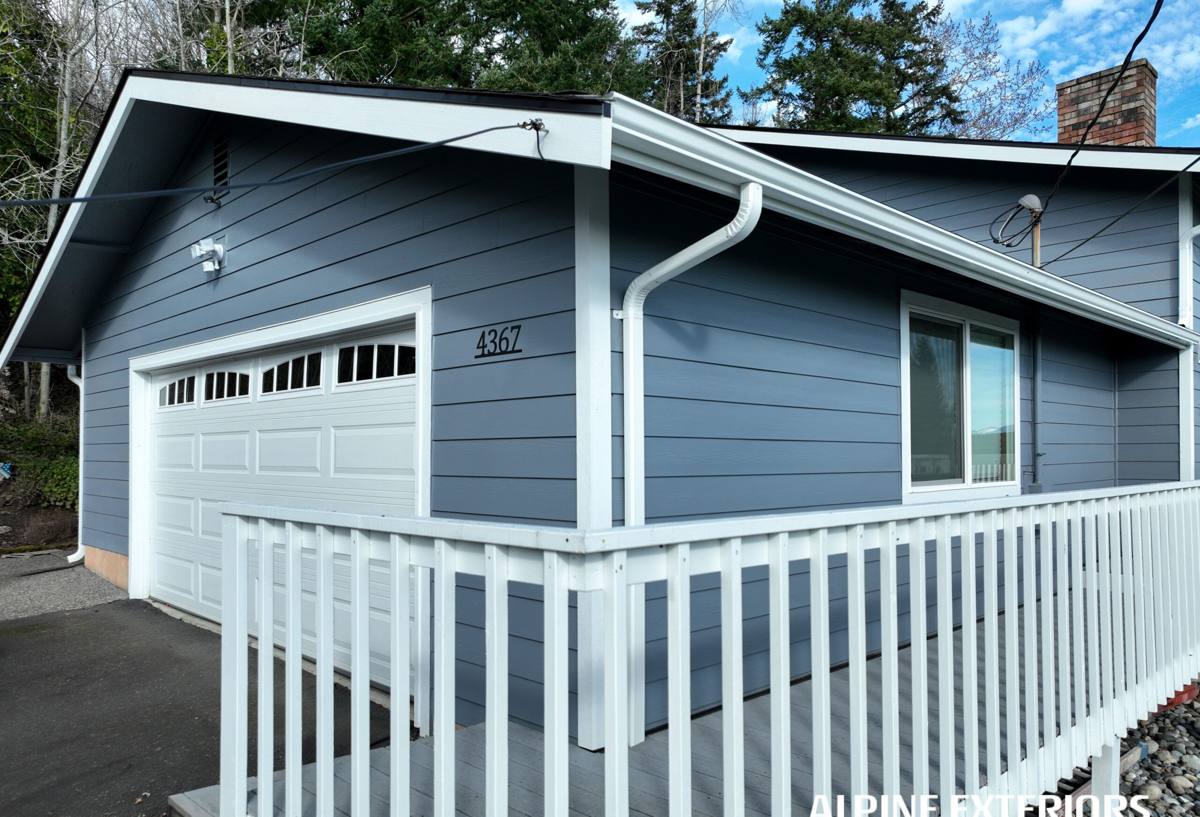
Signs an Everson Roof Is Due for Replacement
Roofs in this area rarely fail all at once — they wear down gradually, and a lot of homeowners wait too long simply because the roof "still looks fine" from the ground. Some of the clearer warning signs we look for:
- Granule loss showing up in gutters or at downspout outlets, especially after a windy rain
- Moss or dark algae staining concentrated on the shaded or north-facing slopes
- Shingles that are curling, cupping, or lifting at the edges
- Soft or spongy spots underfoot when walking the roof deck
- Daylight visible through the roof deck from inside the attic
- Water stains or discoloration on ceilings, especially near valleys or chimneys
- A roof that's 20+ years old on standard asphalt shingles, or 15+ years with visible moss recurrence despite cleaning
Any one of these on its own might just mean a repair. Several at once, especially combined with the roof's age, usually means repairs are patching over a system that's past the point of being worth chasing.
What a Correct Roof Replacement Actually Involves
A roof replacement done right in this climate is more than stripping old shingles and nailing down new ones. The parts that don't show are what determine whether the roof performs for its full expected life or starts showing problems again in five years.
Full Tear-Off, Not Overlay
We don't recommend layering new shingles over old ones. It hides deck problems, traps moisture between layers, and voids most manufacturer warranties. A full tear-off lets us actually see the decking, catch soft or rotted sheathing, and start the new roof system clean.
Deck Inspection and Repair
Once the old roofing is off, the plywood or board decking underneath gets inspected panel by panel. Given how much sustained moisture this area sees, it's not unusual to find soft spots around old flashing, valleys, or plumbing vents that weren't visible from above. Any compromised decking gets replaced before anything else goes down — skipping this step is one of the most common shortcuts that leads to a roof failing early.
Underlayment and Water-Resistant Barrier
Given how much wind-driven rain this area gets, synthetic underlayment with ice-and-water shield at the eaves, valleys, and around all penetrations isn't optional in our book — it's the difference between water that's shed and water that's absorbed into the deck over time.
Flashing at Every Transition
Chimneys, skylights, sidewalls, and valleys are where roofs actually leak — the open field of shingles rarely fails first. New step flashing, counter-flashing, and valley metal, properly integrated (not just caulked over old flashing), is standard on every replacement we do.
Ventilation
A roof deck that can't breathe stays damp longer after every rain, which is exactly what moss and algae need to take hold. Balanced intake and exhaust ventilation is part of a correct replacement, not an upsell.
Choosing a Roofing Material for This Climate
There's no single "best" roofing material — the right choice depends on the home, the budget, and how much upkeep the owner wants to commit to. Here's how the common options compare for a property like those around Everson:
| Material | Moss/Moisture Resistance | Typical Lifespan | Maintenance |
|---|---|---|---|
| Standard 3-tab asphalt | Fair — no algae resistance without treated granules | 15–20 years | Periodic moss removal on shaded slopes |
| Architectural (laminate) asphalt | Good, especially with algae-resistant granules | 25–30 years | Occasional cleaning; holds up better under sustained damp |
| Metal (standing seam or panel) | Very good — sheds water fast, little surface for moss to grip | 40–50+ years | Low; periodic inspection of fasteners and seams |
| Cedar shake | Poor without regular treatment in a damp, shaded climate | 20–30 years with upkeep | High — regular treatment and moss control required |
We're upfront that cedar shake, while attractive, asks a lot of a homeowner in a climate like this — regular treatment and moss control are non-negotiable if you want it to last, and skipping that maintenance is how shake roofs end up needing early replacement. For most Everson homes, we steer people toward architectural asphalt or metal, depending on budget and how the roof is shaded, because both hold up with realistic, lower-maintenance care.
Our Roof Replacement Process
- On-site inspection: We walk the roof (not just look from the ground), check the attic for ventilation and moisture signs, and document what we find.
- Written estimate: A clear scope covering tear-off, decking allowance, underlayment, flashing, ventilation, and material — no vague line items.
- Scheduling around weather: Given how much of the year sees rain here, we build in realistic timing and don't start a tear-off without a dry-enough window to close in the roof the same day.
- Tear-off and deck inspection: Old roofing removed, decking checked and repaired as needed, with any changes communicated before we proceed.
- Install: Underlayment, ice-and-water shield, flashing, ventilation components, then the roofing material itself, per manufacturer specification.
- Cleanup and walkthrough: Full site cleanup, magnetic sweep for nails, and a final walkthrough so you know exactly what was done.
Ventilation and Moss: The Long-Term Maintenance Picture
Even a correctly installed roof isn't maintenance-free in this part of Whatcom County. A long moss season means shaded slopes will need periodic attention no matter what material you choose. The goal of a good installation is to reduce how much that maintenance is needed and how much damage skipped maintenance can cause — not to eliminate upkeep entirely. That means proper ventilation to keep the deck drier, algae-resistant shingles where budget allows, and keeping overhanging branches trimmed back so roof slopes get what sun exposure they can.
We tell every homeowner the same thing: a light annual moss treatment or gentle removal (never high-pressure washing, which strips granules) does more to protect a new roof than almost anything else you can do after installation.
What Affects the Cost of a Roof Replacement
Pricing a roof replacement honestly means looking at the specifics of the home, not quoting a flat per-square rate. The main factors we weigh:
| Factor | Why It Matters |
|---|---|
| Roof pitch and complexity | Steep or cut-up rooflines with multiple valleys and dormers take longer and use more flashing and underlayment |
| Number of existing layers | Homes with a prior overlay require extra tear-off labor and disposal |
| Decking condition | Rot or soft spots found during tear-off require plywood replacement, which isn't always visible until the old roofing is off |
| Material selection | Standard asphalt, architectural asphalt, and metal carry different material and installation costs |
| Ventilation upgrades | Adding or correcting intake/exhaust ventilation where the current setup is inadequate |
| Site access | Tree cover, steep driveways, and rural lot layouts common around Everson can affect equipment staging and disposal logistics |
Rather than quote a number before seeing the roof, we walk it, note the specifics above, and put everything in writing so there aren't surprises mid-project. If decking issues turn up during tear-off, we stop and talk to you before any additional work or cost is added.
Why Hire a Crew That Already Works in Everson
Roofing crews that mostly work drier climates, or who install the same way everywhere, tend to under-spec underlayment and skip ventilation upgrades that don't show up as a problem for a few years. Working this area regularly means knowing which details actually matter here: where wind-driven rain tends to find weak flashing, which roof orientations hold moss longest, and how to schedule tear-offs around a weather pattern that doesn't offer long dry stretches. It also means being familiar with Whatcom County permitting requirements and being reachable locally if a question comes up after the job is done — not routed through a call center for a company based somewhere else.
Before You Sign: A Practical Checklist
- Is the contractor licensed and bonded to work in Washington State?
- Do they carry active liability insurance and workers' compensation coverage?
- Is the estimate written, itemized, and specific about underlayment, flashing, and ventilation — not just "tear off and replace"?
- Does the quote specify what happens if rotted decking is found, and how that's priced?
- Are manufacturer warranty terms and workmanship warranty terms explained separately?
- Is there a clear plan for debris removal and site cleanup, including a nail sweep?
- Can they explain, in plain terms, why they're recommending a specific material for your roof?
If a contractor can't answer these clearly before you sign, that's worth treating as a red flag regardless of how competitive the price looks.
Get a Straightforward Estimate
If your roof in Everson is showing its age, holding moss longer than it used to, or you just want an honest read on whether repair or replacement makes more sense, we're happy to take a look. The estimate is free, there's no pressure, and you'll get a clear, written breakdown of what your roof actually needs — use the form below to get started.