 Ferndale Siding
 Lynden's Roofs Work Harder Than Most People Realize
Lynden sits inland from the coast, but "inland" in Whatcom County doesn't mean dry. Between the Nooksack River valley's humidity, the mature tree cover around a lot of farmhouses and established neighborhoods, and the wind that carries moisture-laden marine air east from Bellingham Bay during winter storms, roofs here take on a steady combination of wet, shaded, and windblown conditions. It's a different stress pattern than a roof would see in a drier part of the state, and it shows up in the way shingles age, the way moss colonizes north-facing slopes, and the way flashing and underlayment either hold up for decades or fail quietly for years before anyone notices.
We work on roofs throughout Ferndale and out to Lynden regularly enough to know the pattern isn't random. Homes tucked under fir and cedar canopy grow moss faster than homes in open fields. Older farmhouses with less attic ventilation trap moisture that rots decking from underneath, long before the shingles on top look worn. And roofs that get driving rain sideways off a winter system need flashing and underlayment details that a fair-weather install can skip and still look fine — for a while.
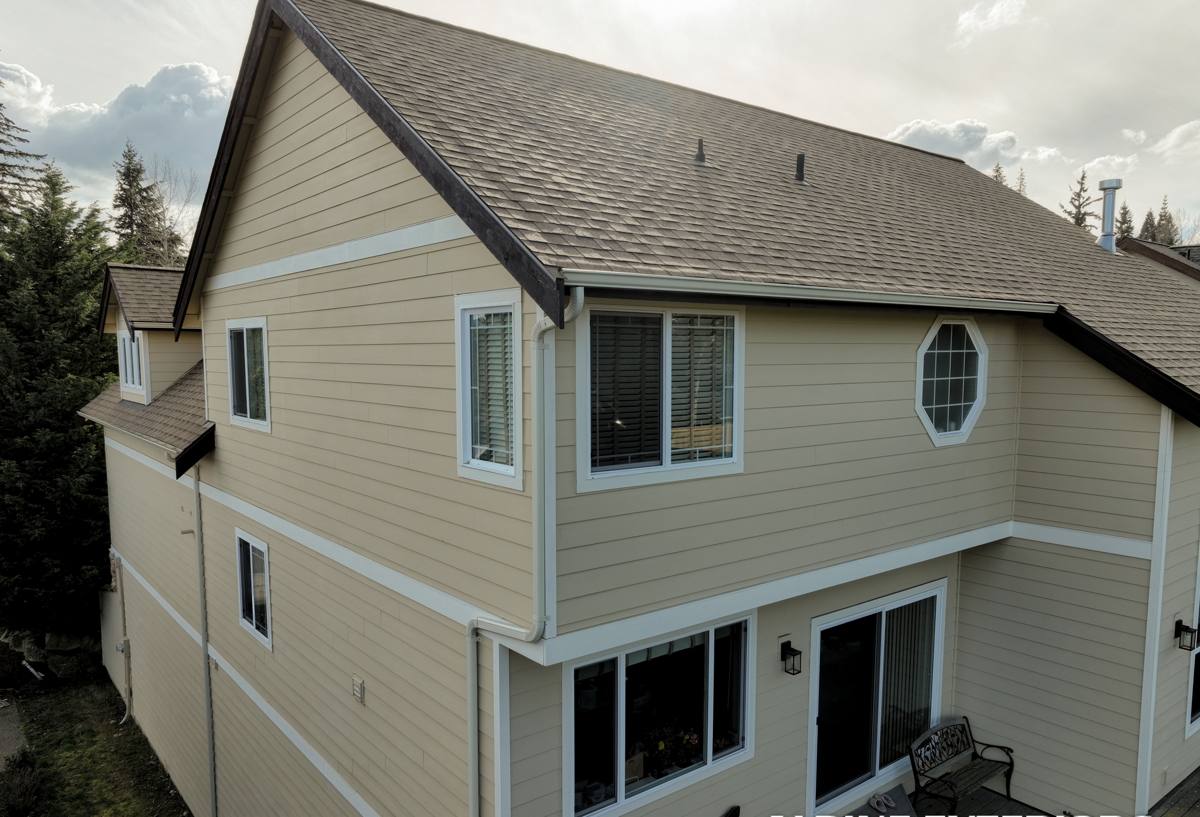
Signs a Lynden Roof Needs Replacement, Not Another Repair
What You Can See From the Ground
- Shingles that are curling, cupping, or losing granules in patches rather than evenly across the whole roof
- Dark streaking or thick moss growth on shaded slopes, especially north- and east-facing sections
- Sagging along the ridge line or between rafters, visible from the street or driveway
- Missing or lifted shingles after a windstorm, especially near valleys, hips, or the roof edge
- Granules collecting in gutters or at downspout outlets in noticeably increasing amounts
What We Find Once We're Up There or in the Attic
A roof that looks tired from the ground is often further gone than it appears. Soft or delaminated decking under old shingles, rusted or cracked flashing at chimneys and sidewalls, and insulation with water staining are all things a homeowner rarely sees but a contractor checks first. If we find rot at the deck level, patch repairs won't hold — that's a replacement conversation, and we'll tell you plainly rather than sell you a repair that buys a season.
What a Correct Roof Replacement Actually Involves
A roof replacement is more than stripping old shingles and nailing down new ones. The parts nobody sees are the parts that determine whether the new roof lasts fifteen years or thirty-five.
Full Tear-Off and Deck Inspection
We remove the existing roofing down to the deck rather than laying new material over old — that's the only way to actually see the condition of the sheathing. Any soft, delaminated, or rotted decking gets cut out and replaced before anything new goes down. Skipping this step is how a new roof ends up failing from underneath within a few years.
Underlayment and Ice-and-Water Protection
Given how much sideways rain this area sees off winter fronts, underlayment choice matters more here than in drier climates. We use synthetic underlayment across the field and self-adhered ice-and-water membrane at eaves, valleys, and any low-slope transitions — the spots where wind-driven rain and ice dams are most likely to force water backward under the shingles.
Flashing, Not Just Sealant
Chimneys, skylights, sidewalls, and roof-to-wall transitions are where most leaks actually start, not in the open field of shingles. Correct step flashing, counter-flashing, and kick-out flashing at these points is a metal-and-overlap job, not a caulk job. Caulk is a maintenance item; flashing is the actual water barrier.
Ventilation That Matches the Attic
A roof with poor intake and exhaust ventilation traps moisture, which shortens shingle life from below and can rot decking regardless of how good the roofing material is on top. We check baffles, soffit intake, and ridge or box vents as part of the same job — replacing shingles without correcting ventilation just resets the clock on the same problem.
Material Options for Lynden's Climate
There's no single "best" roofing material — the right choice depends on your home's style, slope, budget, and how much long-term maintenance you want to take on. Here's how the common options stack up for this area specifically:
| Material | Moss & Moisture Resistance | Typical Lifespan | Maintenance |
|---|---|---|---|
| Architectural asphalt shingle | Good with proper underlayment; benefits from periodic moss treatment | 25-30 years | Low to moderate — occasional moss/debris removal |
| 3-tab asphalt shingle | Fair — thinner profile ages faster under constant moisture | 15-20 years | Moderate |
| Standing seam metal | Excellent — moss struggles to grip smooth metal panels | 40-50+ years | Low |
| Cedar shake | Requires diligent upkeep — natural wood holds moisture longer | 20-30 years with maintenance | High |
We install and stand behind architectural asphalt shingle and standing seam metal as our primary recommendations for this region. Both handle the wet-shade-wind combination well when installed with correct underlayment and flashing. We're candid about wood shake: it can look great, but the ongoing maintenance burden in a climate this wet is real, and we'd rather set that expectation up front than have a customer surprised by it five years in.
Our Process, Start to Finish
- On-site inspection. We walk the roof and check the attic, not just look from the driveway. You get a straight answer on whether you need a repair or a replacement.
- Written estimate. Material options, scope, and price laid out clearly, with no pressure to decide on the spot.
- Scheduling around weather. We plan tear-off days around forecast windows and keep the deck covered if conditions shift mid-project — an open roof deck in a Whatcom County rain event is not something we risk.
- Tear-off, deck repair, and install. Full removal, any necessary sheathing replacement, then underlayment, flashing, ventilation corrections, and the new roofing system.
- Cleanup and walkthrough. Magnetic sweep for nails, hauled-away debris, and a final walk so you can see the finished work and ask questions before we consider the job done.
Moss, Gutters, and Keeping a New Roof Healthy
A well-installed roof still needs basic upkeep in this climate. Moss doesn't just sit on top of shingles — over time it holds moisture against the surface and can work its way under tab edges. A few habits go a long way:
- Keep overhanging branches trimmed back to reduce shade and debris buildup on the roof
- Clean gutters at least twice a year, more often if you're under conifers that drop needles year-round
- Have moss physically removed rather than pressure-washed off, which can strip granules and shorten shingle life
- Check attic ventilation isn't blocked by insulation or storage after any renovation work
- Address small flashing or sealant issues promptly — they're cheap to fix early and expensive once water gets behind them
Why Hire a Crew That Already Works in Lynden
Roofing crews that mostly work drier regions sometimes underestimate how much detail this climate demands — extra ice-and-water coverage, more careful flashing, ventilation that accounts for constant ambient moisture rather than occasional rain. We're based in Ferndale and work this stretch of Whatcom County regularly, which means we're not guessing at how a roof here needs to be built. We've seen what fails and what holds up over the long run, and we build accordingly rather than defaulting to a generic install.
It also means we're a short drive away if something comes up after the job — a question about maintenance, a warranty concern, or just wanting someone to take a look before the next big storm. That local presence matters more with roofing than with almost any other part of a house.
What Affects the Cost of a Lynden Roof Replacement
Every roof is different, so we don't quote sight-unseen, but the main factors that move the price are consistent:
| Factor | Why It Matters |
|---|---|
| Roof size and number of stories | More square footage and steeper access mean more labor and material |
| Roof pitch and complexity | Multiple valleys, dormers, and hips take more time and flashing work than a simple gable |
| Deck condition | Rotted sheathing found during tear-off adds material and labor to replace it correctly |
| Material chosen | Asphalt, metal, and cedar carry different material and installation costs |
| Tear-off layers | Removing multiple layers of old roofing takes longer than a single-layer tear-off |
We'll walk you through exactly which of these apply to your home and why, so the number on your estimate makes sense rather than feeling like a black box.
If your roof is showing its age or you just want an honest read on how much life it has left, we're happy to take a look. Fill out the form below for a free, no-pressure estimate — we'll tell you what we actually see, not just what's easiest to sell.