 Ferndale Siding
 Sandy Point Asks More of Your Siding Than Most of Whatcom County
Sandy Point sits close enough to the water that homes here take a different kind of weathering than a house a few miles inland in Ferndale. Salt-laden air moves off the water and settles on exterior surfaces year-round, wind-driven rain finds its way into joints and laps that would stay dry on a more sheltered lot, and the long wet season that defines this part of Washington keeps north- and shade-facing walls damp enough, long enough, for moss and algae to take hold. None of that makes siding here impossible to get right. It just means the margin for error is smaller, and the material and installation choices that work fine elsewhere in the county don't always hold up the same way this close to the shoreline.
This page is specifically about fiber cement siding for Sandy Point properties — what the exposure actually does to a wall system, what a correctly installed job looks like in this setting, and why we only install James Hardie fiber cement rather than the other materials available.
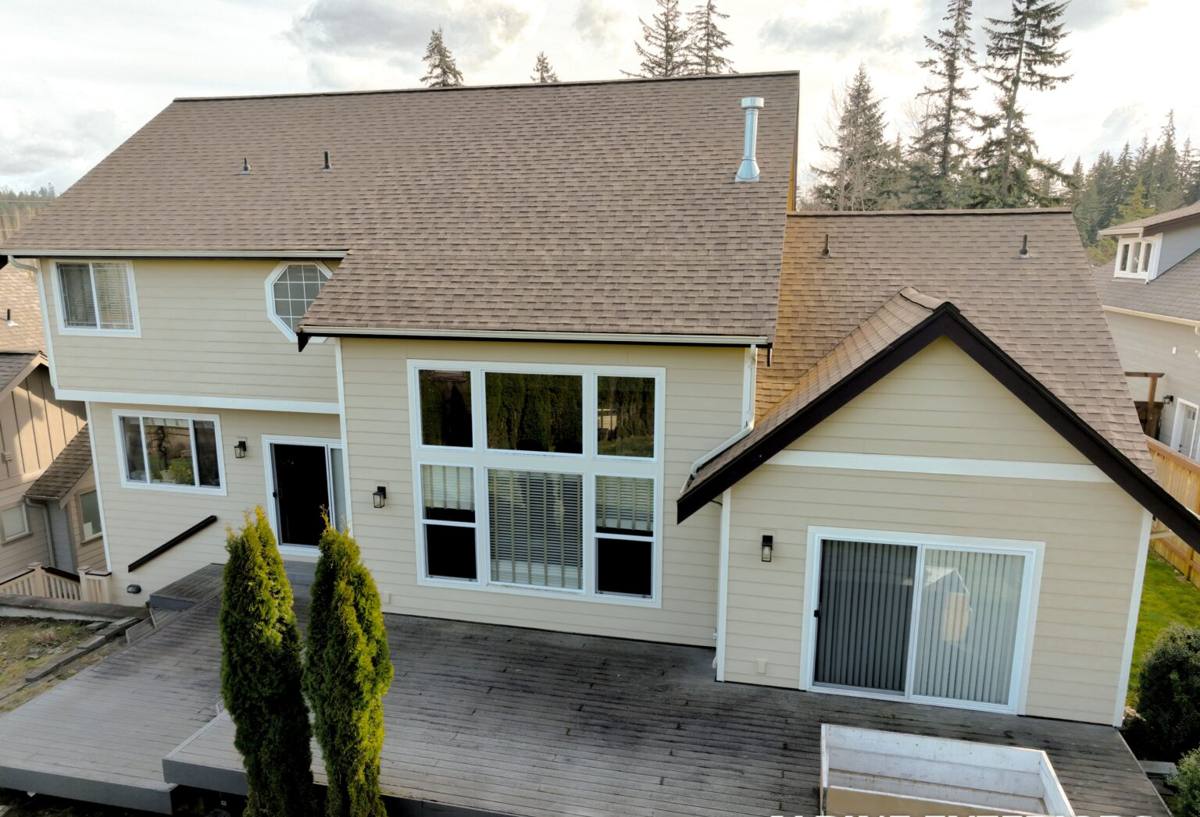
What Salt Air, Driving Rain, and a Long Moss Season Do to a Wall System
Three separate stresses stack up on a Sandy Point home, and they don't act independently — each one makes the others worse.
Salt air is corrosive to unprotected metal fasteners, trim, and flashing, and it accelerates the breakdown of paint films and coatings that aren't formulated to resist it. Siding that relies on field-applied paint for its weather barrier will chalk, fade, and need repainting sooner near the water than the same product would inland.
Wind-driven rain doesn't behave like rain falling straight down. It gets pushed sideways and upward into laps, seams, and any gap around trim, windows, or penetrations. A siding system that depends on caulk alone to keep water out at those points will eventually fail, because caulk is a wear item, not a permanent seal.
Moss and algae need moisture and organic material to hold onto, and they thrive on shaded, north-facing, or tree-covered walls that stay damp for extended stretches during Whatcom County's wet season. Some siding materials give moss more to grip — rougher textures, absorbent surfaces, or wood fiber content all make it easier for growth to establish and harder to fully remove without damaging the material underneath.
Why We Install Only James Hardie Fiber Cement in This Kind of Exposure
We don't install vinyl, LP SmartSide, primed wood, cedar, or other fiber cement brands. That's not a marketing position — it's a decision we made because of jobs like the ones we do in Sandy Point, where the exposure exposes weaknesses that a lower-demand site might never reveal.
James Hardie fiber cement is non-combustible and dimensionally stable, meaning it doesn't expand and contract with moisture the way wood-based products do. That stability matters directly here: siding that swells and shrinks with every wet-dry cycle opens gaps at joints and around fasteners over time, and in a wind-driven-rain environment, those gaps are exactly where water gets in. Hardie's ColorPlus factory-applied finish is baked on under controlled conditions rather than rolled or sprayed on-site, which gives it better adhesion and more consistent resistance to fading and wear than field-applied paint — a real advantage against sun and salt exposure over the life of the siding.
We're not going to tell you every other product is worthless; each one has legitimate uses. But for homes taking on salt air, sustained wind-driven rain, and a long moss season all at once, we've made fiber cement — specifically Hardie's engineered product line — our standard, and we stand behind that choice with the installation practices below and the warranty that comes with the product.
Choosing the Right Product Line and Finish for a Coastal Lot
James Hardie builds its siding in climate-specific "HZ" formulations, engineered for the moisture and freeze-thaw conditions of different regions. For Whatcom County's marine climate, that means selecting the formulation built for wet, moderate-temperature exposure rather than a version engineered for a drier or harsher-winter climate elsewhere in the country.
Profile and Texture
Lap siding, board-and-batten, and shingle-style panels are all available in smooth or textured finishes. On a Sandy Point property with shaded or tree-covered walls, a smoother finish gives moss and algae less surface texture to grip, which can mean less frequent cleaning — a small detail, but one worth discussing during your estimate if part of the home sits in near-constant shade.
Color and ColorPlus Coating
ColorPlus finishes are available in a range of factory-applied colors backed by their own finish warranty, separate from the product warranty on the substrate itself. Darker colors absorb more heat, which can help surfaces dry faster after rain — worth weighing against your design preferences on walls that stay damp longest.
What Correct Installation Involves at This Exposure Level
Fiber cement performs the way it's supposed to only when it's installed correctly. In a lower-exposure setting, small installation shortcuts might not show up for years. Close to the water, they show up faster.
Clearances and Flashing
Hardie's specifications call for specific clearances between siding and grade, roof lines, decks, and other horizontal surfaces, plus proper flashing at every window, door, and penetration. In a driving-rain environment, flashing details that direct water back out rather than behind the siding aren't optional extras — they're the difference between a wall that sheds water and one that traps it.
Fastening
Correct fastener type, spacing, and depth matter everywhere, but corrosion-resistant fasteners matter more directly here because of salt exposure. Fasteners driven too deep or at the wrong spacing can crack the board or loosen over time as the wall moves seasonally, opening a path for water.
Joints and Caulking
Every seam, joint, and butt-end is a potential water entry point. Correct practice means sealing and painting cut ends before installation (not after), using the right joint treatment at butt seams, and never relying on caulk as the sole line of defense where a proper flashing detail should be doing the work instead.
How Fiber Cement Compares in This Climate
Every siding material handles salt air, wind-driven rain, and moss differently. Here's an honest comparison of how the common options perform under Sandy Point's conditions specifically, not just in general.
| Material | Salt Air / Coastal Exposure | Moisture & Driving Rain | Moss Resistance |
|---|---|---|---|
| James Hardie Fiber Cement | Non-combustible, dimensionally stable, factory finish resists salt-driven fading | Stable under wet-dry cycling when installed to spec; doesn't swell at joints | Smooth finishes limit surface for growth to grip |
| Vinyl Siding | Can become brittle and fade faster under UV and salt over time | Water can travel behind panels at seams if not lapped correctly | Smooth surface, but seams and J-channels can trap moisture and debris |
| Wood / Cedar / Primed Spruce | Organic material is naturally more vulnerable to salt-accelerated decay | Absorbs moisture, swells and shrinks, opening joints over repeated cycles | Wood fiber gives moss and algae the most to hold onto |
| LP SmartSide (engineered wood) | Factory treatment helps, but the substrate is still wood-based | More stable than raw wood but still moisture-sensitive at cut edges and joints | Better than raw cedar, still more absorbent than fiber cement |
This isn't a claim that the other materials are unusable — it's why, given what Sandy Point's exposure demands, we've standardized on fiber cement rather than stocking multiple product lines and installing whichever one a homeowner asks for.
How the Process Works, Start to Finish
A siding project on a coastal Whatcom County property starts the same way any of our jobs do — with a look at the current condition of the walls, the specific exposure of each elevation (which sides take the worst of the wind and rain, which stay shaded and prone to moss), and an honest conversation about what needs to happen and what it will cost.
From there: removal of the old siding and inspection of the sheathing and framing underneath for any hidden moisture damage, correction of any flashing or drainage issues found at that stage, installation of a proper water-resistive barrier, then the Hardie siding itself installed to manufacturer spec — correct clearances, correct fastening, correct joint treatment at every seam. We walk the finished job with you before we consider it done.
Because we only install one product system, our crews aren't switching between installation methods for five different materials — they install Hardie fiber cement the same correct way on every job, which is part of how consistency gets maintained on a coastline where the details matter more.
Maintaining Fiber Cement Siding in a Marine, Moss-Prone Climate
Fiber cement is lower-maintenance than wood, but "lower-maintenance" doesn't mean "no maintenance," especially this close to the water. A little routine attention keeps a correctly installed system performing for the long haul.
- Rinse siding periodically to remove salt residue and airborne grime, especially on walls facing open water or prevailing wind
- Inspect caulking at trim, windows, and joints annually and re-caulk any cracked or separated seams before wet season sets in
- Trim back vegetation and tree cover where practical to reduce shade and airflow restriction on walls prone to moss
- Gently clean moss and algae from shaded elevations rather than letting it build up season over season
- Check gutters and downspouts to make sure runoff is directed away from siding, not draining down the wall face
- Watch for any soft spots, cracking, or paint failure at butt joints and address them promptly rather than waiting
Why Hiring a Crew That Already Works in Sandy Point Matters
Not every siding contractor treats a waterfront-adjacent property the same as an inland one, and that's a mistake. The clearance details, flashing choices, and fastener corrosion resistance that matter in Sandy Point aren't universal best practices applied everywhere at the same intensity — they're decisions that should be made knowing exactly how much wind-driven rain and salt exposure a given wall is going to see. A crew that regularly works properties in and around Ferndale and the rest of Whatcom County's coastal areas already understands which elevations need the extra attention and which flashing details actually hold up here, rather than learning it on your home.
If you're planning a siding project on a Sandy Point property, we're happy to take a look, walk the exterior with you, and put together a free, no-pressure estimate for James Hardie fiber cement siding built for what this location actually experiences. Use the form below to get started.