 Ferndale Siding
 Building New on Sandy Point's Waterfront
Sandy Point sits right up against the Strait of Georgia in Whatcom County, and building new here means designing and installing every exterior component with salt air, driving rain, and a long stretch of damp, mossy weather in mind. Windows are one of the highest-risk components in that equation. A window opening is the single biggest interruption in a home's weather barrier, and if it isn't detailed correctly during framing and siding, water finds its way in long before anyone notices a problem. On a new build, you only get one clean shot at doing it right — there's no existing siding to work around, no old flashing to guess at. That makes new-construction window installation a different job than a replacement, and it's worth understanding the difference before your builder or window crew ever shows up.
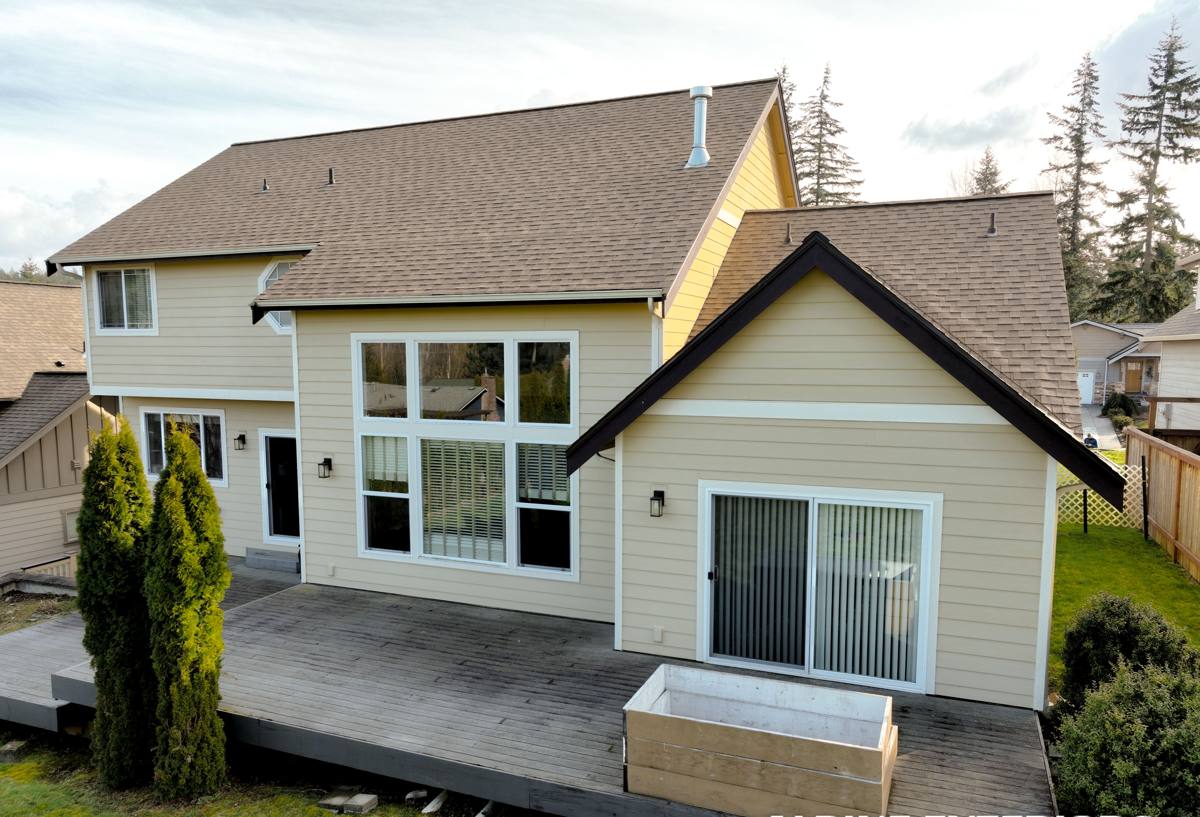
New-Construction vs. Replacement Windows: Why the Distinction Matters
New-construction windows come with a nailing fin (sometimes called a flange) around the perimeter of the frame. That fin gets fastened directly to the stud framing before the house wrap and siding go on, which means the window becomes a fully integrated part of the wall's water management system — not something dropped into an existing hole. Replacement windows, by contrast, are built without that fin and are designed to slide into an opening where siding and trim already exist, relying on the old frame and existing flashing.
On a new build like a Sandy Point home, using the correct new-construction window and integrating it properly with the wall assembly is what gives you a genuine chance at a dry, low-maintenance house for decades. Skipping steps here, or treating a new-construction install like a quick trim-and-caulk job, is one of the most common ways a brand-new home ends up with a moisture problem within the first few winters.
What "Correct Integration" Actually Means
- The window ties into the weather-resistive barrier (house wrap or building paper) in the correct shingle-lap order, so water is always directed outward and downward.
- Flashing tape and flexible flashing membrane are used at the sill, jambs, and head in a specific sequence — not just caulk around the outside.
- The rough opening is sized and prepared before the window ever arrives on site, so there's no last-minute trimming that compromises the frame.
- Fasteners and flashing materials are chosen for coastal exposure, not generic interior-grade hardware.
What Salt Air and Driving Rain Demand From the Install
Sandy Point's exposure is more aggressive than a typical inland Ferndale lot. Wind coming off the water carries both moisture and salt, and it hits window walls at angles that push rain sideways and even upward under certain conditions — which is exactly the kind of wind-driven rain that exposes a weak flashing detail. Add Whatcom County's long, low-intensity moss season, when surfaces stay damp for extended stretches with limited direct sun to dry them out, and you have an environment that punishes shortcuts.
Three things matter most for a Sandy Point new-construction window job:
- Sill pan flashing. A back-dammed, sloped sill pan under every window gives any water that gets past the exterior seal a way to drain back out instead of sitting against the framing.
- Corrosion-resistant hardware and fasteners. Salt-laden air accelerates corrosion on ordinary steel fasteners and lesser hardware finishes. Fastener selection and frame hardware should be chosen with that exposure in mind, not just cost.
- Material selection at the frame and finish level. Some frame materials and exterior finishes tolerate persistent damp and salt exposure better than others — this is worth discussing product by product rather than assuming one material is automatically right for every coastal application.
The Correct Installation Sequence
A proper new-construction install follows a set order. Skipping or reordering these steps is where most failures start, and it's not something you can fix from the outside once siding is on.
- Rough opening check. Confirm the opening is square, level, and sized correctly with the right amount of shim space — before the window shows up.
- Sill pan installation. A sloped, back-dammed pan flashing goes in first, so the sill is protected before the window ever sits in the opening.
- Window set and fastening. The window is set plumb and square, then fastened through the nailing fin per the manufacturer's pattern — proper fastening is what keeps the fin doing its job through decades of wind loading.
- Flashing tape at jambs and head. Flexible flashing runs up the jambs and across the head in the correct shingle-lap order, tying into the sill pan below and the house wrap above.
- House wrap integration. The wrap is cut, folded, and taped so water sheds over every layer below it, never behind it.
- Interior and exterior sealant. Sealant is the last line of defense, not the first — it backs up the flashing system rather than substituting for it.
Choosing Window Products for a Coastal Whatcom County Build
There's no single "best" window material for every situation — the right choice depends on exposure, budget, and how much upkeep an owner wants to take on. For a Sandy Point build, we walk through these trade-offs honestly rather than pushing one product line.
| Frame Material | Coastal Exposure Behavior | Maintenance | General Cost Position |
|---|---|---|---|
| Vinyl | Handles salt air and moisture well; won't corrode or rot | Low — occasional cleaning | Entry to mid-range |
| Fiberglass | Very stable in temperature swings and damp conditions; strong long-term coastal performer | Low | Mid to upper-mid |
| Aluminum | Strong and slim sightlines, but requires a quality finish to resist salt-air corrosion over time | Moderate — finish needs monitoring | Mid-range, varies by finish |
| Wood / wood-clad | Attractive but the most vulnerable to persistent damp and salt exposure without diligent upkeep | High — regular inspection and finish maintenance | Upper range |
We're upfront when a product isn't a good match for a waterfront lot like Sandy Point. That's not a knock on any manufacturer — it's about matching a material's known maintenance needs and moisture behavior to a site that gets more salt air and sustained dampness than a typical inland Ferndale property.
How Our Process Works on New-Construction Jobs
Whether we're working directly with a homeowner or alongside a builder's framing crew, our process on a Sandy Point new-construction project follows the same pattern:
- Plan review. We look at window schedules and rough opening details before framing is finalized, so sizing and flashing details are planned in, not improvised later.
- Site walk at rough-in. We confirm openings, house wrap sequencing, and sill conditions before a single window is set.
- Installation to manufacturer spec. Sill pans, flashing tape, fastening patterns, and wrap integration are done in the sequence above, on every opening — not just the ones facing the water.
- Final inspection and documentation. We check every unit operates correctly, seals properly, and is flashed to spec before we call the job done.
Cost Factors for New-Construction Window Packages
Every build is different, so we quote based on the actual window schedule, but these are the main variables that move the number:
| Factor | Why It Matters |
|---|---|
| Number and size of openings | More glass and larger units mean more material and labor per window |
| Frame material | Vinyl, fiberglass, aluminum, and wood-clad units carry different base costs |
| Coastal-rated hardware and flashing materials | Corrosion-resistant fasteners and premium flashing membranes cost more than standard-grade materials but pay off in reduced maintenance |
| Wind and impact-rated glazing | Homes with heavier wind exposure sometimes call for upgraded glazing packages |
| Access and site conditions | Waterfront lots, elevation changes, and limited staging area can affect install time |
A Practical Checklist Before You Sign Off on Windows
- Confirm the windows specified are true new-construction units with a nailing fin, not replacement units adapted for new framing.
- Ask what sill pan flashing method will be used at every opening, not just the water-facing walls.
- Ask what fastener and hardware finish is being used, given the salt-air exposure.
- Confirm the house wrap integration sequence in writing or on the plans, not just verbally.
- Get frame material trade-offs explained in plain terms — maintenance expectations, not just sticker price.
- Ask how the crew inspects and documents completed installs before siding covers the evidence.
Why Local Experience on Sandy Point Matters
A crew that only occasionally works this stretch of Whatcom County coastline can get the basics right and still miss the details that matter here — how far wind-driven rain travels up a wall, how quickly moss and algae establish themselves on north-facing trim, how much more corrosion-resistant hardware needs to be than it would on an inland Ferndale lot. Crews who work Sandy Point regularly build those lessons into every install by default, instead of learning them the hard way on a callback. That familiarity is worth more than it sounds like on paper — it's the difference between a window package that's still performing in fifteen years and one that starts showing problems in five.
If you're planning a new build or working with a builder on Sandy Point, we're glad to walk the plans, talk through window and material options for your specific exposure, and give you a straightforward, no-pressure estimate. Use the form below to get started.