 Ferndale Siding
 Building or Adding On in Semiahmoo? The Windows Have to Match the Site
Semiahmoo sits right up against Semiahmoo Bay and the Strait of Georgia, which means homes here take a different kind of weather beating than a house a few miles inland in Ferndale or Lynden. If you're framing a new home, an addition, or a room with a full wall opening, the windows you put in during that framing stage are doing more than filling a hole — they're one of the first lines of defense against salt-laden wind, wind-driven rain, and the long, damp stretch of the year when moss and mildew take hold on anything that stays wet too long.
New-construction windows are built and installed differently than replacement windows, and getting that installation right the first time matters even more on a site like this. This page covers what that job actually involves, what Semiahmoo's coastal microclimate demands from the materials and the install, and how we approach the work.
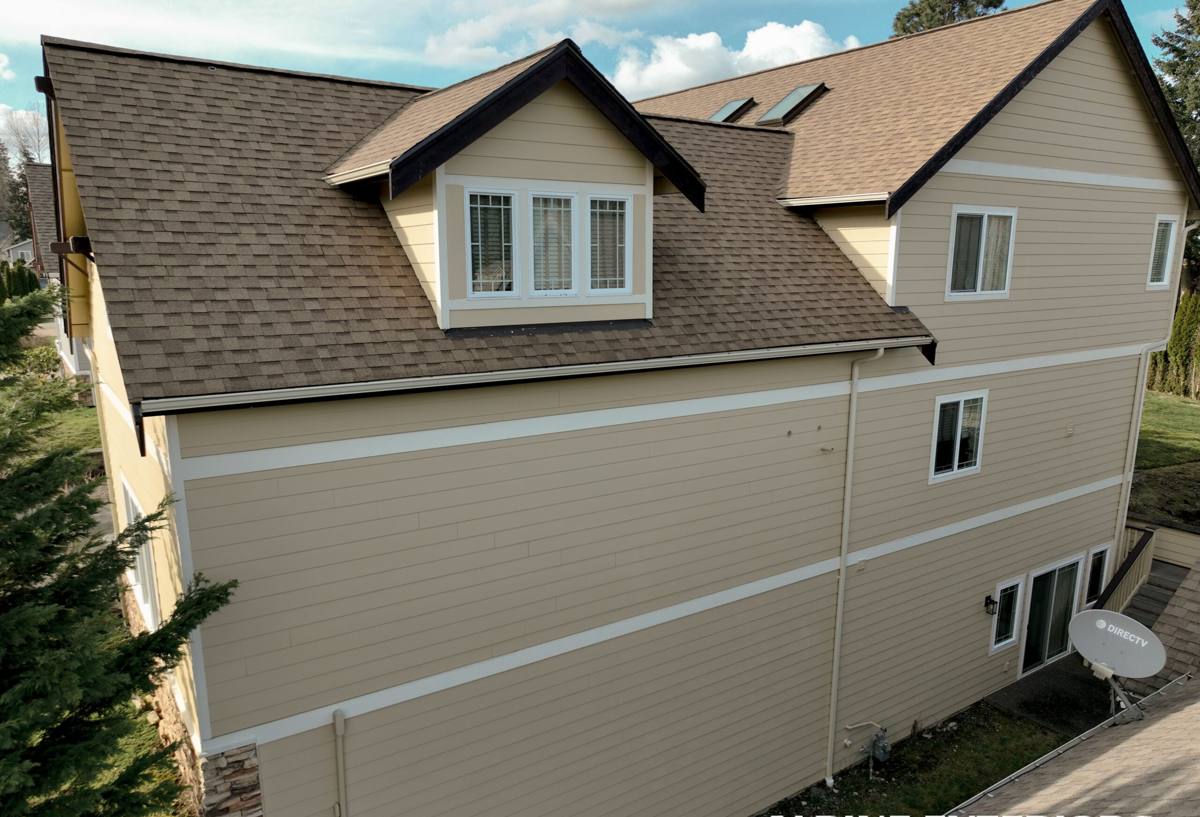
What "New-Construction" Actually Means
New-construction windows have a nailing fin (also called a flange) built into the frame. That fin gets fastened directly to the wall sheathing before siding goes on, which lets the window become part of the wall's water-management system rather than being retrofitted into an existing opening later. This is the right window type for:
- New home builds, from the ground up
- Additions where you're framing new exterior walls
- Room conversions or bump-outs with a fresh rough opening
- Projects where the siding and weather-resistive barrier (WRB) are also being installed or replaced
If you're simply swapping out an old window in an existing wall without touching the siding around it, that's a replacement or "pocket" window project — a different scope with different techniques. We handle both, but this page is specifically about the new-construction side, because the sequencing and flashing details are different and worth understanding before you start a project.
Why Semiahmoo's Climate Changes the Calculus
Whatcom County gets its share of Pacific Northwest rain no matter where you build, but Semiahmoo's exposure adds a few specific stressors:
Salt Air
Being this close to saltwater means airborne salt reaches window frames, fasteners, and hardware year-round, not just during storms. Salt accelerates corrosion on unprotected metal components — screws, hinges, cranks, and cheaper hardware finishes — and it can dull or pit certain frame coatings over years of exposure. This doesn't mean every window fails; it means frame material and hardware quality matter more here than they would on a build twenty miles inland.
Driving Rain
Open water exposure means wind-driven rain hits window openings at an angle, not just straight down. A window can be perfectly weathertight in a still rain and still leak in a sideways storm if the flashing and sill pan weren't detailed for wind-driven conditions. This is a flashing and sequencing issue more than a window-brand issue — we'll get into that below.
A Long Moss and Mildew Season
Whatcom County's damp season runs long, and anywhere moisture sits — window sills, trim returns, low-slope headers — moss, algae, and mildew will eventually take hold if drainage isn't built in from the start. That's a maintenance and appearance issue as much as a performance one, and it's easiest to prevent at the install stage rather than fix later.
What a Correct New-Construction Install Actually Involves
The window itself is only part of the job. What separates a window that performs for decades from one that leaks within a few winters is almost always the sequencing of materials around the opening. A correct installation, in order, looks roughly like this:
- Rough opening check — verified square, plumb, and sized correctly before anything goes in
- Sill pan flashing — a sloped, sealed pan at the bottom of the opening so any water that gets past the window drains back out, not into the framing
- Window set and leveled, fastened through the nailing fin per the manufacturer's pattern
- Jamb and head flashing, integrated with the weather-resistive barrier in the correct shingle-lap order — head flashing overlaps the WRB above it, side and sill flashing tuck underneath
- Sealant at critical joints only — not a bead around the entire perimeter, which can trap water rather than let it drain
- Interior air sealing with low-expansion foam or backer rod, separate from the exterior weatherproofing layer
Skip or reorder any of these steps and you can end up with a window that looks fine for a year or two and then shows staining, soft trim, or interior moisture — usually well after the crew that installed it is gone. On a Semiahmoo site, where wind-driven rain tests these details more than most, we don't shortcut this sequence.
Frame Material: What Holds Up Near Saltwater
There's no single "correct" frame material for every project — it depends on budget, the home's style, and how much upkeep you want to do. But salt air exposure is a real factor in the decision, so here's how the common options compare for a Semiahmoo build:
| Frame Material | Salt Air / Corrosion Resistance | Maintenance | Notes |
|---|---|---|---|
| Vinyl | Good — won't corrode | Low; occasional rinse to clear salt film | Cost-effective; verify hardware is upgraded, not base-grade |
| Fiberglass | Very good — dimensionally stable, resists pitting | Low | Higher upfront cost; holds paint well if color changes are wanted later |
| Aluminum-clad wood | Depends on cladding finish quality | Moderate — interior wood needs normal upkeep | Attractive option for higher-end builds; verify cladding warranty covers coastal exposure |
| Bare aluminum | Weakest in salt air without a quality coating | Higher — watch for pitting and oxidation over time | We steer clients toward clad or coated options this close to the water |
Whatever frame material you land on, we pay close attention to hardware — the cranks, hinges, and fasteners are usually where salt exposure shows up first, and upgraded stainless or coated hardware is worth the modest added cost on a waterfront or near-waterfront lot.
Glass and Weatherstripping Considerations
Beyond the frame, a couple of details matter more on an exposed coastal lot like Semiahmoo:
- Dual or triple-pane glass with a quality seal — the seal is what fails first in coastal wind exposure; a compromised seal shows up as fogging between panes years before the glass itself is a problem
- Weatherstripping designed for wind-driven rain, not just draft-sealing — this affects how well the window resists water intrusion under pressure, not just air leakage
- Low-E coatings for year-round comfort, which matter as much for grey winter heat retention as summer glare on open-water lots
Our Process on a Semiahmoo Project
We approach new-construction window work the same way regardless of scale, but a few things get extra attention on Semiahmoo sites specifically because of the exposure:
- We check the rough openings against the specific window sizes before ordering — reduces on-site surprises and delays
- We install sill pan flashing on every opening, no exceptions, given how much this one detail affects long-term performance in driving rain
- We coordinate flashing sequencing with whoever is installing your WRB and siding, whether that's our crew or another trade, so the layers actually shingle correctly
- We flag hardware and frame upgrades where the site's exposure justifies the added cost, and explain the trade-offs honestly rather than upselling by default
- We walk the finished openings with you before trim and siding close them up, since that's the last point where a flashing issue is easy to fix
Common Problems We See (and Prevent)
Most window failures we get called out to inspect on coastal Whatcom County homes trace back to a handful of recurring issues:
- Missing or improperly sloped sill pans, letting water sit against the sill instead of draining out
- Sealant applied around the entire window perimeter instead of at specific joints, trapping moisture that gets in some other way
- Flashing installed out of shingle-lap order, so water runs behind a layer instead of over it
- Base-grade hardware on a waterfront lot that starts showing corrosion within a few years
- Trim and cladding installed tight against the sill with no drainage gap, encouraging moss and mildew buildup
None of these are exotic problems — they're all preventable with correct sequencing and reasonable material choices at install time, which is exactly why the framing stage is the right time to get it right rather than the stage where you're patching a leak later.
Why Local Experience on Semiahmoo Specifically Matters
A crew that's worked other Semiahmoo and greater Ferndale properties already knows how this stretch of Whatcom County behaves — which sides of a house typically catch the worst wind-driven rain, how fast moss establishes on north-facing trim, and which hardware upgrades are worth the cost versus which are unnecessary for a given lot's exposure. That's not something you can fully substitute with a generic installation checklist. It shows up in small decisions made on-site — how a flashing detail gets adjusted for a particular roofline, or where an extra bead of protection is worth adding — that a crew unfamiliar with this specific coastal exposure might not think to make.
Keeping New-Construction Windows Performing Long-Term
A correctly installed window still benefits from basic upkeep in this climate:
- Rinse frames and sills periodically to clear accumulated salt film, especially on wind-exposed elevations
- Check weep holes and drainage tracks each fall to make sure they're clear before the wet season sets in
- Watch for moss or algae starting on sills and trim, and clean it early rather than letting it establish
- Have caulking and sealant joints inspected every few years — sealant is a wear item, not a permanent fix
If you're planning a new build, addition, or any project that involves framing new window openings on or near Semiahmoo, we're happy to walk the site, talk through material options for your specific exposure, and put together a straightforward, no-pressure estimate using the form below.