 Ferndale Siding
 Why Decks Near Sudden Valley Wear Out Faster Than You'd Expect
If you own a deck in or around the Sudden Valley area, you already know it doesn't age like a deck in a drier climate. Whatcom County sits close enough to the water that salt-laden air reaches wood, metal fasteners, and railing hardware even on properties that feel "inland." Add in months of driving rain each year and a moss season that can stretch from fall through spring, and you have a combination that finds every weak point in a deck's construction. Framing that was built to code but not to this climate starts to show it after a decade or two — sometimes sooner if the original build cut corners on flashing or fastener choice.
This page is specifically about deck repair for that local reality — not a generic "we fix decks" pitch. The fixes that hold up here are different from what works in a milder, drier region, and a crew that hasn't worked this specific corner of Washington a lot will often miss the details that matter most.
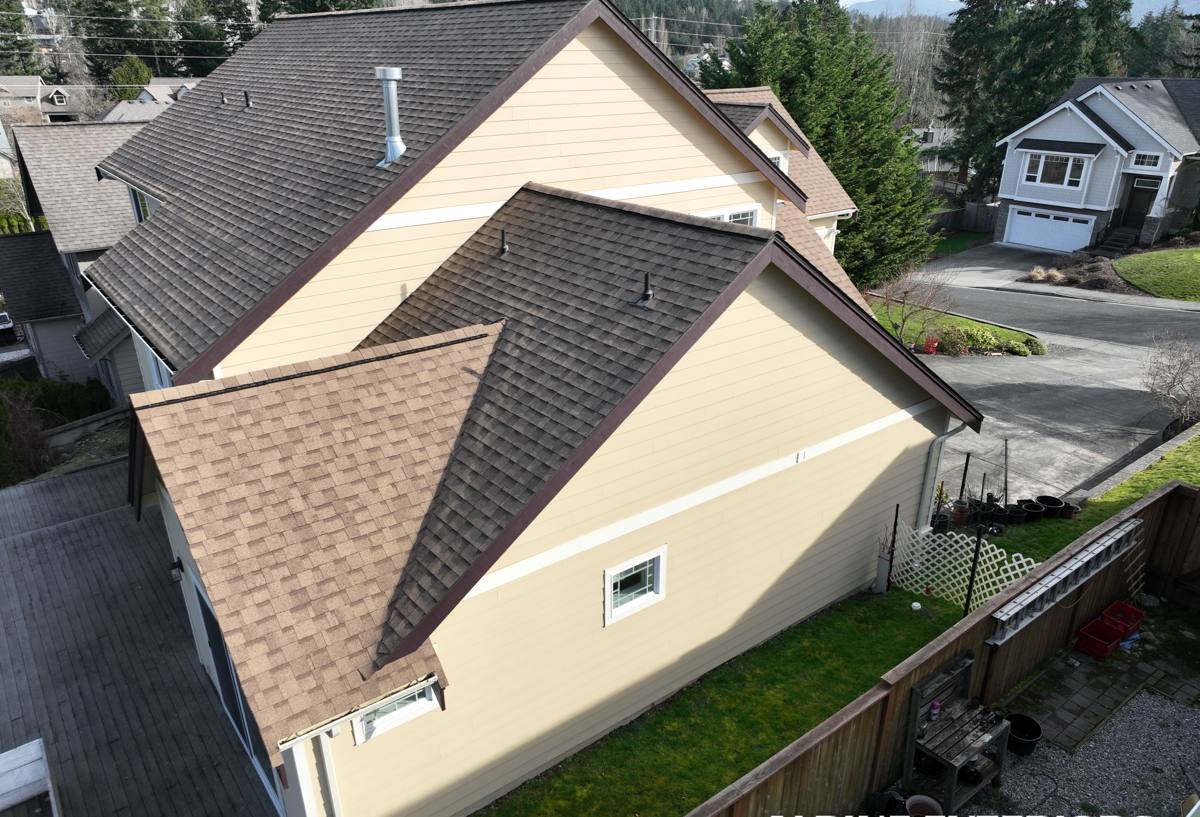
How Salt Air, Rain, and Moss Actually Damage a Deck
Salt Air and Metal Fatigue
Salt in the air accelerates corrosion on anything metal — joist hangers, structural screws, bolts, and railing brackets. Corroded fasteners lose holding strength long before the wood around them looks obviously bad, which is why a deck can feel "solid enough" right up until it isn't. This is one of the most common hidden problems we find on repair calls in this area.
Driving Rain and Water Intrusion
Rain that comes in sideways off a storm doesn't just fall on a deck's surface — it drives into seams, gets behind ledger boards, and works its way into any gap where flashing was skipped or installed poorly. Once water gets behind a ledger or under a rail post base, it stays wet far longer than it takes to dry after a normal rain, because that area gets little sun and less air movement.
Moss and Sustained Moisture
Moss itself doesn't rot wood, but it holds moisture against the deck surface for weeks at a time, and it's usually a sign that a spot isn't draining or drying the way it should. Where moss builds up year after year, the wood underneath it is almost always more deteriorated than the rest of the deck, even if it doesn't look that different at a glance.
Signs a Sudden Valley Deck Needs Repair
Most deck problems in this area show up gradually, and homeowners often live with early warning signs for a season or two before calling anyone. Here's what we typically look for and what it usually means:
- Soft or spongy decking boards — usually localized rot from trapped moisture, often near where moss has been growing
- Rust streaks below fasteners — a sign that hardware is corroding, which affects structural holding strength, not just looks
- A railing that flexes or feels loose — often a post base or connection issue, sometimes tied to a rotted post bottom
- Gaps or dark staining where the deck meets the house — a strong indicator of ledger board water intrusion, one of the more serious issues to catch early
- Stairs that feel bouncy or uneven — can point to stringer damage or a settling footing
- Persistent green or black growth on the surface — moss or algae holding moisture against the wood longer than normal drying allows
- Popped or backed-out fasteners — a sign of wood movement, corrosion, or both
None of these by themselves mean the whole deck is failing. But left alone through another wet season, they tend to spread from a repairable localized issue into something closer to a full rebuild.
What a Correct Deck Repair Actually Involves
A repair that actually holds up here goes beyond swapping out the board that looks bad. We start below the surface, because surface boards are usually the symptom, not the source.
Structural Inspection First
Before any board comes off, we check the framing underneath: joists, the ledger connection to the house, post bases, and footings. This is where the real integrity of a deck lives, and it's also where hidden rot and corrosion are most likely to be found in this climate.
Ledger and Flashing Work
Because ledger board failure is one of the more serious issues we see locally, we pay close attention to flashing at the house connection. If flashing is missing, damaged, or was never properly integrated with the siding or house wrap, water will keep finding its way in no matter how many boards get replaced above it.
Fastener and Hardware Upgrades
Where we find corroded fasteners or hangers, we don't just replace like-for-like — we use fasteners and hardware rated for coastal and high-moisture exposure. This one decision has more to do with how long a repair lasts here than almost anything else in the job.
Decking and Rail Repair
Damaged boards, stair treads, and rail components get replaced to match the existing deck as closely as possible, with attention to proper spacing and drainage so water doesn't pool and restart the same problem.
Repair vs. Replacement: How We Help You Decide
Not every deck problem calls for a full rebuild, and not every deck is worth patching indefinitely. The honest answer usually comes down to where the damage is and how much of the structure it's reached.
| Factor | Leans Toward Repair | Leans Toward Replacement |
|---|---|---|
| Location of damage | Isolated boards, stairs, or railing sections | Widespread rot across multiple framing members |
| Ledger board condition | Solid, properly flashed connection | Soft wood or long-term water staining at the house |
| Footings and posts | Stable, no visible movement or settling | Cracked, heaving, or undersized footings |
| Age of structure | Under 15–20 years with good original build quality | Older deck nearing the end of its practical service life |
| Fastener condition | Localized corrosion, easily replaced | Widespread corrosion throughout the structure |
We'll always give you a straight answer on which side of that line your deck falls on, including when repair is genuinely the smarter call financially — we're not trying to sell a rebuild when a targeted repair will hold up fine.
Our Process for Sudden Valley Deck Repair Calls
1. On-Site Inspection
We walk the entire deck, including underneath where accessible, checking framing, ledger, footings, and hardware — not just the visible surface.
2. Plain-English Diagnosis
We tell you what we found, what's causing it, and what your realistic options are, including what happens if you wait. No pressure, no scare tactics.
3. Scoped Repair Plan
You get a written scope covering exactly what will be repaired, replaced, and upgraded — including fastener and flashing specifics, since those details matter more here than in a drier climate.
4. The Repair Itself
We do the structural work first, then move outward to decking, stairs, and railings, so nothing gets closed up over an unresolved problem.
5. Walkthrough
Before we consider the job done, we walk it with you so you know exactly what was done and what to watch for going forward.
Maintenance That Extends the Life of a Repaired Deck
A good repair buys you years, but this climate keeps working on a deck year-round. A little regular maintenance goes a long way toward not needing another repair call sooner than necessary.
- Sweep or blow off leaves and debris regularly, especially in fall — trapped debris holds moisture against boards
- Remove moss as soon as it appears rather than letting it establish over a full season
- Check railing connections and stair treads for looseness once or twice a year
- Keep gutters and downspouts near the deck clear so water isn't dumping directly onto or under it
- Reseal or refinish wood decking on the manufacturer's recommended schedule, not just when it looks faded
- Look at the ledger connection to the house periodically for staining or gaps
Why a Crew That Already Works This Area Matters
Deck repair isn't a one-size-fits-all trade. A crew that mostly works drier inland regions will size up a Whatcom County deck differently than one that repairs decks dealing with salt air and long moss seasons every week. That local pattern recognition — knowing which fastener grades hold up, which ledger details tend to fail first, where moisture collects on a typical local lot — is the difference between a repair that lasts and one that needs revisiting in a couple of years.
We work on homes throughout Ferndale and the surrounding Whatcom County communities, including areas like Sudden Valley, so the climate conditions driving your deck's wear are ones we see regularly, not occasionally.
Get a Straight Answer on Your Deck
If your deck near Sudden Valley is showing soft spots, loose railings, rust staining, or persistent moss, it's worth having someone look at the structure before another wet season adds to the damage. We offer free, no-pressure estimates — you'll get an honest read on whether you're looking at a repair or something more, with no obligation either way. Fill out the form below to get started.