 Ferndale Siding
 Metal Roofing in Sudden Valley: A Different Set of Problems Than Most Roofs Face
Sudden Valley sits in a pocket of Whatcom County where the roof over your head does a lot more work than it would in a drier climate. Between the tree cover, the moisture that hangs around for months at a time, and the salt-carrying marine air that moves through this part of Washington, roofing materials here get tested in ways that don't show up in a manufacturer's brochure. We're a Ferndale-based crew, and Sudden Valley is part of our regular route — not a once-a-year drive-by. That matters more than most homeowners realize until they've hired a contractor who treats every job the same regardless of where it sits.
Metal roofing has become a popular option out here for good reason. Done correctly, it sheds moss and needle debris better than shingles, handles heavy rain without the granule loss that shortens asphalt's life, and holds up against decades of freeze-thaw cycles and driving wind-driven rain. Done poorly — wrong fastener type, wrong underlayment, panels run without accounting for slope or tree drip lines — it can trap moisture, corrode early, and cost more to fix than it would have to install right the first time.
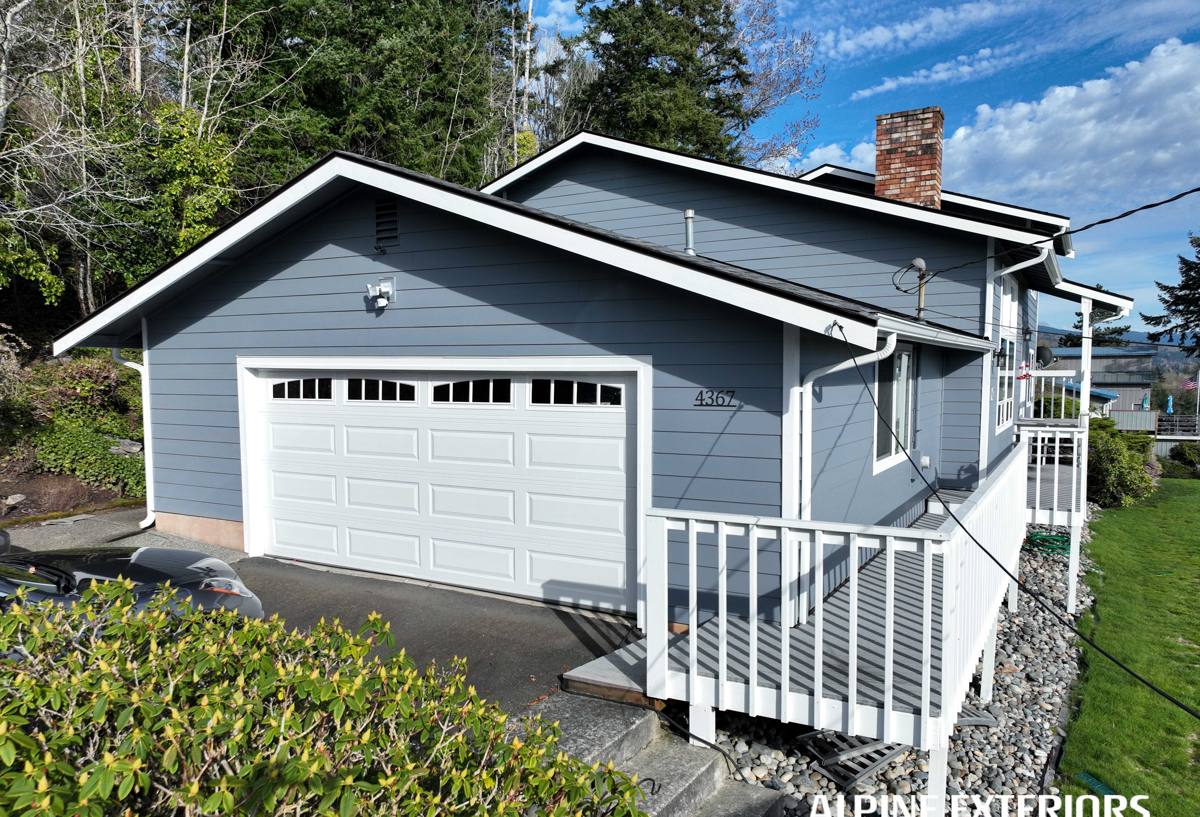
What the Climate Actually Does to a Roof Here
Moss Season Isn't a Season — It's Most of the Year
In Sudden Valley's tree-shaded lots, moss and algae growth isn't limited to a few wet months. Shaded roof sections that never fully dry out can support moss growth nearly year-round. On asphalt shingles, moss roots into the granule layer and lifts it. On a properly installed metal roof, there's no granule layer to root into, and the smooth, sloped panel surface sheds spores and debris far more easily. That said, metal isn't moss-proof by default — valleys, low-slope sections, and areas where debris piles up against a wall or dormer can still hold enough organic matter to support growth if the roof wasn't designed to shed water and debris cleanly.
Driving Rain Finds Every Weak Point
Whatcom County doesn't just get rain — it gets sustained, wind-driven rain that pushes water sideways under laps, around penetrations, and up under poorly sealed flashing. A metal roof's water resistance comes almost entirely from the details: panel overlap, fastener placement, underlayment quality, and flashing at every transition. A roof that looks identical from the ground can perform completely differently depending on how those details were handled.
Salt-Laden Air Accelerates Corrosion
Homes closer to the water and open exposures in this region see measurable salt content in the air, and it travels further inland than most people expect. Salt exposure speeds up corrosion at cut edges, fastener heads, and any point where a protective coating has been scratched or thinned. This is one of the most overlooked factors in metal roofing failures — not the panel itself, but the fasteners and cut edges that weren't treated with the same care.
What a Correctly Installed Metal Roof Includes
A metal roof is only as good as the system underneath it. The panels get the attention, but the parts nobody sees are what determine whether the roof lasts 20 years or 50.
- High-temperature synthetic underlayment rated for the panel type, not a generic felt substitute
- Proper fastener selection — matched metal type to avoid galvanic corrosion between dissimilar metals
- Closure strips and sealant at ridges and eaves to block wind-driven rain and pest entry without trapping moisture
- Ice-and-water shield at valleys and eaves where standing water and debris are most likely to collect
- Proper ventilation to keep condensation from forming underneath the panels, which can cause corrosion from below
- Flashing custom-fit to every penetration — vents, chimneys, skylights — rather than generic pre-formed pieces forced to fit
Skip any one of these and the roof may still look fine for a few years. The failures show up later, usually as leaks that are hard to trace back to their source because the water traveled along the underlayment before finding a gap.
Choosing the Right Metal Panel System
Not all metal roofing is the same product wearing different colors. The panel style you choose affects cost, maintenance, and how well the roof handles this area's rain and moss exposure.
| Panel Type | Best For | Maintenance Needs | Relative Cost |
|---|---|---|---|
| Standing seam (concealed fastener) | Homes with heavy tree cover or long-term ownership plans | Low — no exposed fasteners to fail over time | Higher |
| Exposed-fastener panel | Budget-conscious projects, outbuildings, simpler rooflines | Moderate — fastener gaskets need periodic checking | Moderate |
| Stone-coated metal shingle/tile | Homes wanting a traditional shingle or tile look with metal's durability | Low to moderate — coating integrity matters at cuts | Higher |
For a shaded, wet lot like most of what we see around Sudden Valley, standing seam earns its higher upfront cost by eliminating the exposed fasteners that are the first thing salt air and rain go after. Exposed-fastener panels can still be a sound choice on simpler roof geometries or secondary structures, as long as the fastener gaskets get checked periodically — something we flag for homeowners rather than assume they'll remember.
Our Standard, and Why We Hold It
We don't install every product on the market, and that's a deliberate choice rather than a limitation. Some coating systems and panel gauges look comparable on paper but behave very differently after a decade of Whatcom County winters — thinner gauge steel dents more easily under branch fall and hail, and lower-grade coatings chalk and fade faster under UV exposure combined with constant moisture. We stick to panel gauges and coating systems that have a track record of holding up in wet, shaded, marine-influenced climates, because a roof that needs replacing in 15 years isn't a good value even if it was cheaper going in.
How We Approach Every Sudden Valley Job
- On-site inspection of the existing roof, decking condition, ventilation, and any moss or moisture damage already present
- Honest scope conversation — full tear-off versus overlay, and why one makes more sense for your specific roof
- Panel and detail selection matched to your roofline, tree exposure, and how much maintenance you want to do long-term
- Installation with attention to every flashing point, valley, and penetration — the parts that actually determine leak resistance
- Final walkthrough so you know what the roof needs from you going forward, and what it doesn't
Why a Crew That Already Works Sudden Valley Is Worth Choosing
Roofing crews that only pass through occasionally tend to install the same detail package everywhere, regardless of site conditions. A crew based in Ferndale that regularly works Sudden Valley and the surrounding Whatcom County communities has already seen how these roofs perform after a few winters — which valley designs actually hold up under heavy needle drop, which fastener choices corrode faster near open water exposure, and which ventilation setups prevent condensation under shaded canopy. That's knowledge that doesn't come from a training manual; it comes from following up on jobs and seeing what held and what didn't. It also means a faster response if something needs attention after a storm, instead of waiting on a crew that has to schedule a special trip out.
Keeping a Metal Roof Performing Long-Term
Metal roofs need less maintenance than shingles, but "less" isn't "none," especially in a climate like this one.
- Clear needle and leaf buildup from valleys and behind chimneys or dormers at least once or twice a year
- Keep gutters flowing freely — backed-up gutters push water back under eave flashing
- Check for moss or algae staining in shaded sections and treat early rather than letting it establish
- Inspect fastener heads and cut edges periodically for early signs of corrosion, particularly on exposed-fastener systems
- Trim overhanging branches that keep sections of the roof perpetually damp and shaded
A Straightforward Look at Cost Factors
What a metal roof costs depends on more than square footage. The factors below tend to move the price more than homeowners expect, and knowing them up front makes for a more useful conversation when you're comparing quotes.
| Factor | Why It Matters Here |
|---|---|
| Roof complexity (valleys, dormers, penetrations) | Each transition needs custom flashing — more of them means more labor |
| Tear-off vs. overlay | Overlaying can hide existing decking damage common in older, moss-affected roofs |
| Panel and coating grade | Higher-grade coatings resist salt and UV exposure longer, reducing repaint or recoat needs |
| Ventilation upgrades | Older homes often need added ventilation to prevent condensation under new metal panels |
| Access and site conditions | Steep, tree-crowded, or hard-to-access rooflines add labor time |
Metal roofing generally costs more upfront than asphalt shingles, but the gap narrows considerably once you account for asphalt's shorter lifespan and the moss remediation that shaded Whatcom County roofs so often need. Over a 40-plus-year span, most homeowners come out ahead — but that math only holds if the installation was done right in the first place.
If you're weighing options for a home in Sudden Valley, we're glad to come take an honest look and walk through what your specific roof needs — no pressure, no upsell script. Use the form below to request a free estimate.