 Ferndale Siding
 Composite Decking for Sumas Homes
Sumas sits out at the far edge of Whatcom County, in the flat, low-lying farmland of the Sumas Prairie near the Canadian border. It's a different setting than the coastal neighborhoods closer to Bellingham Bay, but a deck built here faces the same underlying weather pattern that shapes exterior work across this part of the Pacific Northwest: driving rain that comes in sideways as often as it falls straight down, a damp valley climate that holds moisture against wood and framing long after a storm passes, and a moss season that runs longer here than in drier parts of the state. We build and replace decks in Sumas regularly, and composite decking is what we recommend for most homeowners in this specific setting — not because it's trendy, but because of how it actually performs against this valley's particular combination of rain, damp, and cold.
This page is about one thing: composite decking, done right, on a Sumas property. If you're comparing materials, weighing cost factors, or just want to know what a correct installation looks like out here, this is the detail that matters.
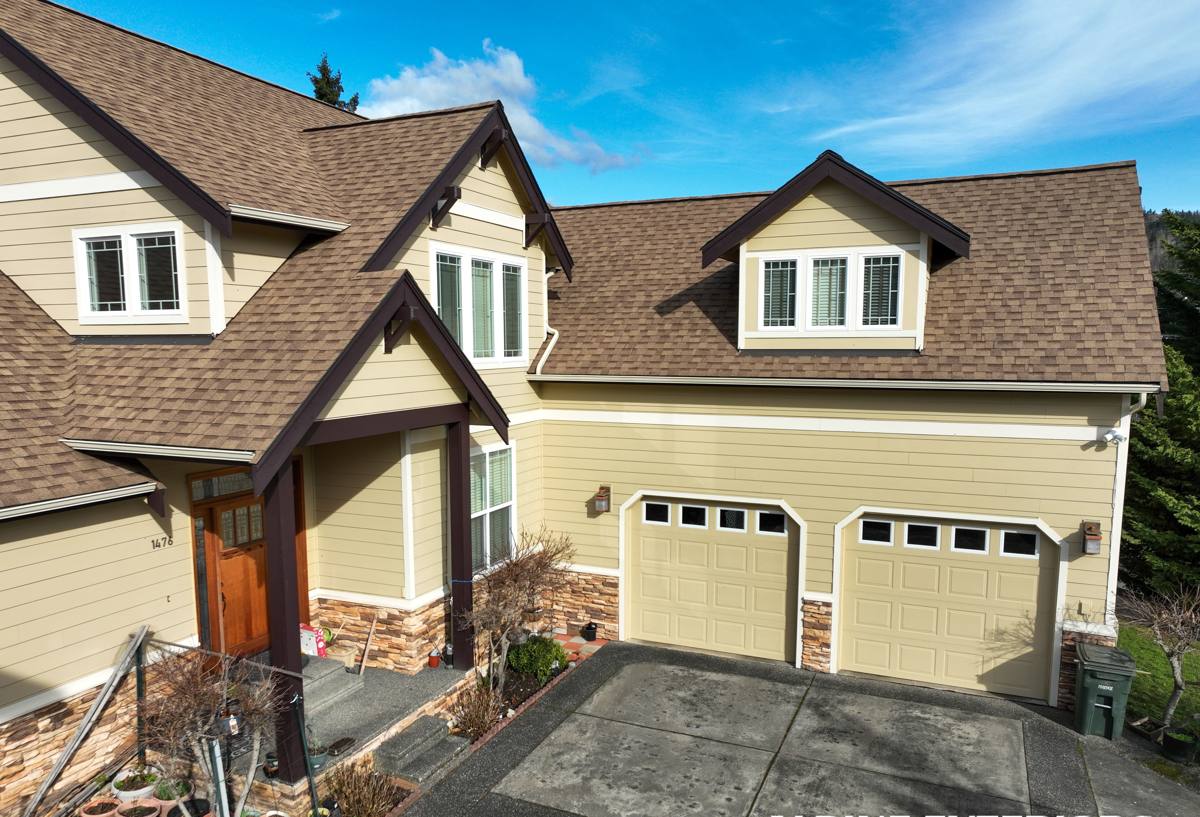
What the Sumas Climate Does to a Deck
Driving Rain and Standing Valley Moisture
Sumas sits low, in flat agricultural terrain near the Nooksack River system, and a flat, low-lying lot holds surface and ground moisture differently than a hillside property does. Storms push rain sideways under railings and across board surfaces rather than letting it run cleanly off, and on a valley floor that moisture doesn't drain away from the yard or from under the deck as quickly as it would on higher ground. A deck surface and substructure that aren't detailed to shed water — not just from above, but from ground-level dampness underneath — will show problems first at fastener points, board ends, and ledger connections.
Cold Outflow Wind
Because of its position near the head of the valley by the border, Sumas sees more cold outflow wind events during winter than towns closer to the water. Those events bring sharp temperature swings and real wind load against railings, stair assemblies, and any pergola or cover structure attached to a deck. A structure that's fine under ordinary Whatcom County weather can still get tested harder here when an outflow event rolls through with wind behind the cold.
A Long Moss and Mildew Season
Persistent regional dampness, mild temperatures, and shaded yard areas on many Sumas properties add up to a moss and mildew season that stretches across much of the year. On a deck, that shows up as slick green growth on horizontal surfaces — which is more than cosmetic, since a mossy deck board is a genuine slip hazard on stairs and walkways, not just an eyesore.
Freeze-Thaw Cycling
Sumas sees more frequent hard frosts than milder coastal parts of the county, which adds a freeze-thaw dimension to any moisture that's already worked its way into a porous decking material or an under-sealed fastener hole. Water that soaks in and then freezes expands, and repeated cycles of that accelerate cracking, splintering, and fastener failure in a way a purely wet-but-mild climate wouldn't.
Why Composite Decking Fits This Setting
Wood decking has a real place in the market, and plenty of homeowners are happy with a well-maintained cedar or pressure-treated deck. But for a Sumas property dealing with valley damp, wind exposure, and real freeze-thaw cycling, composite decking removes several of the maintenance and moisture risks that wood carries in this specific climate.
| Factor | Wood Decking | Composite Decking |
|---|---|---|
| Moisture resistance | Depends on species and finish; needs regular sealing to keep water out | Resists moisture absorption without ongoing sealing |
| Moss and mildew | Organic surface supports growth quickly if maintenance lapses | Less hospitable to organic growth, though surface cleaning is still needed |
| Freeze-thaw behavior | Absorbed moisture can crack and split boards over repeated frost cycles | Engineered composition resists the same cracking and splintering |
| Maintenance | Annual or biennial sealing/staining recommended | Periodic cleaning; no sealing or staining required |
| Upfront cost | Generally lower material cost | Higher material cost, offset over time by lower maintenance spend |
| Splintering underfoot | Can splinter as wood ages and dries between wet seasons | Doesn't splinter the way weathered wood does |
The trade-off is upfront cost against ongoing maintenance and moisture risk. For a homeowner who wants to seal and re-stain a deck every year or two, wood can still be the right call. For a Sumas property where the wet season runs long and a missed maintenance year has real consequences, composite decking generally holds up with far less homeowner effort over the deck's life.
What "Composite" Actually Means
Composite decking is manufactured from a blend of wood fiber and recycled plastic, and most modern boards add a protective cap layer — often called capped composite — that seals the board's core against moisture, staining, and UV fading. That cap layer is the part doing most of the real work in a climate like this one; an uncapped or lower-grade composite board can still absorb moisture at cut ends and fastener holes over time, so the specific product and how it's detailed at every cut matters as much as the general material category.
What Correct Composite Deck Installation Looks Like Here
Material choice only gets a Sumas deck halfway there. The rest comes down to installation detail, and on a low-lying valley property that holds moisture longer than a well-drained hillside lot, cutting corners on any of these steps tends to show up within a single wet season.
- Structural framing rated for the exposure: Joists, beams, and posts sized and spaced correctly, with hardware rated for corrosive, damp exposure rather than standard interior-grade fasteners.
- Sealed and flashed ledger connection: Where the deck attaches to the house, the ledger board and its flashing get particular attention — a poorly flashed ledger is a direct path for water into the wall behind it.
- Ground clearance and drainage: Enough clearance and slope under the deck so ground moisture from a wet valley floor doesn't sit trapped against the framing.
- Sealed cut ends: Every field cut on a composite board exposes its core; those cut ends need to be treated so they don't become the one place on the deck that absorbs water.
- Hidden fastener systems where the product allows: A clean, gap-consistent surface that also avoids the fastener-head water pooling that visible screws can create over time.
- Railing and stair hardware rated for wind and cold: Given Sumas's outflow wind exposure, railing posts and stair stringers get connections sized for real wind load, not just the minimum.
New Build vs. Deck Replacement
Not every project starts from bare ground. A lot of our Sumas work is replacing an aging wood deck's surface and railings on a substructure that's still structurally sound, once we've confirmed the framing itself hasn't been compromised by trapped moisture. Other jobs call for a full tear-out, especially when the ledger connection or framing shows signs of long-term water damage. We'll tell you honestly which situation a given deck is actually in before we quote anything.
Deck Readiness Checklist
- Ledger board and house connection checked for water staining or soft wood
- Support posts and footings inspected for movement, rot, or frost heave
- Joists checked from underneath for soft spots or standing moisture
- Railings and stair stringers tested for looseness or wind-related stress
- Grade and drainage under the deck confirmed to be shedding water away from framing
- Shaded or north-facing sections checked for moss buildup and slip risk
Cost Factors for a Sumas Composite Deck
| Factor | What It Affects | Why It Matters Here |
|---|---|---|
| Tear-off vs. resurface | Labor scope and substructure access | Full tear-off reveals hidden framing damage more common under older decking in a damp valley climate |
| Framing condition | Repair costs before new decking goes on | Long-term trapped moisture can rot joists and ledger connections out of sight |
| Board and railing product tier | Material cost and long-term maintenance | Higher-tier capped composite handles sustained moisture and freeze-thaw better than economy boards |
| Fastening and hardware spec | Material and labor requirements | Outflow wind events near the border can call for tighter fastening and hardware specs than a sheltered inland site |
| Site access | Labor time and equipment needs | Rural and agricultural properties can have longer driveways or wider staging needs than in-town lots |
Exact costs depend on deck size, current framing condition, and the specific product tier chosen, which is why we walk the property in person before giving a real number rather than quoting off a generic price sheet.
Decks Are Part of the Whole Exterior System
Deck problems on a Sumas home rarely stay isolated to the deck. A poorly flashed ledger board is one of the more common sources of hidden water damage to the siding directly above and around it, and a deck built without accounting for grade and drainage can push moisture back toward the house's foundation. Because we handle siding, roofing, windows, and decks together, we look at a deck as part of one connected exterior system exposed to the same rain, wind, and freeze-thaw cycling as the rest of the home, rather than a standalone project that happens to be attached to the house.
Why a Local Crew Matters for Decking in Sumas
A crew that works this part of Whatcom County regularly understands how valley damp, wind-driven rain, and freeze-thaw cycling behave on real decks here over a full year, not just how a product performs on a spec sheet. That experience shapes practical decisions on build day: how much clearance to leave under the framing, which ledger details are worth the extra time, and which hardware is worth upgrading given this specific site's wind exposure. Sumas sits far enough from the water and close enough to the border that its exposure looks a little different from the rest of Ferndale's service area, and a crew with hands-on local experience treats that difference seriously instead of applying a one-size-fits-all approach built for a milder coastal lot.
What to Expect When You Call Us
- A walk-through of the existing deck, or the planned site for a new build, to assess framing, drainage, and connection points
- An honest assessment of whether you're looking at a resurface, a partial rebuild, or a full replacement
- A clear explanation of composite board tiers and why we recommend a given product for your specific setup and budget
- A written estimate with no pressure to sign on the spot
If your Sumas property needs a new composite deck, a replacement for an aging wood deck, or just an honest second opinion on what's happening underneath an older deck, we're glad to take a look. Reach out using the form below to schedule a free, no-pressure estimate.