 Ferndale Siding
 Siding That Actually Holds Up in Sumas
Sumas sits close enough to the water and the foothills that its homes take a beating most inland Washington towns never see. Salt-laden air drifts in off the Strait, driving rain comes sideways for weeks at a stretch in the fall and winter, and a long, damp moss season settles into anything that holds moisture against a wall. Add freeze-thaw cycles in the coldest stretches of winter, and you've got a climate that's genuinely hard on exterior building materials — harder than most siding products were ever engineered to handle.
We install James Hardie fiber cement siding exclusively. Not because it's the only product on the market, but because after years of working on homes in this exact corner of Whatcom County, it's the only one we're willing to put our name behind. This page walks through what Sumas homes specifically need from their siding, what a correct Hardie installation actually involves, and why the crew doing the work matters as much as the product itself.
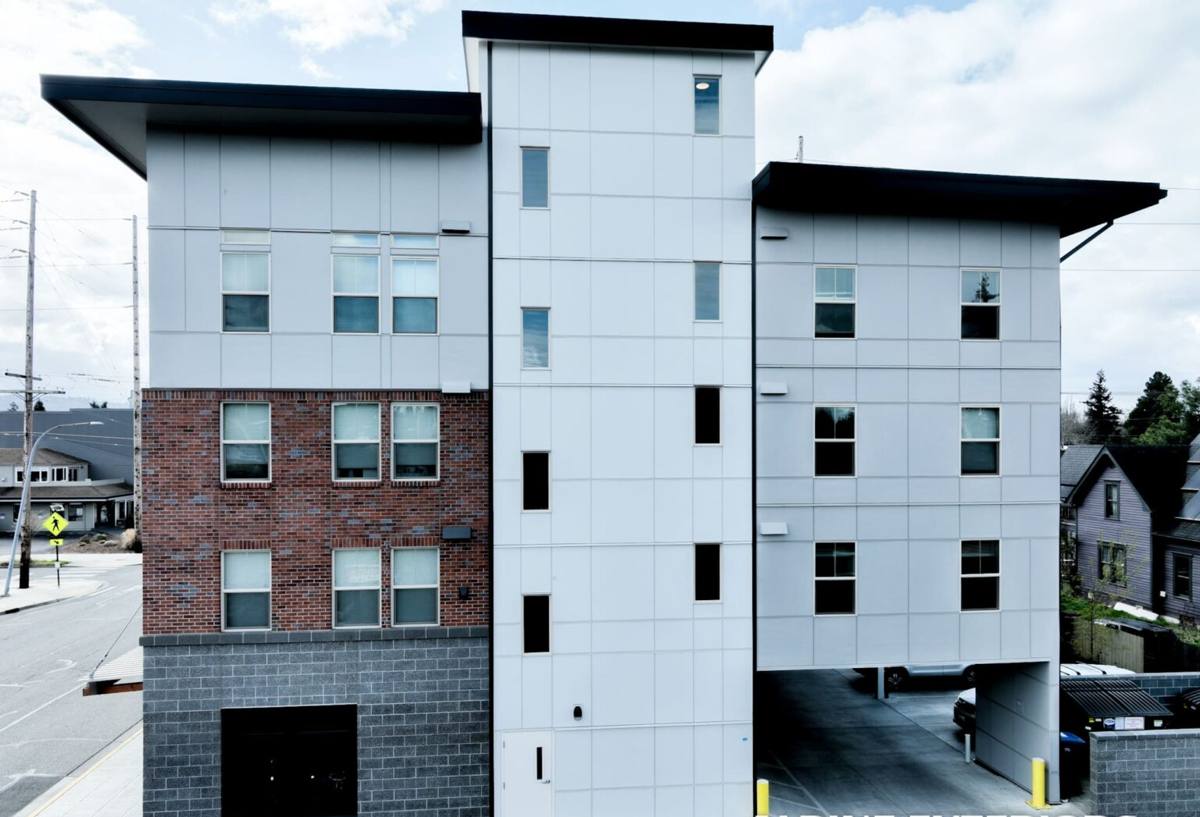
What Sumas's Climate Does to a House
Salt Air and Metal Fasteners
Proximity to the water means airborne salt settles on every exterior surface, including the fasteners and flashing behind your siding. Cheap or incorrectly specified fasteners corrode over time, and once a fastener fails, the siding panel it's holding starts to work loose. It's a slow problem — you won't notice it in year one — which is exactly why it needs to be addressed at installation, not after the fact.
Driving Rain and Wind-Driven Moisture
Sumas gets rain that doesn't fall straight down. Wind pushes it sideways and up under laps, seams, and trim edges. Siding systems that rely on face-sealed caulk joints or that aren't installed with the right lap spacing and flashing details will eventually let water behind the cladding. Once moisture gets behind siding and can't dry out, you're looking at sheathing rot, mold, and repairs that cost far more than the siding itself.
Moss and Sustained Dampness
The moss season here isn't a nuisance — it's a multi-month stretch where north-facing walls, shaded elevations, and anything near overhanging trees stay damp almost continuously. Moss and algae growth on a wall surface holds moisture against the material underneath. Products that absorb water or swell when saturated degrade faster under these conditions. Products that shed water and don't feed organic growth hold their looks and their integrity much longer.
Freeze-Thaw Cycling
Whatcom County doesn't get brutal winters, but it does get repeated freeze-thaw cycles — cold snaps followed by thaw, over and over through the winter months. Any siding material that has absorbed water is vulnerable during these cycles, since freezing water expands and can crack, delaminate, or warp a compromised panel.
Why James Hardie Is Built for This
James Hardie fiber cement is engineered from cement, sand, and cellulose fibers — a composition that doesn't absorb and hold water the way wood-based or wood-composite products do, and doesn't corrode, rust, or rot. It's also non-combustible, which matters in a region where wildfire smoke and dry summer stretches have become a normal part of the year.
Hardie's HZ5 product line is specifically engineered for climates like ours — freeze-thaw cycling, sustained moisture exposure, and coastal-influenced weather. The ColorPlus factory finish baked onto each plank resists fading and chipping far better than field-applied paint, which matters when your siding is going to spend months of the year damp and shaded. And because the color is factory-cured, touch-ups and future repainting are far less of a maintenance burden than with site-painted materials.
What a Correct Installation Actually Involves
The material is only half the equation. A huge percentage of siding failures we get called out to inspect aren't material failures — they're installation failures. Here's what we do differently on every Sumas job:
- Weather-resistant barrier installed and lapped correctly before any siding goes up, with all penetrations properly flashed and sealed
- Rain screen or drainage gap detailing where the wall assembly calls for it, so any moisture that does get behind the siding has a path to drain and dry
- Corrosion-resistant, Hardie-approved fasteners — never standard fasteners that can react with the cement board or corrode in salt air
- Correct nailing pattern and blind-nailing where specified, to avoid the face-nailing shortcuts that cause premature panel movement
- Proper lap spacing and clearance at grade, decks, and roof lines so water sheds away from the wall rather than pooling against it
- Caulking and sealant only where Hardie's install specs actually call for it — not as a substitute for correct flashing
Every one of these steps is spelled out in James Hardie's published installation guidelines. Skipping or rushing any of them is how homeowners end up with premature failures on a product that's rated to last decades when installed to spec.
Our Process for Sumas Homeowners
1. On-Site Assessment
We walk the entire exterior, not just the elevation you called about. Siding problems on one wall often point to a moisture or ventilation issue that affects the whole envelope, and we want to catch that before we quote anything.
2. Honest Scope and Product Selection
We'll tell you straight whether you need a full re-side, a partial replacement on the worst-exposed elevations, or repair work. We'll also walk you through the Hardie plank profile, color, and HZ specification that fits your home and its exposure.
3. Removal and Substrate Check
Old siding comes off, and we inspect the sheathing underneath for rot or moisture damage before anything new goes up. Covering up a compromised substrate is how "new siding" fails in three years instead of thirty.
4. Correct Installation, Start to Finish
Weather barrier, flashing, fasteners, nailing pattern, lap spacing — every step done to Hardie's spec, not shortcuts based on what's fastest.
5. Final Walkthrough
We go over the finished work with you, including basic care and what to expect from the ColorPlus finish over time.
James Hardie Siding: Cost Factors
| Factor | Why It Affects Cost |
|---|---|
| Home size and elevation count | More square footage and more complex rooflines mean more material and labor |
| Existing substrate condition | Rot or moisture damage found during removal adds repair work before new siding can go up |
| Plank profile and color selection | Lap width, shake-style panels, and premium ColorPlus tones price differently than standard options |
| HZ specification needed | Coastal and freeze-thaw exposure may call for a higher HZ rating on certain elevations |
| Trim and detail work | Window, corner, and fascia trim complexity adds labor time |
| Access and site conditions | Steep lots, tight setbacks, or limited equipment access can affect labor time |
We don't publish blanket pricing because every home is different, but we'll give you a clear, itemized quote after the on-site assessment — no guessing games.
Why We Don't Install Anything Else
We get asked fairly often about vinyl, LP SmartSide, or cedar, since they're common around the region and sometimes cheaper up front. Our answer is consistent: given what Sumas's climate does to a wall assembly over a decade or two, we're not willing to install products that trade long-term performance for a lower initial price. Vinyl can warp and doesn't hold up well to impact. Wood-based composite products are more sensitive to sustained moisture exposure than fiber cement. Cedar requires ongoing maintenance most homeowners underestimate when they choose it. James Hardie is the one product we've found that consistently performs the way it's supposed to in this specific climate, provided it's installed correctly — which is the whole reason we specialize in it rather than trying to be a jack-of-all-trades siding contractor.
Maintenance Checklist for Hardie Siding in Sumas
- Rinse siding annually with a garden hose to remove salt residue and airborne grime, especially on wall faces exposed to prevailing weather
- Inspect caulking around windows, doors, and trim yearly and re-caulk if it's cracked or pulling away
- Trim back vegetation and tree branches that keep any wall section shaded and damp longer than the rest of the house
- Check for and gently remove moss or algae buildup on north-facing or shaded elevations before it spreads
- Look at ground-level clearance periodically to make sure mulch, soil, or landscaping hasn't crept up against the bottom edge of the siding
- Have a professional inspect flashing and seams every few years, particularly after major storm seasons
Why a Local Crew Matters
Siding installation isn't one-size-fits-all, and a crew that's worked homes throughout Whatcom County — including Sumas — already knows how prevailing wind direction, elevation exposure, and local moisture patterns affect where problems tend to show up first on a house. That local experience shapes decisions on the job: which elevations get extra flashing attention, where drainage details matter most, and how to sequence work around our wetter months. It's the difference between a generic installation and one that's actually built for the conditions your home faces every year.
If you're planning a siding project in Sumas, we'd be glad to take a look at your home and talk through what it needs. Reach out for a free, no-pressure estimate — there's a form right below this page.