 Ferndale Siding
 Window Installation Built for Custer's Weather, Not Just Its Openings
Custer sits close enough to the water and open farmland north of Ferndale that its homes take a different kind of beating than houses tucked further inland. Wind off the Strait of Georgia carries salt, storms roll through with sideways rain instead of straight-down rain, and the low, wet winters here mean moss and mildew have months to work on anything that traps moisture. Windows are one of the first places that shows up — soft sills, foggy glass, swollen sashes, and trim that stays damp long after the rain stops. Installing a window correctly in this area isn't just about the unit itself; it's about how it's flashed, sealed, and tied into the wall so water has nowhere to go but back outside.
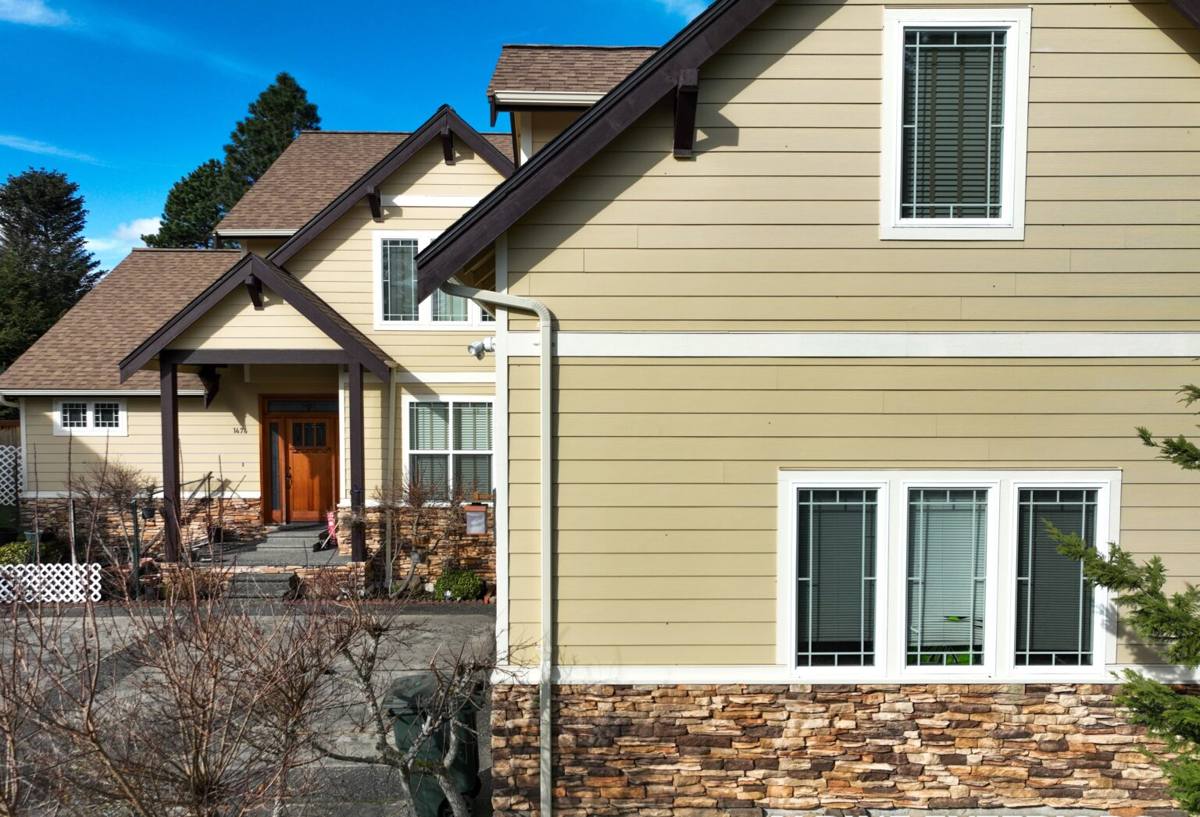
What Salt Air, Driving Rain, and Moss Season Actually Do to Windows
Every climate stresses windows differently, and it's worth being specific about what Custer's does:
Salt Air
Airborne salt accelerates corrosion on window hardware — hinges, locks, balance springs, and screen frames. It also breaks down some sealants and finishes faster than they'd wear in a drier inland climate, which is part of why we pay close attention to what hardware and finish spec a window ships with before it goes in a Custer wall.
Driving Rain
When rain comes in at an angle instead of falling straight down, it hits window walls with real force and finds any gap in flashing or caulking. A window that would stay dry in a calmer climate can leak here if the water management details underneath the trim aren't done right. This is almost always where failed installations go wrong — not the window itself, but what's behind it.
Moss and Sustained Moisture
Whatcom County's long wet season means anything that holds moisture against wood — a clogged weep hole, a low spot in a sill, moss growing on a horizontal trim board — stays wet for weeks at a time. That's enough time for rot to start, even in treated lumber, if water isn't given a clear path away from the window.
Signs a Custer Home's Windows Need Attention
Homeowners often notice a problem long before they know its cause. Common signals we hear about in this area include:
- Fogging or a visible haze between panes of a double-pane window — the seal has failed and the gas fill is gone
- Soft or spongy trim and sills, especially on the sides of the house that face prevailing wind and rain
- Windows that are hard to open, lock, or latch — often corrosion or wood swelling rather than a broken window
- Visible moss or dark staining on horizontal sills and the tops of window trim
- A noticeable draft or cold spot near the window frame in winter
- Peeling or bubbling paint on interior trim near the window, which usually means moisture is getting in somewhere
Any one of these is worth a look. Together, or left long enough, they usually mean water has already reached the wall framing.
What a Correct Window Installation Actually Involves
A window installation is really a small water-management project with a window in the middle of it. Skipping steps here is invisible on install day and expensive five years later.
Flashing and Water Management
Before a new window goes in, the rough opening needs a sill pan to catch any water that gets past the window itself and direct it back outside instead of into the wall. Flashing tape integrates with the weather-resistive barrier in the correct shingle-lap order — bottom first, then sides, then top — so water always sheds downward and outward, never behind the layer below it. On a house exposed to driving rain, this sequence matters more than the brand of window going in.
Air Sealing and Insulation
The gap between the window frame and the rough opening needs to be sealed and insulated correctly — not stuffed tight with fiberglass, which can compress and leave gaps, and not left open, which lets moist air condense inside the wall cavity. Low-expansion foam or backer rod with sealant, sized correctly to the gap, keeps the assembly both airtight and able to move slightly as the house settles and the seasons change.
Fastening, Shimming, and Squaring
A window that isn't shimmed square will bind, won't seal evenly against its weatherstripping, and puts uneven stress on the frame that shows up as leaks or hardware failure years down the road. This is a slow, careful part of the job — and it's the part that's easiest to rush.
Exterior Trim and Sealant
The final sealant bead at the trim-to-siding joint is the last line of defense, not the first. It should be a high-quality, paintable, flexible sealant rated for exterior use — and it should be checked periodically, since even good sealant has a service life in a wet climate.
Choosing the Right Window Material for a Custer Property
There's no single "best" window for every house — it depends on exposure, budget, and how much upkeep the homeowner wants to do. Here's how the common options compare for this climate specifically:
| Material | Salt Air / Moisture Resistance | Maintenance | Typical Cost Range |
|---|---|---|---|
| Vinyl | Good — won't corrode or rot, seams are the main concern | Low — occasional cleaning | Lower |
| Fiberglass | Very good — dimensionally stable, resists warping in wet-dry cycles | Low | Mid to upper |
| Wood-Clad | Good on the exterior clad face; interior wood needs protection from indoor moisture | Moderate — finish and seals need periodic attention | Upper |
| Aluminum | Fair — prone to condensation and corrosion near salt air unless thermally broken | Moderate | Varies |
For most Custer homes we lean toward vinyl or fiberglass on exposed elevations, since neither rots, rusts, or needs repainting — a real advantage where moss and moisture have months each year to work on a house. Wood-clad windows can still be the right call on homes where matching an existing look matters, as long as the homeowner understands the maintenance that comes with it.
How We Handle a Window Installation Job in Custer
- On-site assessment — we look at each opening individually, since sun, wind, and rain exposure can vary a lot from one side of the same house to another
- Measure and order — exact sizing for either a full-frame replacement or an insert, depending on the condition of the existing framing
- Remove the old window carefully — and inspect the rough opening and sill for hidden rot or moisture damage before anything new goes in
- Repair framing if needed — no new window goes over damaged wood; we address it first
- Install sill pan, flashing, and the window — shimmed square, fastened per manufacturer spec, sealed in the correct order
- Insulate and air-seal the perimeter gap
- Finish exterior and interior trim — and walk the homeowner through operation, locks, and any warranty paperwork
Why a Crew That Already Works Custer Makes a Difference
A lot of window problems in this area trace back to installers applying a generic method that works fine in a drier, calmer climate but doesn't account for wind-driven rain or the length of the wet season here. A crew that regularly works Ferndale and Whatcom County properties has already seen which elevations take the worst weather, which older homes tend to have hidden sill damage, and which details actually matter versus which are just extra steps. That local pattern recognition is hard to replace, and it's usually the difference between a window that's still tight in ten years and one that's leaking again in three.
Maintenance Checklist for New Windows in This Climate
A correctly installed window still needs a small amount of seasonal attention in a place with this much rain and salt air:
- Inspect exterior caulking each fall before the heavy rains set in, and re-seal any cracked or separated joints
- Clear moss, leaves, and debris off sills and tracks so water can't pool and weep holes stay open
- Wipe down hardware — locks, hinges, cranks — periodically to reduce salt-air corrosion buildup
- Check that weep holes at the bottom of the frame are clear and draining, not painted or caulked shut
- Look for condensation between panes, which signals a failed seal rather than a cleaning problem
- Repaint or refinish wood-clad exteriors on the manufacturer's recommended schedule, not just when it looks bad
What Affects the Cost of a Window Installation
Every home is different, but the main cost drivers on a Custer job are usually the same handful of things: whether the existing framing is sound or needs repair, full-frame replacement versus an insert, the window material and glass package chosen, and how many openings are being done at once. We'll always walk a homeowner through these factors honestly before any work starts, rather than quoting a number that doesn't hold up once we see what's actually behind the old trim.
If you're dealing with a drafty, foggy, or hard-to-open window in Custer or anywhere around Ferndale, we're happy to take a look and give you a straight answer — no pressure, no upsell. Fill out the form below for a free estimate.